



Editor’s note: Geoff Wolinetz returns to Cognitive Frames with his fifth piece—and the most personal entry yet in his ongoing investigation of performed identity. From LA comedians constructing themselves in Defending Your Life and L.A. Story, to recluses performing for cameras in Grey Gardens, to fugitives surviving behind masks in Marathon Man, Geoff has been steadily drilling toward a core question: who are we when the performance cracks?
With Nicole Holofcener’s You Hurt My Feelings (2023), he arrives at the most intimate stage of all—the lies we tell the people we love about their creative work, and what it costs when those lies get exposed. For anyone who’s ever created something and wondered whether the encouragement they received was real, this one cuts close. – D.H.
When you create anything, whether it’s an essay like this read by hundreds or a piece of art seen by millions1, you open yourself up to all manner of feedback. Often the good feedback feels great. Usually the not so good feedback, even if constructive, feels bad. You’ve spent the time to create and putting yourself out there, no matter how confident you are, comes with a certain vulnerability. And it’s one thing if that comment comes from a stranger or acquaintance, but it’s a different thing when it comes from someone you love, someone whose opinion means something to you.
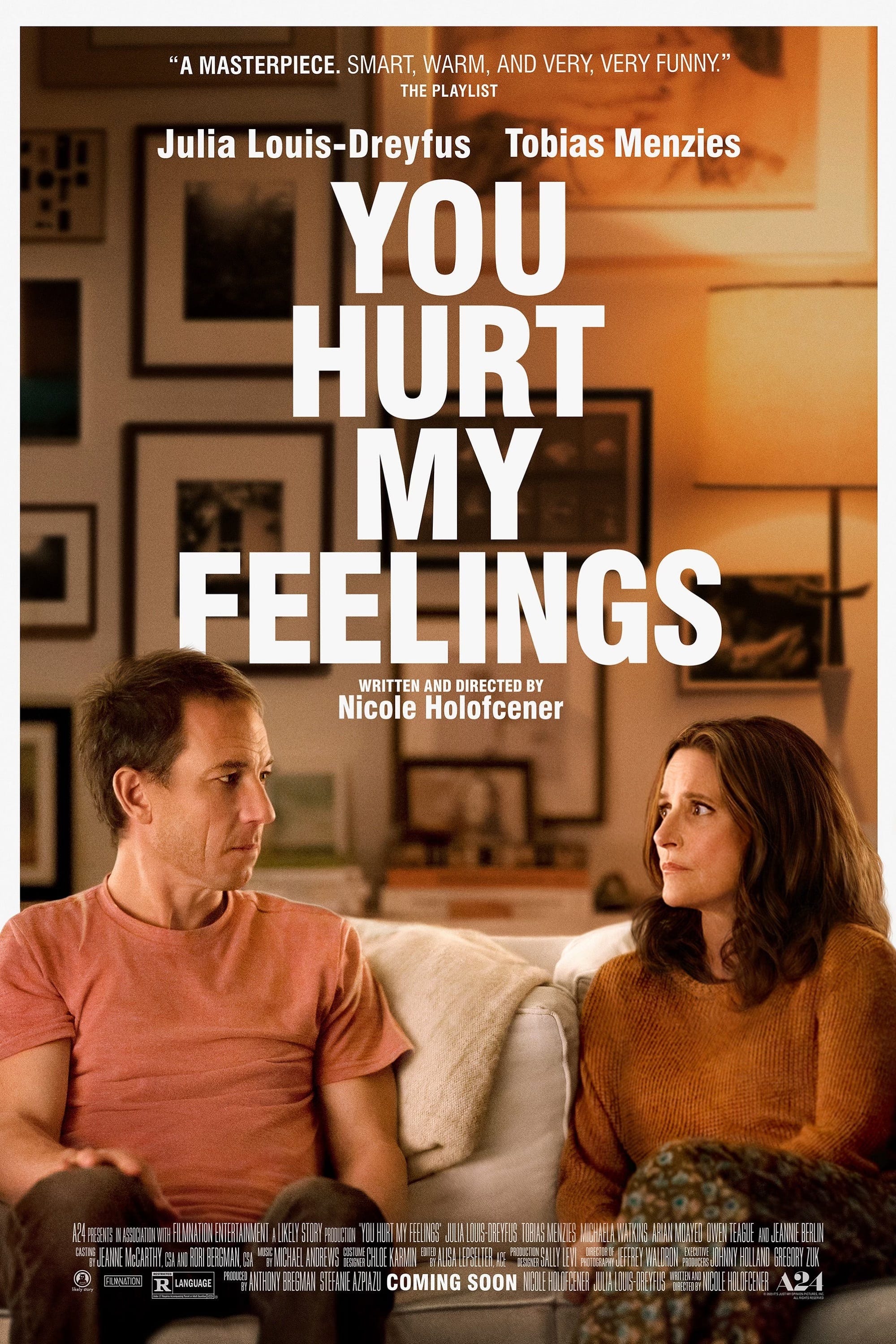
There’s a moment in You Hurt My Feelings that’s been living rent-free in my head for weeks. Julia Louis-Dreyfus2 and Tobias Menzies are in the middle of an argument. It’s not an explosive one, but the kind you only have with someone who’s been in your life long enough to know exactly where your soft spots are.
He finally says, frustrated, “Who cares what I think?”
And she fires right back, “I care.”
That’s it. That’s the movie. And honestly, it’s also most of our relationships summed up in one small, but significant exchange.
We spend so much of our lives pretending we’re self-contained, immune to other people’s judgments, that we create “for ourselves” without looking for validation. But the truth is simpler and a lot more fragile: we care. We care deeply and intensely and immensely. Especially when the opinion belongs to someone we love and rely on and have let inside all the way into our inner circle where all of our fragility lives and our vulnerability thrives. Their belief in us doesn’t just sit on top of our emotional life; it’s part of the foundation.
And that’s why the small lies, those soft, seemingly kind lies, can feel like a knife. Not because they draw blood in the moment, but because they cut somewhere deep. They cut to the place where trust and self-worth are woven together, indistinguishable.
You Hurt My Feelings is, at its core, a movie all about these little lie.3 The ones we offer not out of malice but out of affection. The ones meant to encourage, soften, protect. The ones we tell ourselves don’t matter because they’re “small.” The ones that, when exposed, feel like deep betrayals to whom they’re told.
It’s a film about the uneasy space between useful honesty and necessary deception and how impossible it is to know which one a moment calls for until we’re already in the wreckage.
The Stakes Are Never Small When What’s at Risk Is Identity
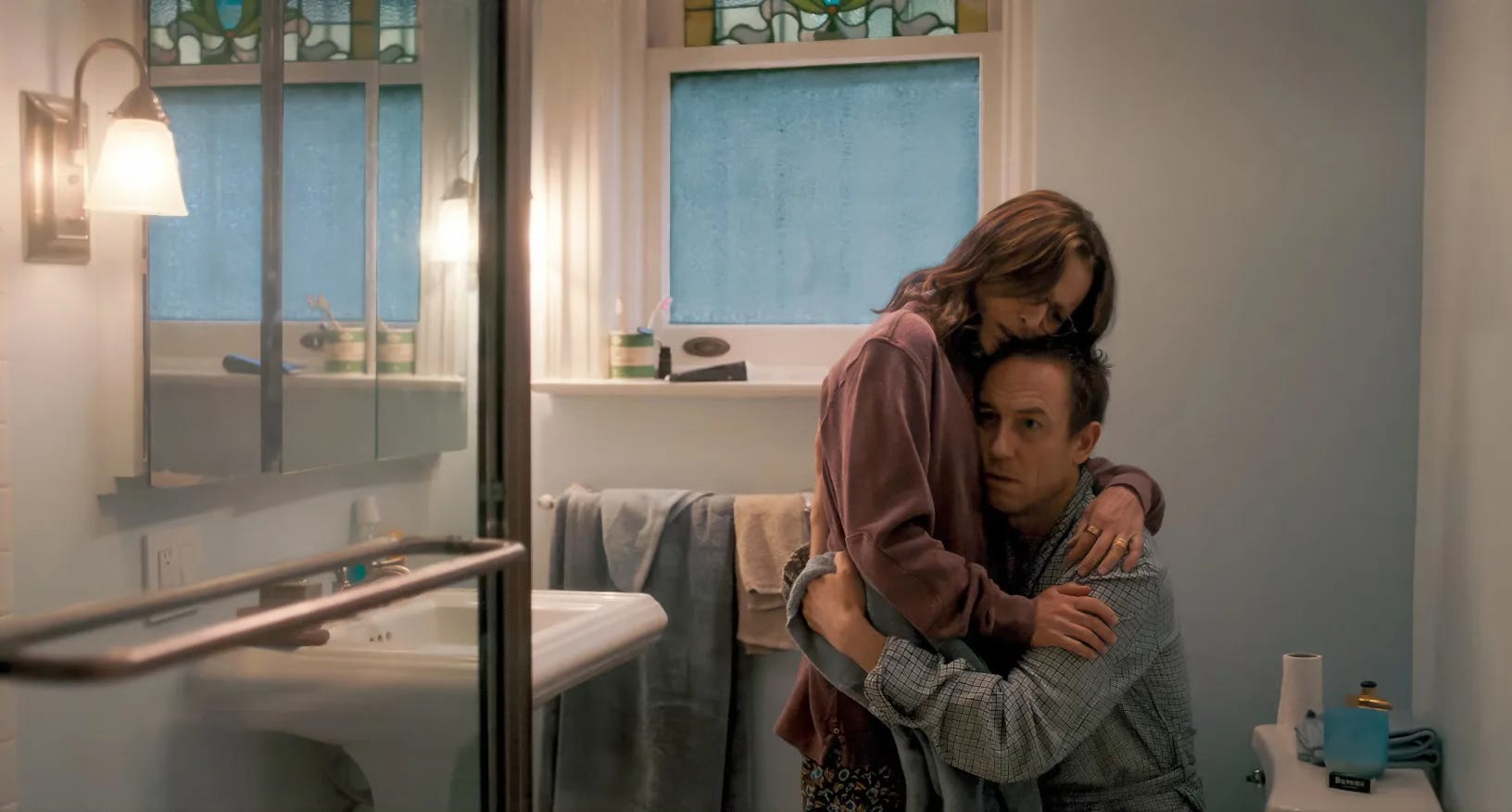
Beth (Louis-Dreyfus) is a writer, which can be described as permanently walking around with your insides outside of your body. Creative work is an emotional striptease. You’re showing people your perspective, your insecurities, your judgment, your talent (or lack of it), and hoping people don’t flinch.
Her husband Don (Menzies) has been cheering her on for years. Encouraging every draft. Offering unconditional enthusiasm. Telling her she’s great. Not because he’s a sycophant, but because he loves her. And because he knows how vulnerable she feels.
So when Beth overhears him telling someone that he doesn’t actually like her new book, it doesn’t just hurt; it hits like a bomb. Holofcener doesn’t give us a dramatic score or a slow zoom—just Louis-Dreyfus’s face as the words land, the quiet devastation of hearing the truth about a lie.
This is where the movie is painfully honest: Beth isn’t devastated because her husband doesn’t like her writing. She’s devastated because she took all those “I love it”s as proof that he saw her, believed in her, and thought she was capable of the thing she’s devoted her life to. She didn’t need him to be her editor. She needed him to be her witness, to tell the truth as he saw it.
And in that moment, the witness stand stood empty.
When Don lied, he wasn’t trying to be deceitful. He was trying to be kind. But kindness without truth eventually feels like mockery and deception. Encouragement without honesty eventually collapses under its own weight.
That’s the soft knife: it doesn’t slice because it’s sharp; it slices because it’s unexpected.
Why We Tell the Soft Lies
Most people don’t lie because they want to deceive the people they love. They lie because they want to protect them.
You don’t tell your partner “Yes, you look fat,” or your friend their business idea is a dog, or your kid their hand turkey looks nothing like a turkey4—because the point isn’t accuracy. The point is affirmation.
These aren’t malicious lies. They’re emotional triage.
When Don lies to Beth, it’s out of fear: fear that honesty will hurt her, fear that he’ll be the reason she stops writing, fear that he’ll become the villain in the story she’s been fighting to tell. He tells himself that he’s supporting her, that the white lie is a cushion she needs to keep going.
And here’s the truth: he’s not wrong. Encouragement does keep us going.
It just has an expiration date.
The problem with soft lies is that they don’t stay soft. Over time, they create a subtle distortion: the person you’re trying to protect is no longer standing on ground you’ve reinforced. Over time, they balance uneasily on something you’ve inflated.5
And eventually, there’s a tiny pinprick and the air begins to seep out.
When Beth learns that Don hasn’t been honest, she doesn’t feel embarrassed. She feels unmoored, completely disconnected. She feels like her creative identity, which already feels shaky, isn’t made of concrete; it’s made of sand.
That’s the betrayal.
We often think that big lies break relationships. And they do. But it can be the little ones, the ones offered with good intentions that create fractures no one sees until they spread like ripples from a pebble in a pond.
Undisclosed Truths
There’s a particularly sharp discomfort that arrives when you realize someone was encouraging you just to protect your feelings. It makes every moment of praise retroactively feel performative, even the genuine ones.
We all get the impulse also, because we understand it and we do it too. But it’s the kind of thing that’s easy to be empathetic about when you’re doing it or someone does it to someone else, but really difficult to understand when it’s happening to you.
Beth doesn’t know which compliments were real. Which reactions were authentic. Which moments were encouragement and which were pity. She starts replaying everything, trying to separate the authentic from the artificial.
This is what soft lies actually do: they shake your trust in yourself, not your trust in the other person.
If Don thought the book wasn’t good, does that mean it isn’t good? Has she been delusional? Has she been working for two years on something no one believes in but her? Was she the only one who thought she had potential?6
The reality is that these questions aren’t about writing. They’re about identity.
And this is where the film transcends its neat indie premise: it tells the truth about how much of our self-worth is wrapped in the belief that the people closest to us think we’re capable of doing something meaningful with our lives.
That scene called out at the beginning of this essay—the argument and the reveal—is stunning because it’s the opposite of dramatic. There’s no thrown vase smashed against the wall. No slammed phone receiver or door. It’s just two people who love each other trying to make sense of the fact that even love has blind spots.
Don’s “Who cares what I think?” isn’t defensive. It reflects a deep panic. It’s the moment he realizes the stakes of what seemed like a harmless lie.
Beth’s “I care” isn’t just a retort. It’s a confession. What she’s really saying is: “I’ve built a lot of my life on the belief that you believe in me and now I don’t know if I can believe in you or myself.”
It’s the most honest moment in the whole movie, which is fitting because it comes right after Beth comes out and says she overheard what she considers to be the most painful deception.
The Line Between Encouragement and Honesty Is Blurry... And It Changes Constantly
Here’s the uncomfortable truth the movie lands on: neither radical honesty nor constant encouragement works in a long-term relationship. Both can be blunt instruments. Both can destroy more than they protect.
Total honesty is often cruelty wearing a merit badge. Total encouragement is often dishonesty wearing a hug.
Healthy relationships require a constant recalibration: When does someone need belief, and when do they need truth? When does encouragement become fuel, and when does it become insult? When does honesty help, and when does it harm?
These aren’t small questions. And they don’t have consistent answers: they shift with mood, circumstance, insecurity, ambition, fear, past failures, and future hopes.
The film understands that the line between a loving lie and a harmful deception is razor-thin... and always moving.
The actual beauty of the film is that it doesn’t resolve with a grand apology or a dramatic gesture7. Instead, Beth and Don do what real couples do: they renegotiate. They figure out how to be honest without being brutal. How to encourage without being patronizing. How to be partners without being exclusively either critics or cheerleaders.
They find the middle path, something like mutual responsibility for each other’s emotional lives and not perfect truth or perfect support.
The real lesson of the film is that love is not about always telling the truth or always cushioning the blow. Love is about learning when each one matters.8
And sometimes, love is about admitting: “I may not always get it right, but I’m trying.”
The Small Lies Will Always Be There. The Work Is Knowing Why We Tell Them
We will continue to tell soft lies. We will continue to pad the truth. We will continue to encourage when we should critique and critique when we should encourage. Because we’re human. Because the people we love matter to us. Because their hope matters to us. Their confidence matters to us. Their happiness matters to us.
But the soft knife cuts deepest when we stop examining our intentions. A small lie can be a lot of things:
A small lie can be compassion.
A small lie can be cowardice.
A small lie can be support.
A small lie can be betrayal.
Often, it’s all four at once.
And maybe the point isn’t to eliminate the lies. Maybe it’s to understand that the closer someone is to us, the more carefully we have to wield them.
Because the people we love will always care what we think. And we will always care that they care.
That’s the price of being seen and known.
And, when handled with honesty and tenderness, it’s also the reward.
Where to Watch: You Hurt My Feelings is currently streaming on HBOMax and available for rent or purchase across VOD streamers.
Feel free to share this piece of art with millions
Of the core Seinfeld 4, JLD was the only one not in the pilot episode and has had, by far, the best, most versatile career of all of them. Also, her husband is very tall.
You Hurt My Feelings is an A24 film and man, those guys just don’t miss very often, do they?
A hand turkey is still the best way to let everyone know that Thanksgiving is your favorite holiday
This may be the most inflammatory thing that I say today, but I hope you all know that most food expiration dates are bullshit
Let’s be honest with ourselves though: this is the writing process whether someone is lying to you about whether your book is good or not
If we’re looking at dramatic gestures in movies, I’d like someone’s comments on what’s better than Lloyd Dobler with a boombox outside Diane Court’s window
And of course, love means never having to say you’re sorry
Incredible piece. The idea that soft lies create a "subtle distortion" where someone stands on inflated ground instead of reinforced foundation really gets at why those well-intentioned deceptions can be so devastating. What feels like protection in the moment actually becomes teh groundwork for deeper identity doubt, since theperson dunno anymore which parts of their self-concept were earned versus cushioned.