



METROPOLITAN OPERA, Kwamé Ryan, conductor. The Gershwins’ Porgy and Bess. Featuring Denyce Graves in her final performance as Maria. Metropolitan Opera House, Lincoln Center. January 24, 2026.
NEW YORK PHILHARMONIC, Manfred Honeck, conductor; María Dueñas, violin (New York Philharmonic debut). Beethoven’s Violin Concerto in D major, Op. 61; R. Strauss’s Elektra Symphonic Rhapsody (arr. Honeck/Ille). David Geffen Hall, Lincoln Center. February 1, 2026.
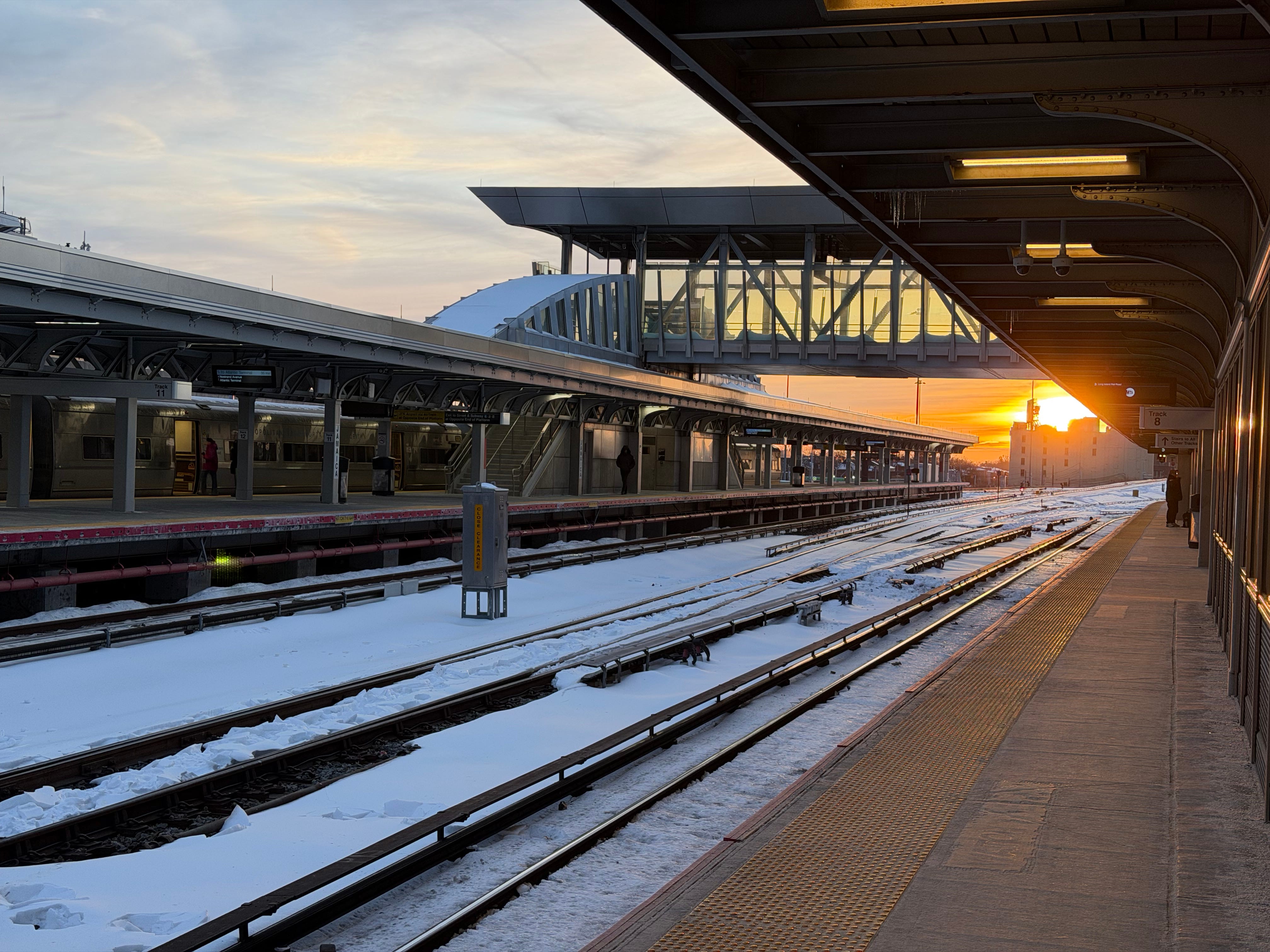
My trips to Lincoln Center in the Winter of ‘26 are necessarily frozen. The LIRR runs past the still snow covered houses and then apartment buildings that line the 12 mile trip from the South Shore into Penn Station. The frigid weather is keeping most people indoors, and had I not, in a fit of “New Romantic” pique become a subscriber to the Metropolitan Opera and NY Philharmonic this season - I would be one of them.
And then where would I be?
Stuck inside, cocooned with the rest of the world. Scrolling past the horrible imagery and news from my country, or people and places I care about around the world. But we all know that scroll is infinite and endlessly exhausting.
This is a world in desperate need of sublime joy.
That joy be found! Do not believe the philistines!
It can be found in the final performance of a Metropolitan Opera legend like Denyce Graves in the role of Maria in the Gershwin’s “Porgy and Bess”. Or the debut performances of a world class violinist like María Dueñas performing Beethoven’s Violin Concerto with the NY Philharmonic.
Lincoln Center is one of New York’s many gateways into a more elevated world. And like all temples, it demands more of us than “the real world”. It demands our concentration. It demands our respect. And it asks for our love. Is that any different than walking into Madison Square Garden? Or CitiField?1
Twenty-three-year-old María Dueñas commands love, concentration, and respect. Her performance of Beethoven’s Violin Concerto was uplifting and vital. Her playing toed the line between technical precision and fiery emotion. A controlled chaos that reminded me of Geese’s live performance at Brooklyn Paramount last fall. Both Dueñas and Geese appear to be dominated by emotion, but when you look closely you can see the purity of intent and technical brilliance.
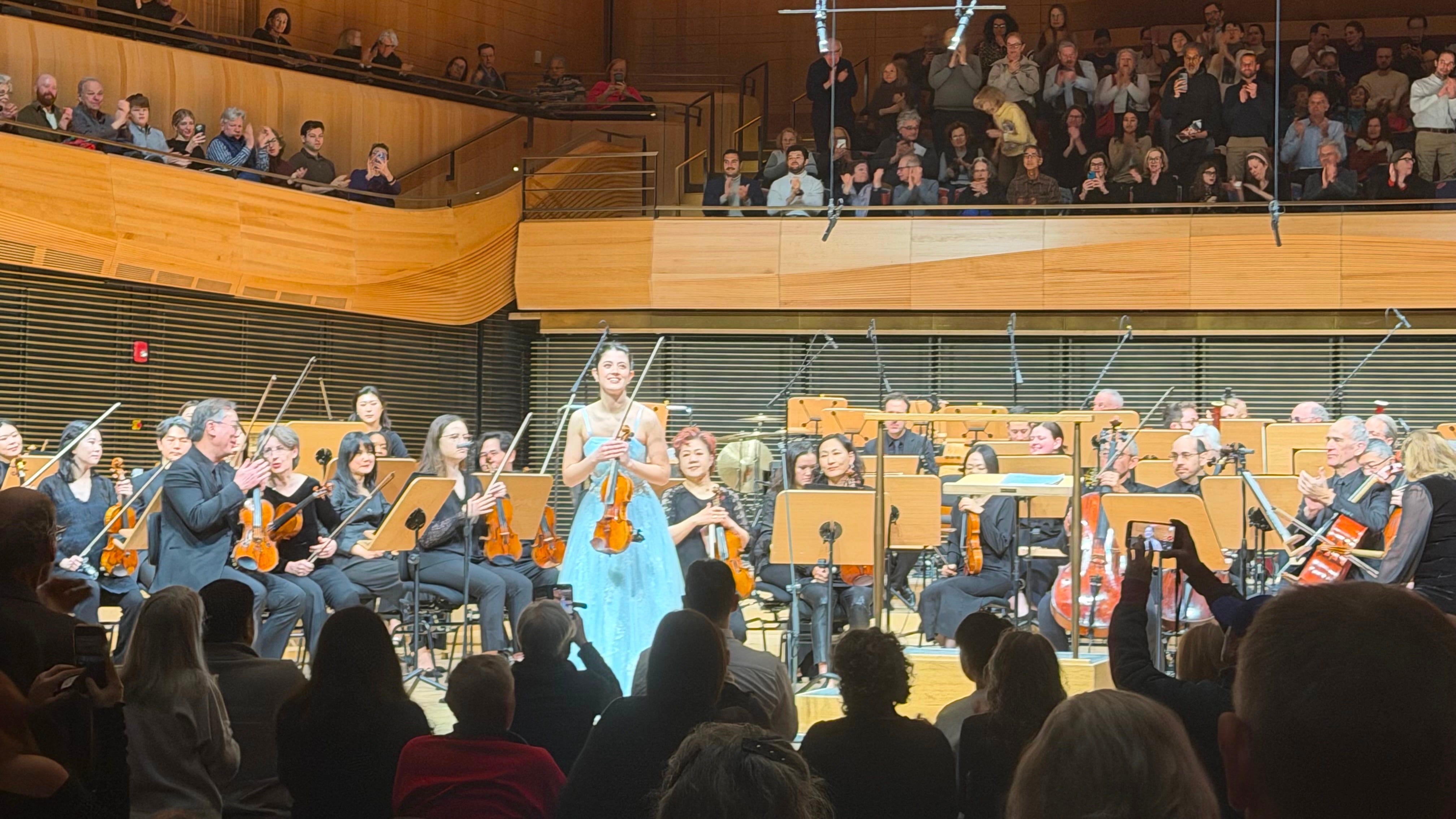
Is it any wonder that these artists, raised in a post-9/11 era, in the shadow of the Great Recession, Covid, and populism, could find beauty in chaos? Or try to resolve that chaos with the classic form of rock music or one of Beethoven’s masterworks? They are the children of chaos. It is their language. And they are much better equipped to interpret this world than I am.
Dueñas performed the cadenzas she composed herself for her Deutsche Grammophon debut album Beethoven and Beyond— recorded live at Vienna’s Musikverein with the same conductor standing beside her at Geffen Hall, Manfred Honeck. She is not merely interpreting Beethoven. She is in conversation with him.
A twenty-three-year-old writing her own cadenzas for one of the most demanding concertos in the violin repertoire is already a statement. Playing them on the stage of her New York Philharmonic debut, reunited with the conductor who believed in her enough to record them, is something else entirely.
By the middle of the first movement, time became unstuck.
There is a scene in Ryan Coogler’s Sinners where the music in that juke joint builds until the universe cracks open — where the Blues become so true and so powerful that the boundaries between past and present and future dissolve, and you can see the whole history of a people’s joy and suffering pouring through one room.
There is no other way to explain what happened last Sunday in Geffen Hall. This universal and eternal music of Beethoven, written two centuries ago, was being driven by unknown powers into this young woman’s hands. It was divine. It was the opposite of the frozen world.
There is such power in music!
The Larghetto was a prayer. Dueñas led it the way a cantor leads a congregation — not performing for them but drawing them into something larger than any individual in the room. The orchestra followed. The audience followed. It was tender and unhurried, with the patience that only absolute confidence permits.
There is a quality in certain young performers where you sense they have been carrying a piece of music inside them for years, waiting for a room large enough to set it down. Geffen Hall was that room. Honeck and the Philharmonic were locked in with her completely.
And when the Rondo: Allegro arrived, she did not release the tension so much as transform it — channeling everything inward before letting it cascade outward in waves that felt, in the moment, like the most natural thing in the world. The way snow melts when the season finally decides to turn.
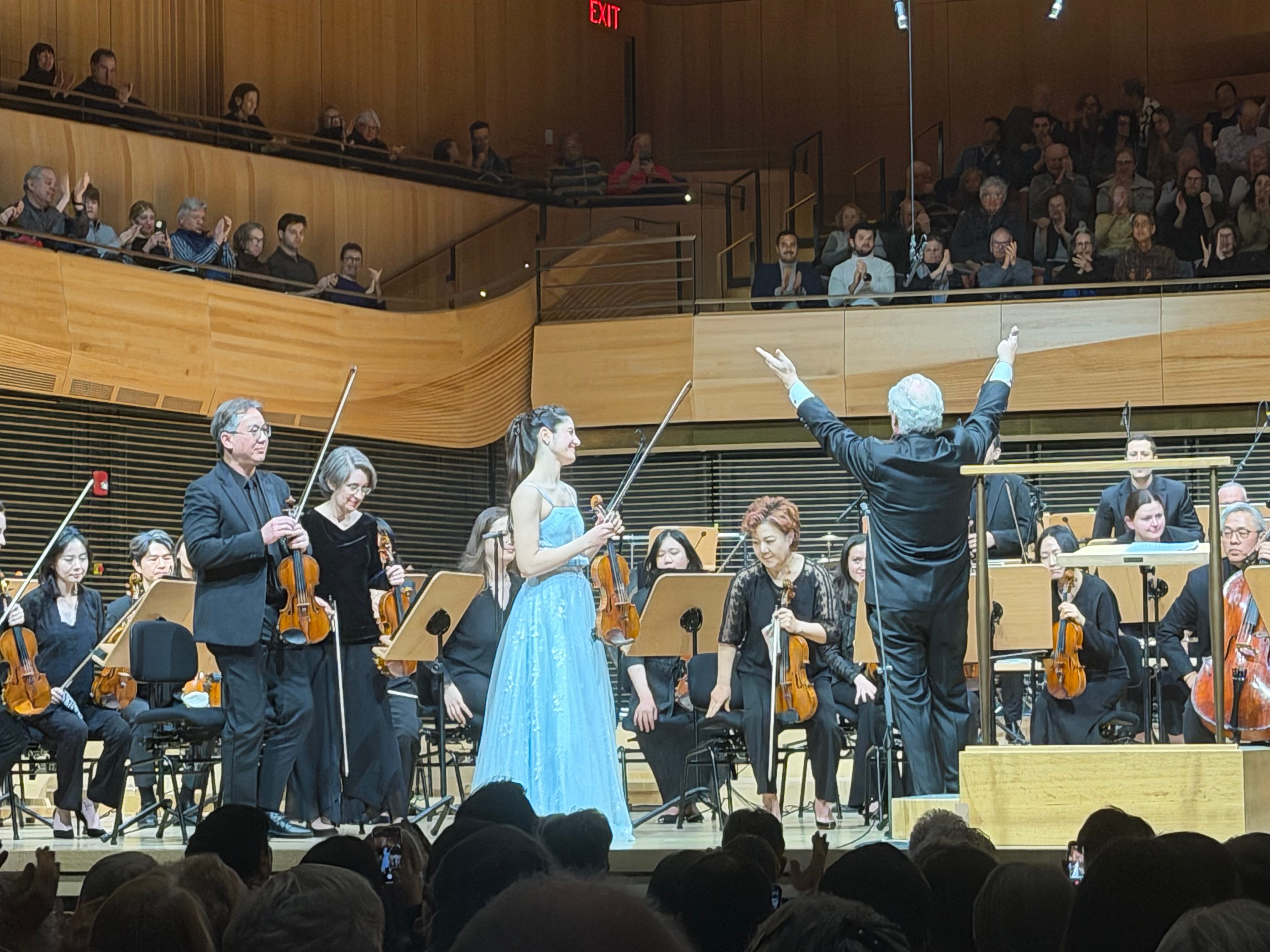
Three standing ovations. Dueñas returned for an encore — Halvorsen’s “Song of Veslemøy” from the Mosaique Suite — and played it with the same sweet, sharp, passionate intensity she had brought to Beethoven. As if she had more to give and could not bear to leave us yet. As if the room, and perhaps the world needed her and this music.
I will never forget it.
After intermission, Honeck turned to Strauss.
His own Elektra Symphonic Rhapsody — an orchestral distillation of the opera’s psychosexual fury, arranged with Thomas Ille — is a statement piece by a conductor who understands that Strauss’s music contains its own theater. You do not need the staging. The music is the drama.
I have felt Strauss’s violence before. At the Met last May, Salome was the most intense live theater experience of my life — severed heads, blood-drenched arias, fifty-foot ghosts projected above the stage. It overwhelmed the senses. It was supposed to.
But hearing Elektra stripped of spectacle, rendered as pure orchestral architecture, revealed something I had not understood before. Without the bodies on stage, without the visual horror, Strauss’s music itself carries the full weight of human degradation and human grandeur. The beauty is not separate from the terror. They are the same material, shaped differently.
Strauss knew this. Dueñas, playing Beethoven an hour earlier, knew it too — that controlled chaos, fury resolved into classical form.
These children of chaotic times would easily recognize each other across centuries.
The LIRR home was dark and quiet. Snow still covering everything. The particular silence of a suburban platform in winter — the tracks silver under the station lights, the cold absolute.
I scrolled on my phone.
The Kennedy Center — the nation’s living memorial to a slain president, home to the National Symphony Orchestra, the Washington National Opera, hundreds of performances a year — would close on July 4th for a “complete rebuilding.”
All after the Washington National Opera had severed ties with the building entirely.
I read this somewhere between Penn Station and the South Shore, still carrying Beethoven’s Larghetto inside me like a held breath. The regular world seems open. The LIRR still run on schedule (mostly). But something fundamental has shifted, and those who pay attention can feel it — in the names being scraped off buildings and replaced with others, in the way a phone screen glows with bad news after three hours of transcendence.
A week before Dueñas, I was at the Met for the Gershwins’ Porgy and Bess.
The last time I saw this opera was January 2020. Orchestra Row T. It was my first time inside the Metropolitan Opera House. I barely knew what I was watching.
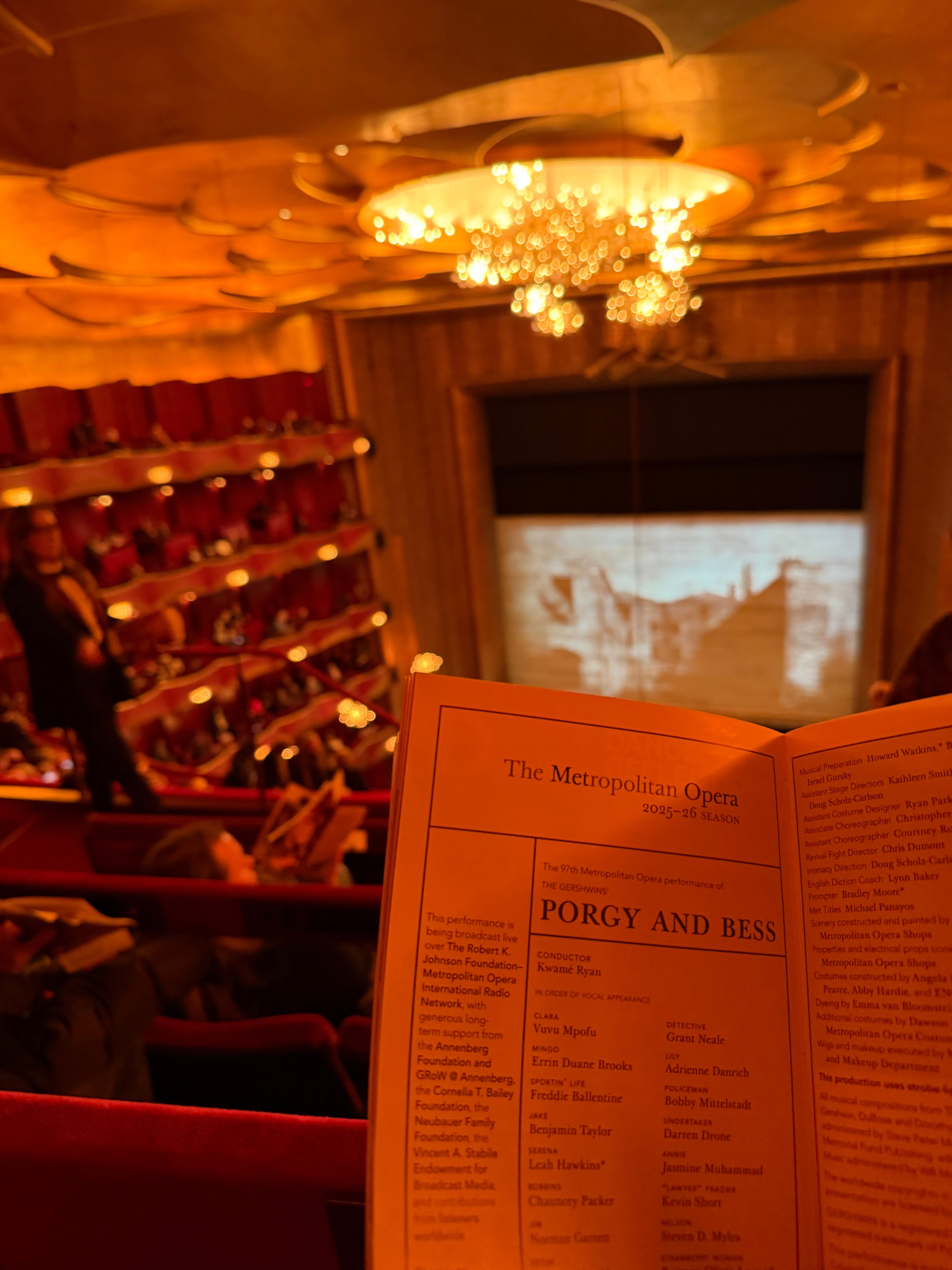
I returned to Catfish Row a different person.
My nephew came with me. This was his second opera — his first was Don Giovanni back in November, where over Bloody Marys at PJ Clarke’s we’d talked about his generation’s anxiety, the algorithmic isolation, the general sense of decline that hangs over everything like weather.
He’d been riveted by Giovanni’s story — Mozart’s propulsive score driving that rich, rapacious anti-hero toward damnation. He preferred Giovanni’s narrative to Porgy’s. But the Gershwins’ music stopped him. You could see it happen. “Summertime.” “Bess, You Is My Woman Now.” “It Ain’t Necessarily So.”
My nephew’s world is the same world as Geese’s and Dueñas’s — his adult years have been defined by chaos and slop and a pervasive sense of decline. His generation’s college years were devoured by Covid. Their young adulthood arrived into populism and algorithmic loneliness.
Who needs the flickering lights of sublimity more than them? Who needs to sit in a room where a hundred performers build a community on a stage and a thousand strangers share in it?
I’ve been reading a lot of Joseph Roth lately. His portraits of a society in decadent collapse, of normal people carrying on their rituals while the ground shifts underneath them, are my way of dealing with the present by looking to the past.
His novel The Radetzky March has been my constant companion on the LIRR into the city. The main character - Carl Joseph, a young man who sees the decadence and decline of his world, and my nephew would find much to discuss.
Kwamé Ryan conducted Porgy and Bess with a warmth that let the ensemble breathe. The production — that magnificent two-story Catfish Row set, bodies filling every balcony, every doorway, every staircase — felt not like a staged community but a living one. And at its center, Denyce Graves sang Maria for the final time.
Graves sang with the authority of someone who has nothing left to prove and everything left to give. Her Maria is the moral center of Porgy and Bess — the one who holds the community together when violence and temptation threaten to tear it apart. That this was her final performance in the role, in this particular winter, in this particular America, gave every note a weight the Gershwins could not have anticipated.
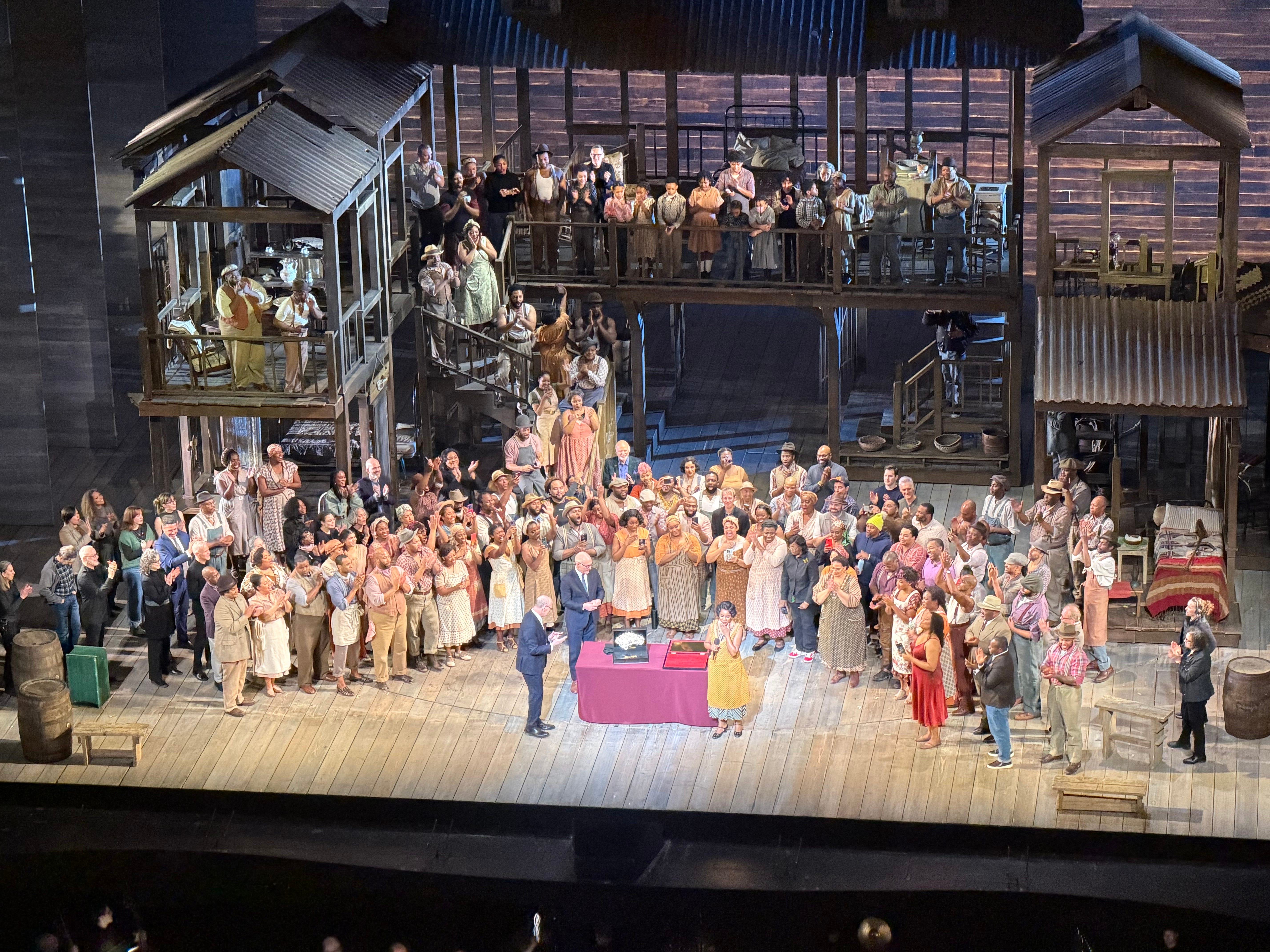
When the full company gathered for the curtain call — spilling across every level of that two-story set, a hundred performers packed into every corner of Catfish Row — it looked like the entire world had shown up to say goodbye. Or to testify. The image stays with me: all of them together, the chorus and the principals, the community intact on stage even as communities are being dismantled elsewhere.
I turned on my phone when I left the Met that afternoon.
Alex Pretti had been shot.
A thirty-seven-year-old ICU nurse at a VA hospital in Minneapolis, killed by federal agents while filming them on his phone. He had stepped between an agent and a woman who had been pushed to the ground. For this, he was pepper-sprayed, tackled, and shot multiple times while pinned on an icy street. Ten shots in less than five seconds.
I thought of Dr. Demant — the gentle, near-sighted regimental doctor who befriends Carl Joseph in The Radetzky March. A healer by nature. He is forced into a duel over his wife’s honor. He cannot even see clearly enough to aim. He goes anyway, because something in him will not allow the insult to stand. His senseless death is a turning point towards something darker.
Sublimity and degradation are nothing new.
I do not pretend that attending the New York Philharmonic is an act of resistance. I do not believe that opera or art will save anyone. These are, in the end, Saturday afternoons in beautiful rooms, with music that is at least a century old.
But In a winter when the Kennedy Center is being gutted, when the National Symphony Orchestra does not know where it will perform next season, in this frozen and dark winter, a twenty-three-year-old violinist from Spain stood on the stage of David Geffen Hall and played Beethoven’s Violin Concerto as though the entire tradition depended on her. And it was not defiance. It was not protest. It was simply what she does.
She plays, and the world briefly becomes what it should be.
In this same winter, a legendary mezzo-soprano sang her final Maria on the stage of the Metropolitan Opera, and a hundred performers filled every level of Catfish Row, and a thousand strangers held their breath together.
The scroll brings us infinite images of unbearable degradation. And they are as real as the cold biting air.
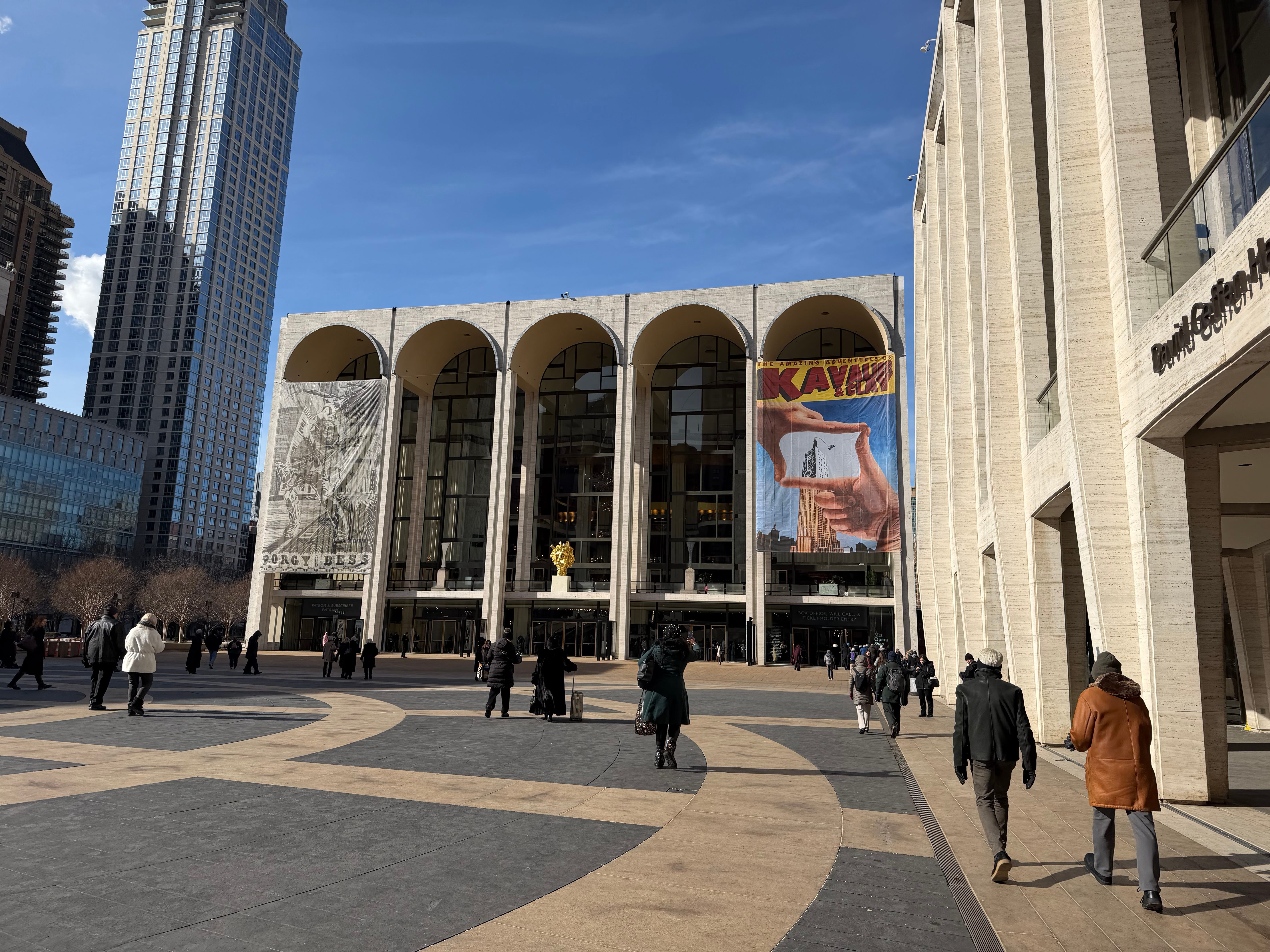
But the LIRR runs both ways. These performances are not a refuge from a frozen world — they are a path through it. Do we care enough to save our institutions in our city? Or must we suffer the fate of our Capital?
Or will we feel the warmth of sublimity on our faces, as is our historic privilege as New Yorkers and Americans.
Film Forum, Radio City Music Hall, Yankee Stadium, Bowery Ballroom, Forest Hills Stadium, Metrograph, Carnegie Hall are also places with metaphysical properties. If you’ve been there you know what I’m talking about.