



I’ve never seen The Metropolitan Opera House truly sold out. But on this first Saturday of Spring, lines stretch to Broadway, and every seat from the parterre boxes to the upper reaches of the Family Circle is completely filled.
We are all here for Richard Wagner’s Tristan und Isolde. A three-act meditation on obsession, love and death.
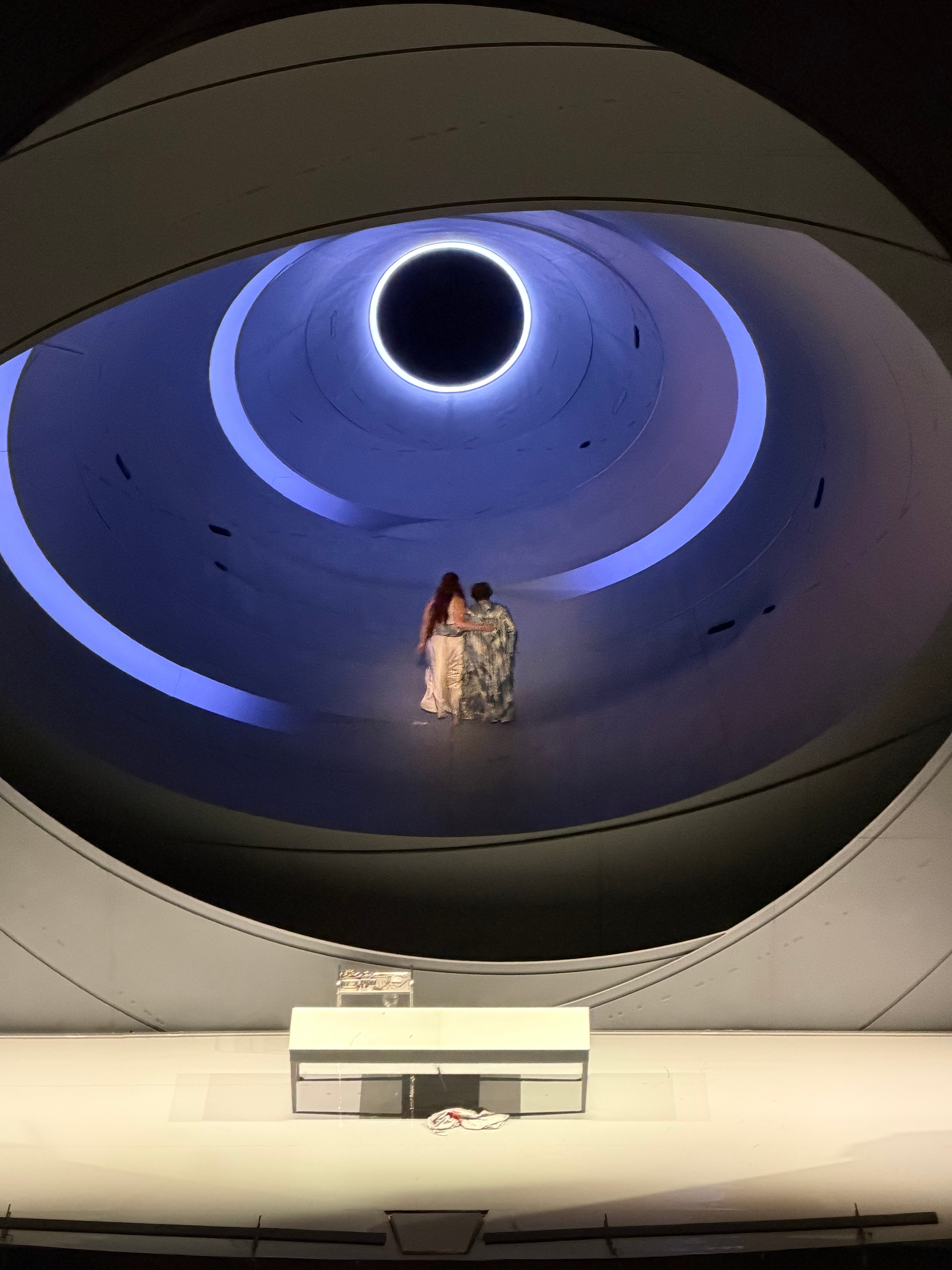
The Room
Five hours. No intermission until you’ve already surrendered an hour and a half of your life to Act I. The woman next to me has smuggled a sandwich in her purse. There are people dressed in hoodies and sparkly ball gowns and blue jeans and tuxedos. Aside from the kids, the line is very similar in composition and conversation to the one my son and I stood in five days later at Citi Field’s Opening Day.
“Can you believe how packed it is?”
“Did you take the train to get here?”
“Back in the 1980s I saw the greatest!”


At Citi Field, much of the crowd is there to see Juan Soto — one of the premier power bats in all of baseball. At the Met, the crowd is here to see Lise Davidsen, a voice so enormous it has its own gravitational field.
I suspect many of the same people drinking prosecco on the Met balcony also queued up next to me at Shake Shack in center field. New York crowds aren’t so siloed in their interests.
I have been coming to the Met Opera House regularly now for a little over a year. I had just finished Jan Swafford’s excellent Beethoven biography, and had to take the opportunity to see Fidelio performed live. The idea of knowing the name of a specific soprano in the cast, let alone a favorite one, would’ve seemed insane.
And yet, I absolutely took note that it was Lise Davidsen singing the role of Leonore. Her voice rang out Ludwig Van’s clarion call to liberty and I sat up straight. By no small measure — I owe my love for opera to that performance.
She is just that good.
After leaving the stage for a year to have children, she is now considered by many (definitely my choice) to be the soprano of her generation. Davidsen wields her voice with near-unprecedented power and control. And for a year I’ve known she would make her return to the stage in Richard Wagner’s Tristan und Isolde.
The Meister
Richard Wagner? The Nazis’ favorite composer? Music mocked and celebrated by Elmer Fudd and Bugs Bunny? The subject of one of the great Annie Hall jokes? I did not know much about Richard Wagner — but I needed to see Lise Davidsen sing live again, and to have some context for this name who was claimed as inspiration for both incredible feats of artistic genius and human avarice.
Richard Wagner is not only uncancellable — what was once called “Wagnerism” is the aesthetic driving our cultural moment, with all its terrifying and wonderful implications.
Yuval Sharon’s production of Tristan und Isolde is one of the more wonderful results of the current moment. There is no question that having a Jewish interpreter of Wagner feels both morally correct and transgressive in a way the Meister himself might appreciate1. It certainly made it easier for me to accept the idea that his work was not as foreign as I had feared.
But it is unquestionably dangerous.
In Sharon’s program notes, “Drowning in the Waves of the Universal Breath,” he quotes T.S. Eliot — “all is always now” — and explains why he took an approach that builds the stage production on two planes. On the lower level, a corporeal world: bodies moving in slow motion, the mundane reality of ships and sails and politics. Above, the metaphysical: a spiral, a vortex, a tunnel of light where both Tristan and Isolde separate and come together.
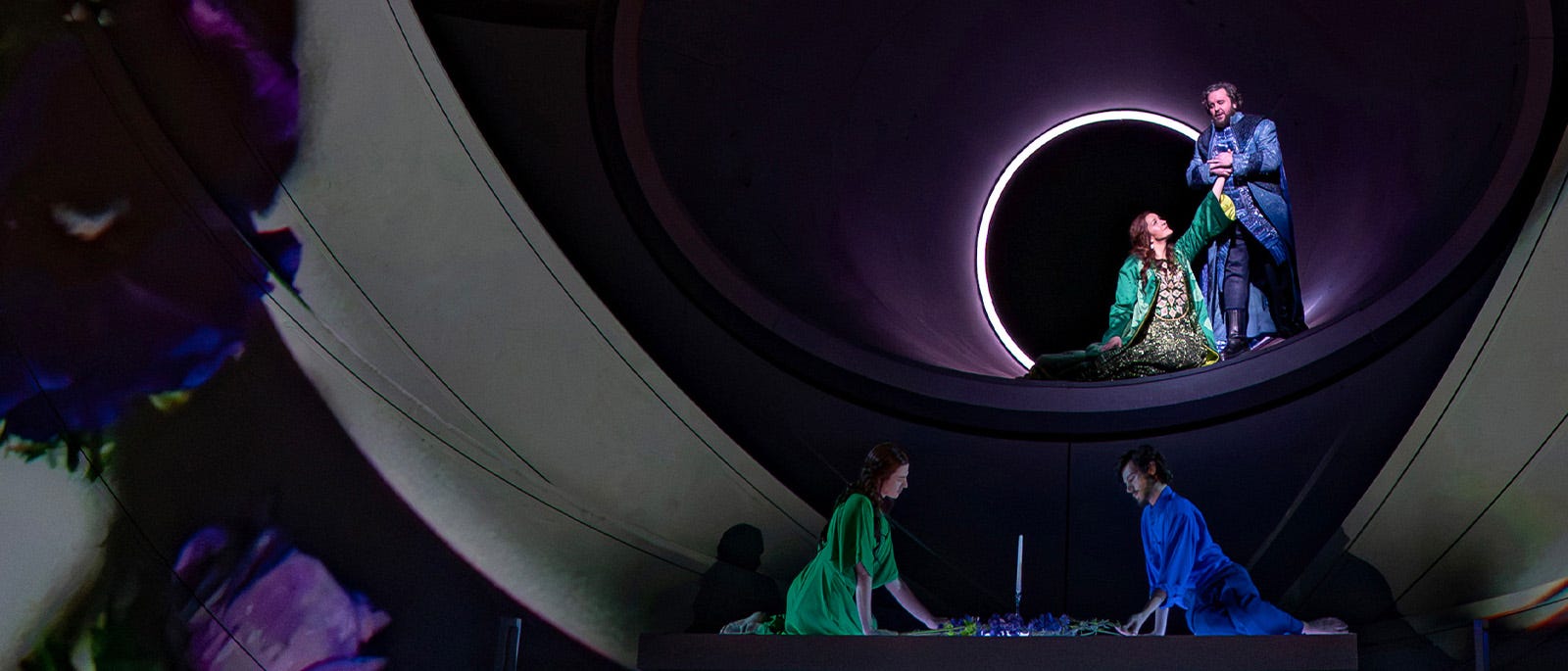
It makes the disintermediation with the “real world” physical. Emotions, desires, fantasies and fears are elevated.
The entire cast is solid — particularly Ryan Speedo Green, who was also fantastic as Porgy earlier this season, and who brings his extraordinary bass-baritone to King Marke. This is a man who can carry Gershwin’s and Wagner’s explorations of betrayal in the same body, in the same season, and bring the pain to life with resonant voice. Michael Spyres sings Tristan with intensity and commitment — although from Row G in the Family Circle, he occasionally felt muddled.
Yannick Nézet-Séguin conducts by highlighting the hits within the score. He wants you to know that he knows what’s considered important in the music and lets you hear it. There’s not a lot of subtlety, or the lyricism of the historic Böhm 1966 recording from Bayreuth.
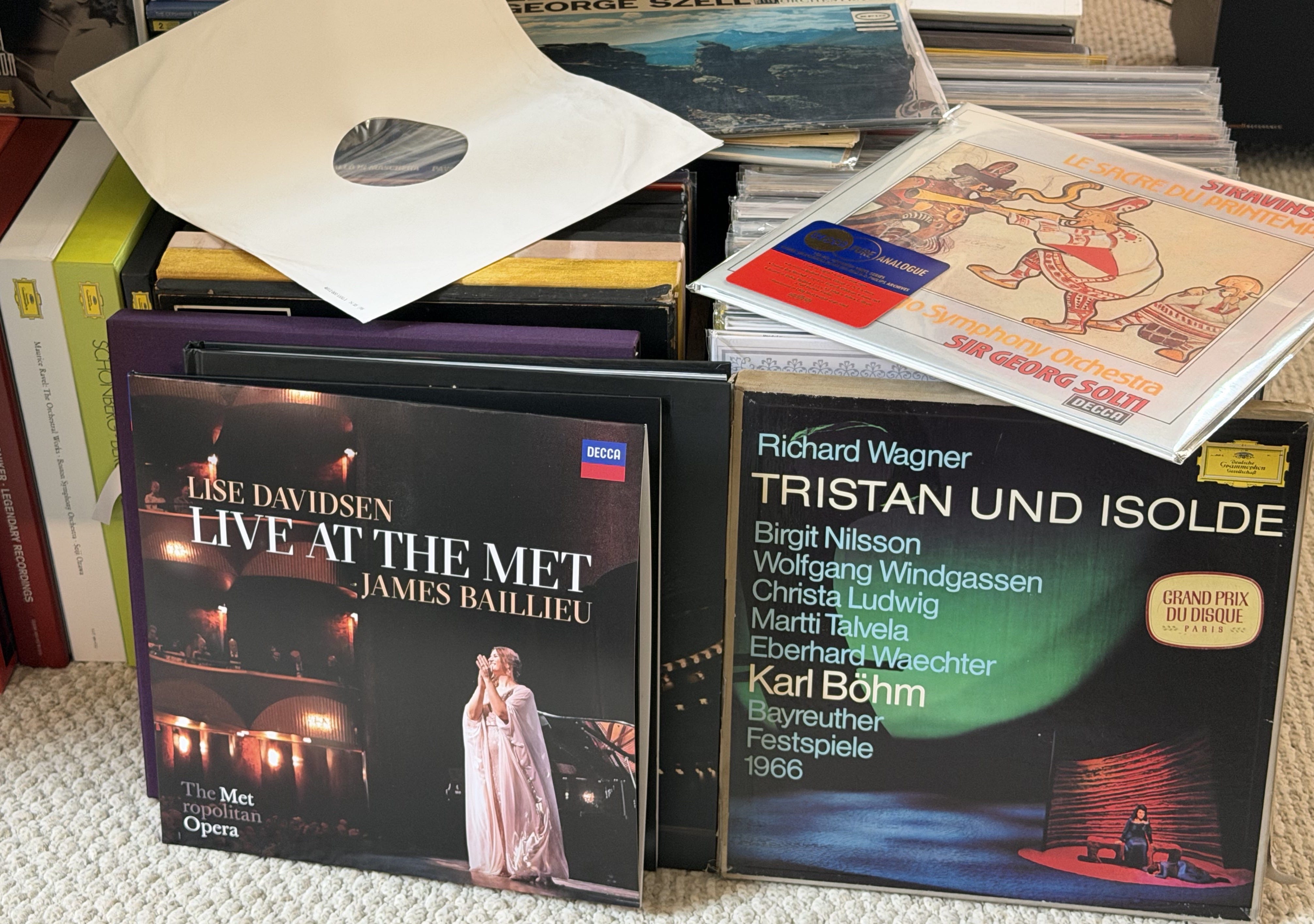
But the sold-out crowd is here for Davidsen. And her Isolde is a historic feat.
The Hymn to Oblivion
Davidsen is a powerful force in voice and body. She plays Isolde as a woman used to being in control and raging at that power being taken. Her infatuation with Tristan melds seamlessly with her hatred for him for taking that power. You can see it written into her body from the first scene, the guilt mixed with the want, the betrayal of Morold — the husband Tristan slew. A betrayal of herself.
This is not romantic love as we sentimentalize it, but the model for the “enemies to lovers” archetype that dominates current romance fiction.
When she and Tristan drink the “love potion” this feeling is unleashed and given full voice.
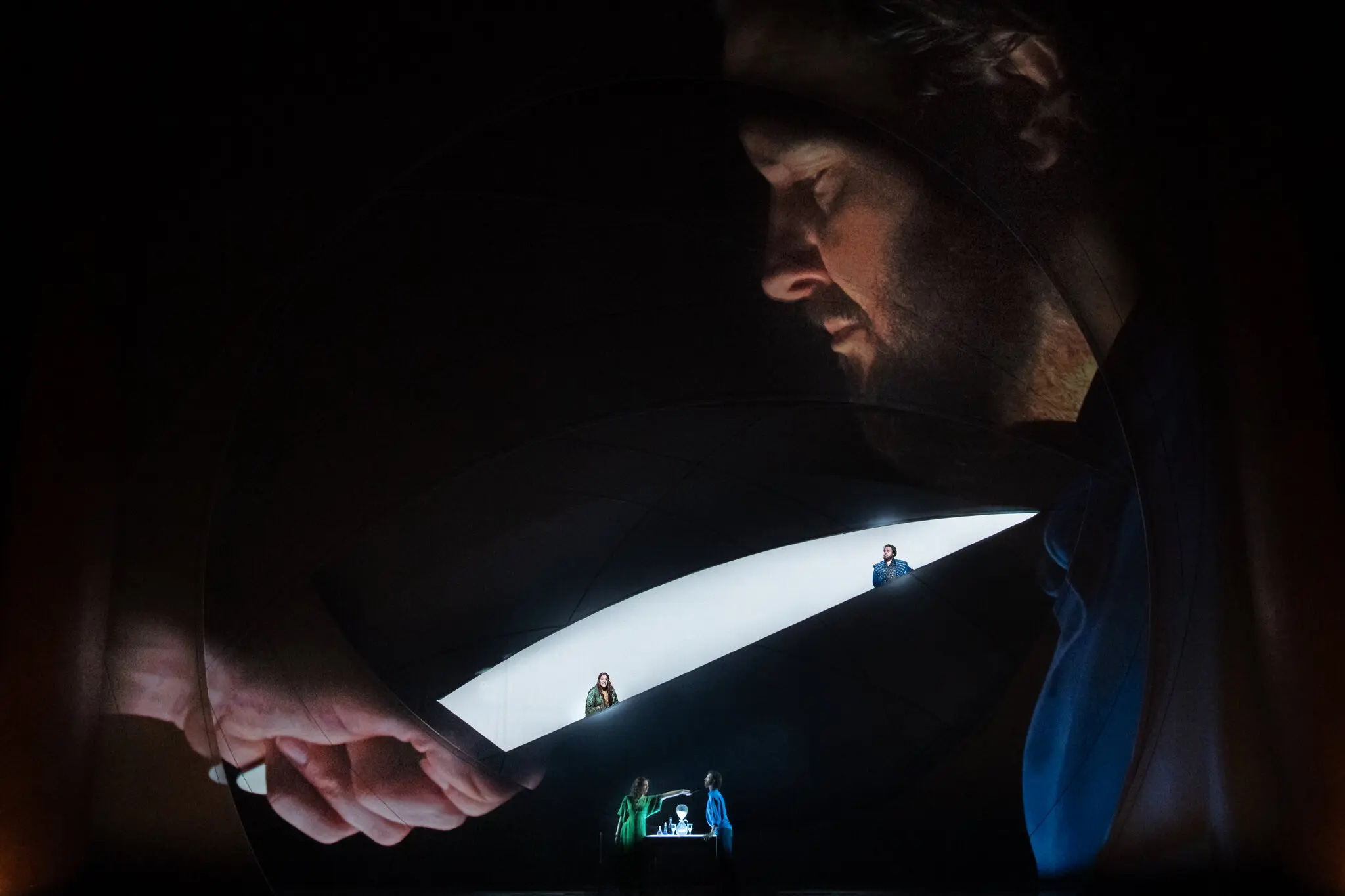
Now the compulsion is something closer to sex, to addiction, to a pull so physical and total that it overrides every rational calculation she might make about consequences. Isolde knows any path she takes leads to annihilation. Her world, the life she believed she would live is over and now she can’t stop herself from giving into the waves of emotion.
You hear it clearly in the Act II duet. Davidsen and Spyres don’t sing at each other — they sing into each other, their voices braiding and pulling apart like two people who can’t decide whether to kiss or fight. When they reach “O sink hernieder, Nacht der Liebe” the orchestra drops to almost nothing, and you can hear the two voices naked in the house — his tenor pressing forward, hers enveloping it, both of them finding a sustained aching. Around me in the Family Circle, nobody is moving. The woman with the sandwich has clearly forgotten it exists.
All of Tristan is what Alex Ross calls “a hymn to oblivion.” in his excellent book “Wagnerism: Art and Politics in the Shadow of Music”. It is a feeling that is very familiar in the world of 2026, and present in every note Davidsen sings.
But the potion reveals and expands what already exists, and aren’t we all a bit like Isolde? So many seek a release from the relentless quantification and optimization and maxxing experience of being alive in 2026 — infatuation leading to oblivion feels like the considered choice.
What we call “doomerism”, or committing to “rot” — the aestheticized decline, the hunger for apocalypse, the seductive conviction that rationalism has exhausted itself and something vast must replace it — all of this would’ve easily been identified as Wagnerism during the early 1900s. Alex Ross calls it a cultural condition — what happens when an entire society loses faith in realism and reaches for myth instead. Wagnerism casts its strongest spell on “the artists of silence — novelists, poets, and painters who envied the collective storms of feeling that he could unleash in sound.”
The Gesamtkunstwerk — the total work of art — was Wagner’s term for what he wanted opera to become, but became what the culture wanted from itself: an experience so complete it could substitute for the yawning gap of meaning in people’s lives. The vegetarians2 and the theosophists and the race theorists and the anarchists — all drinking from the same well, all convinced that what was needed was some new total experience that would dissolve the individual into something larger.
The formation was broad enough to hold Theodor Herzl writing The Jewish State while attending Tannhäuser every night and W.E.B. Du Bois at Bayreuth walking past Wagner’s grave twice a day.3 The same hunger that inspired Herzl was the soundtrack for the Nazis flooding the streets of Europe swinging clubs.
Uncomfortable facts, but history nonetheless.
It is a very human hunger to desire rootedness, and myths that inform identity. We instinctively desire a return to something primal and total — To make things Great again. Art, or nation, or race, or spirit, or love, or death — the cause doesn’t seem to matter as much as the hunger itself.
The Tristan Chord, Everywhere
Like so many other fraught and suicidal moments in history — the strains of the Tristan chord once again rise all around us. The demand for myth has infected our culture and our society.
Look at some of the most resonant pieces of art from the past few years.
Ryan Coogler’s Academy Award-winning Sinners (2025) takes the Wagnerian formation and roots it in the American South, in Black music, and a delta blues juke joint. The vampirism that runs through the film is literal Wagnerism — a mythic and Romantic hunger for sensation that crosses over from ecstasy into the demonic.
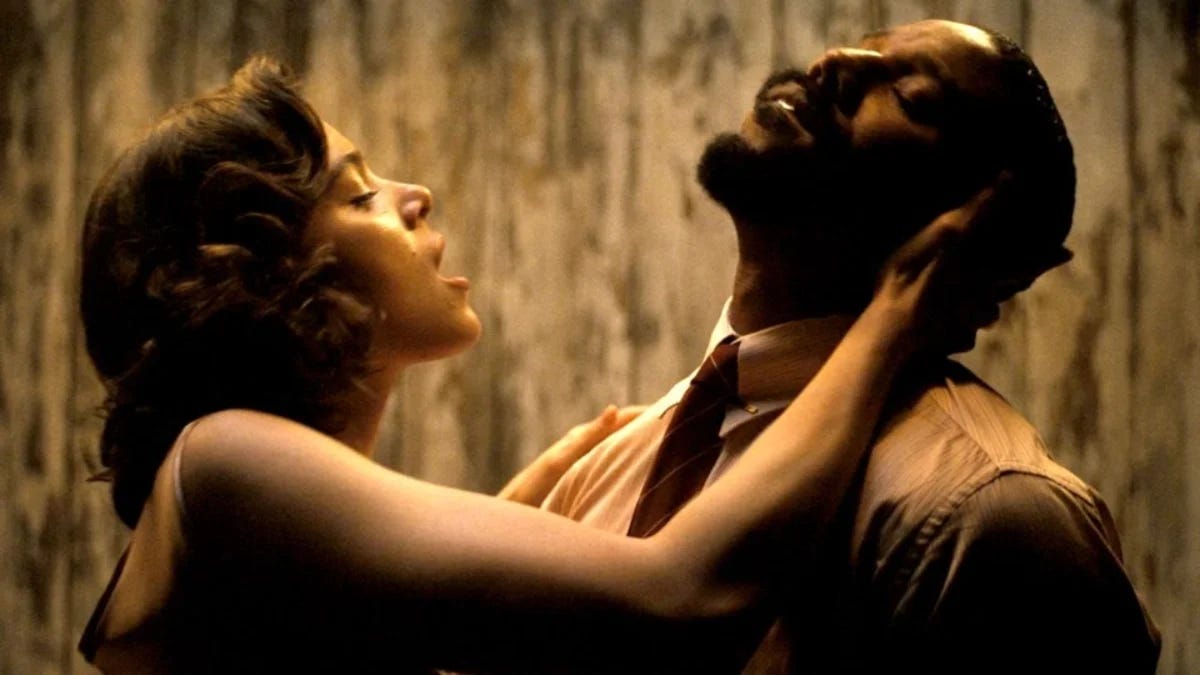
Much as the “love potion” reveals and enhances the doomed instincts of Tristan and Isolde, so does the vampire’s kiss. Coogler builds his gothic fantasy on the premise that music can crack open reality, that the right song played in the right room summons forces that reason cannot contain.
These calls to myth through music are instinctive Wagnerism. 19th-century operagoers would have recognized the film’s refusal to resolve in anything like a traditional victory for good over evil as obviously “Wagnerian.”
Coogler is a graduate of the MCU, after all — a franchise now promising its own Götterdämmerung in “Avengers: Doomsday.” The Thor teaser trailer could literally be lifted from the Ring.
Is it any surprise that a Wagner masterpiece like Tristan und Isolde has broken out of the opera bubble and into mainstream culture? It’s the original story of “Heated Rivals” who become lovers. A “Love Story” that can only end in death4. These fascinations are the mainstream concerns of the 21st century.
As cinema and culture enter its New Romantic era, we should expect to see more explicit and implicit Wagnerism take hold. Especially the Liebestod, or “Love-Death.” It is the highlight of Tristan und Isolde, and of Lise Davidsen’s performance.
Liebestod
After nearly five hours, Lise Davidsen emerges from/into a tunnel of oblivion to sing a tribute to “eternal bliss” as she gazes upon Tristan’s lifeless corporeal form. Rushing across the sea to be by his side, Isolde joins him in oblivion — singing in literally the most beautiful music you feel you’ve ever heard:
Are they clouds of gladdening sweet fragrance?
As they swell and murmur round me,
shall I breathe them, shall I listen?
Shall I sip them, plunge beneath them?
Breathe my last amid their sweet smell?
In the billowy surge,
in the gush of sound
In the World’s Spirit’s, Infinite All
To drown now, sinking, unconscious, void of all thought
Highest Desire!
In this production, Isolde dies in childbirth and sings the Liebestod to both her newborn child and her dead lover.
Rebirth that comes from death. It is a hopeful and moving vision. I really love it in this production, and it never feels tacked on or dishonest. But it can also feel like a Hollywood ending.
Wagner’s original is not nearly as optimistic or life-affirming. Isolde gives herself to the “highest desire” because the annihilation of self is the highest virtue. There is no life. No child. Just the “billowy surge”, the “gush of sound” that is “void of all thought”. Endless waves of emotion. Endless waves of beauty. Never resolving.
Could the Sirens' song that Odysseus lashed himself to the mast to hear sound any different?
I’ve wept before from joy or sadness in the theater or at the movies - but never before from the pure overwhelming force of infinite emotion and infinite sound. It is the treasure in Marcellus Wallace’s case. It is the death of Batman’s parents. It is Rosebud. It’s the portal to the Black Lodge.


If you’re in the room, you can feel reality itself cracking open — as we all drown in “The Infinite All”.
It is a fucking moment.
Once you hear the Tristan chord, you hear it everywhere. It can be heard in the all-consuming fandoms for IP and pop stars. It can be heard in the conspiracy theories that drive our discourse. It is in the notifications on your phone. It is the theme of the gambling and event market app. Drowning in the sinking unconscious. Rotting into decadence.
A politics addicted to the Liebestod, with its never-resolving hunger for something total, something annihilating, something that will dissolve the ordinary world and replace it with meaning or destruction or both at once — is populism’s signature promise.
Highest desire!
During the Liebestod, my mind kept returning to images from Bertrand Bonello’s 2016 film Nocturama. The French director’s interrogation of “Terrorism“ is criminally underseen in the United States, as it is one of the defining political films of the 21st century.
The film uses a non-linear, Reservoir Dogs-like structure to tell the story of a group of young populist terrorists who pull off a major attack on Paris. We are given no context, nor any reason to care about their cause or ideology. We can clearly see they are seized by a feeling so enormous that ordinary life cannot contain it.
Late in the film, one of the terrorists escapes the shopping mall where he and his compatriots are waiting out the night. He bums a cigarette from someone on the street, and the conversation turns to the attacks.
He says: “It had to happen, no? We could all feel it coming. So it had to happen.” No regard for self, or defense for the cause he purports to support — just “sinking” “unconscious, void of all thought”
Liebestod.
On its tenth anniversary, Nocturama feels like prophecy.
Wagnerism as Warning
I’d love to believe Yuval Sharon’s version of the Tristan myth. Wagner’s fascination with reincarnation and rebirth was core to his study of Schopenhauer and Buddhism, so there is no inherent inconsistency. But Wagner wrote what he wrote — and he was picking up on some eternal themes.
When we throw off reason. When reason becomes impossible, or we feel that our freedom and agency have been taken — like Isolde, then Liebestod becomes very attractive. So attractive that we will risk everything. We will call it love. We will sing arias and throw off all of our traditions and rules and morals. We will call it beautiful.
As we move into an era where “optimization” and “maxxing” and “cognitive offloading” and “financialization of everything” seed themselves into daily life, an unconscious desire for Liebestod will grow ever higher. It will show up in beautiful places like Sinners and terrible places like AI psychosis. The need to escape and drown into the sinking unconscious, deeper into our obsessions is a human reaction to our freedoms being taken from us, bit by bit.
Wagnerism is a warning.
And while I love the music and cannot stop thinking about Lise Davidsen’s performance - I cannot help hearing it in places it should not be. I literally cannot stop thinking about it. It is clear that this imperfect, yet undoubtedly sublime and historic production has met its moment.
It is all we can ask of the world’s greatest opera house, in the world’s greatest city.
I cannot wait to return on April 4th.
Ok probably not. But Hermann Levi did conduct the premiere of Parsifal at Bayreuth despite the Meister’s public anti-Semitism. People are very, very weird.
Alternative health always seems to be a part of these movements?
This was one of the more amazing facts in Alex Ross’s essential book “Wagnerism”. I would have little context for this Opera without his scholarship.
Yes I’m absolutely making reference to the TV shows of the moment - who both feature essential characteristics of the Tristan und Isolde mythos