



The 55th edition of New Directors/New Films — co-presented by Film at Lincoln Center and the Museum of Modern Art begins tonight and runs until April 19th.

The festival has been introducing vital new filmmaking voices since 1972, and the best selections have always shared a quality that’s hard to quantify but unmistakable in the theater: you walk out perceiving the world differently than how you walked in.
This year’s festival arrives with 24 features and 10 shorts, including one world premiere, 17 North American premieres, and a lineup that runs from Adrian Chiarella’s chilling Leviticus to Rosanne Pel’s lacerating Donkey Days.
Two films stood out to us more than any others.
Kevin Walker and Jack Auen’s Chronovisor, a 16mm documentary-mystery about a Vatican time machine and Sho Miyake’s Two Seasons, Two Strangers, a Golden Leopard-winning meditation on creative renewal adapted from the manga of Yoshiharu Tsuge.
One film buries you in obsession. The other strips everything away until only the grain of human feeling remains.
Both are making their North American premieres. Both have distribution deals — Grasshopper Film will release Chronovisor theatrically in Fall 2026, and Several Futures opens Two Seasons, Two Strangers at Metrograph on April 24.
But if it’s possible to get tickets, both should be seen at the festival, on the big screen, at MoMA, where the museum itself becomes part of the experience.
Drowning in the Archive
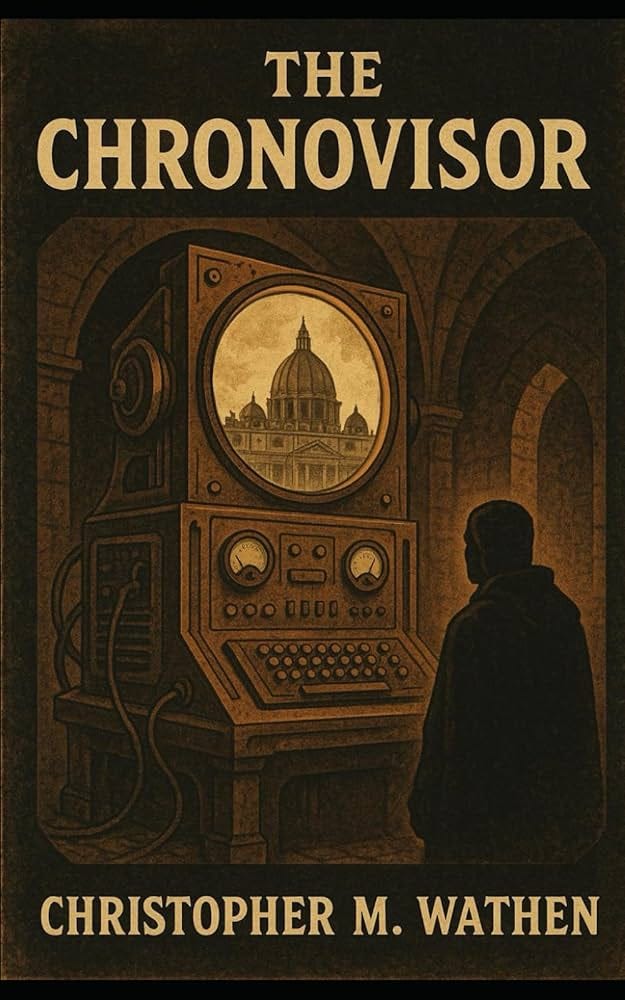
Chronovisor — Kevin Walker & Jack Auen, 2026, USA, 100m
How much are you willing to sacrifice for your obsessions? Your time? Your focus? Your health? Your soul? And what happens when those obsessions feel important — when they might reveal some hidden, critical, essential truth?
Chronovisor begins with a question that sounds like a dare: what if a Benedictine monk really did invent a device capable of viewing events from the past — orations by Cicero, the Crucifixion itself — and what if the Vatican buried it? Father Pellegrino Ernetti’s claim, reported in the Italian press and widely disputed, is the kind of story that should collapse under its own absurdity. Walker and Auen’s brilliance is in making you not care.
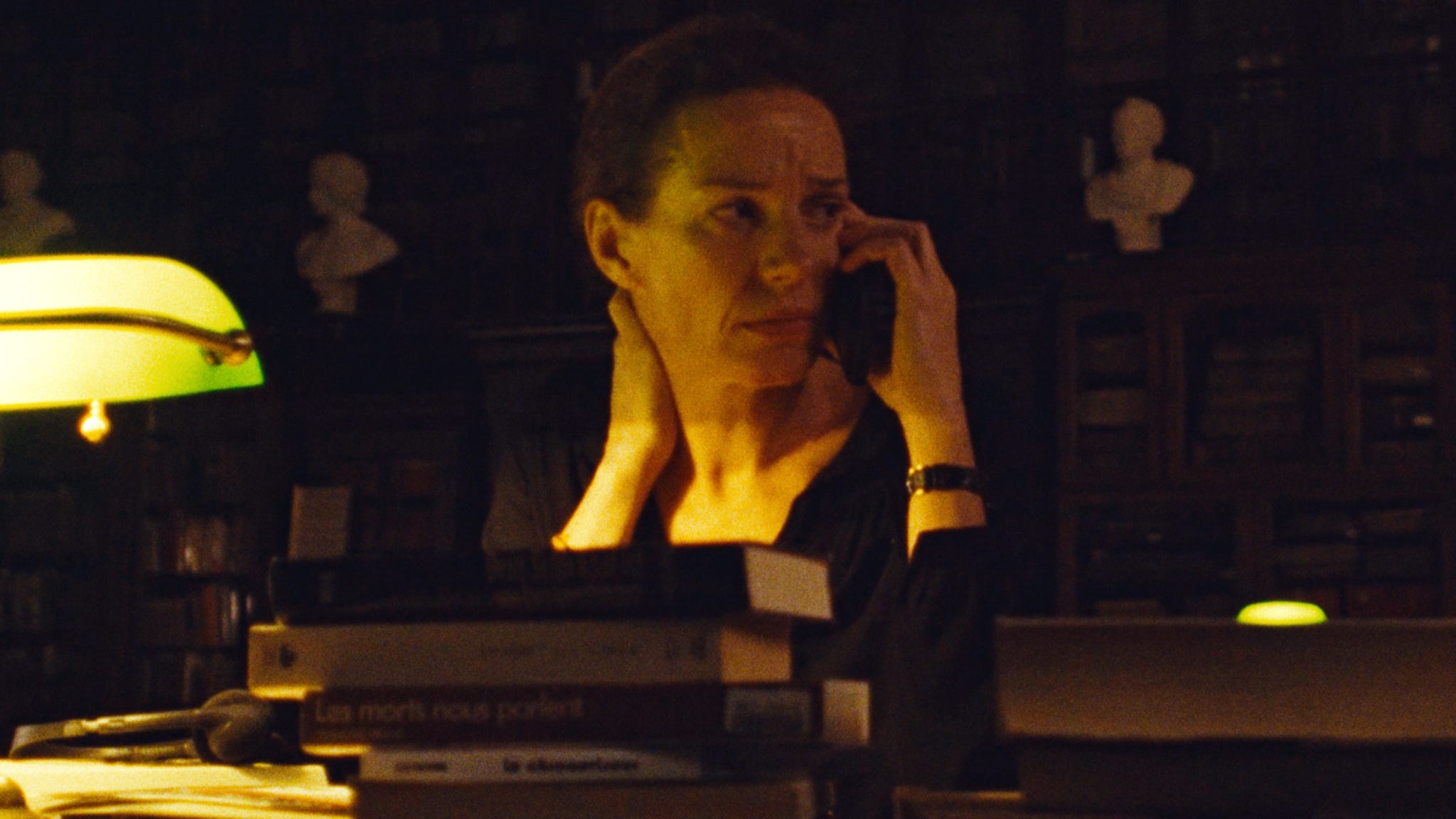
They follow Columbia scholar Béatrice Courte (played by real-life professor Anne-Laure Sellier in her screen-acting debut) as she stumbles onto the Chronovisor while researching an entirely unrelated topic, and then does what any serious academic — or anyone who’s ever fallen down a rabbit hole at 2 AM — would do: she abandons her original project entirely and gives herself over to the quest.
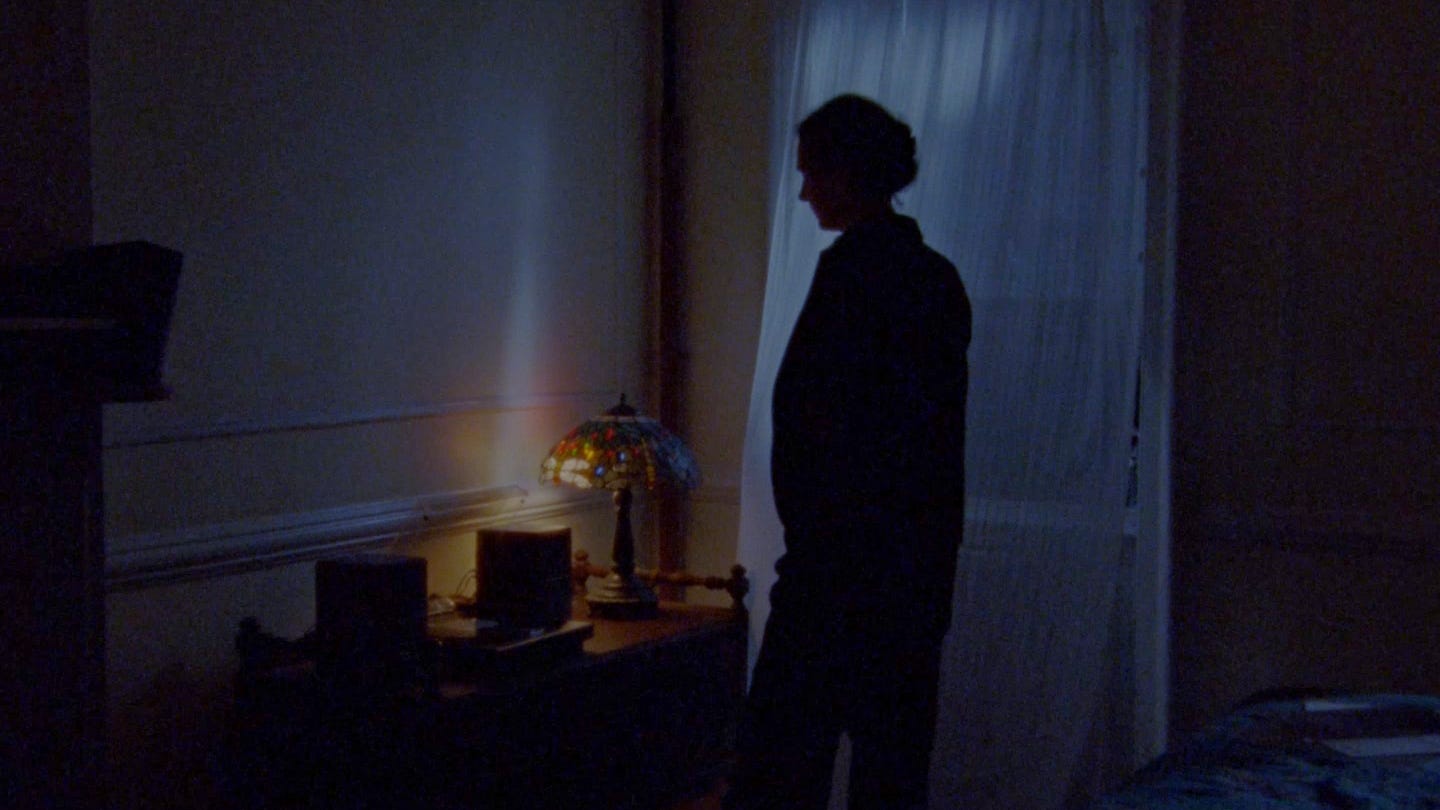
The film creeps into you by immersing you in the very personal nature of discovery and the satisfactions that come with an unresolved quest. The grainy 16mm film stock feels like a grungy, half-forgotten memory, and the film’s New York locations — its archives, its libraries, its stubbornly physical repositories of knowledge — become a Borgesian labyrinth where every corridor promises revelation and delivers only deeper mystery.
The score, drawn from the music of Gustav Holst, rises and swells like a Wagnerian opera but never resolves — suspended between desire and satisfaction, always promising a tonal home it refuses to deliver. One is reminded directly of The Metropolitan Opera’s sold out run of Tristan und Isolde, Wagner’s three-act meditation on obsession, love, and death. The opera’s culmination is the Liebestod — the love-death, the never-resolving hunger for something total and annihilating.
Chronovisor is a Liebestod of the intellect. Courte doesn’t seek the device because she expects to find it. She seeks it because the seeking has become the thing itself — the love-death of the scholar, the point where the obsession becomes indistinguishable from the self.
Like Isolde singing into the “billowy surge” and the “gush of sound,” Courte plunges deeper into the archive, sinking into the quest, devoid of all thought except the next clue. The Chronovisor may or may not be real. What’s obviously real — even on first watch — is the force of the obsession.
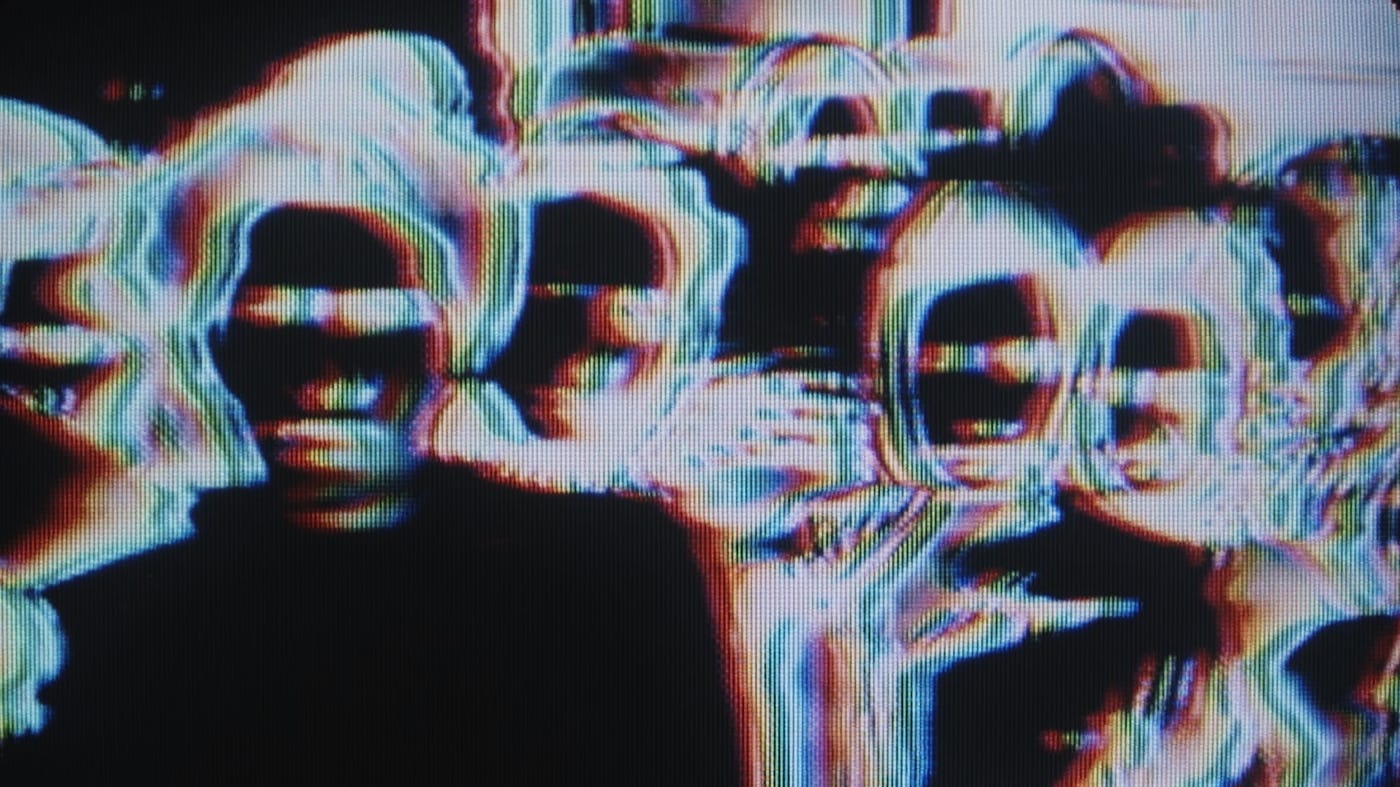
Chronovisor’s implications are unmistakable: The most powerful conspiracies aren’t the ones that turn out to be true. They’re the ones that make truth feel inadequate by comparison.
A brilliant feature debut. By far the best new film I’ve seen this year.
— Doug Hesney
The Art of Omission
Two Seasons, Two Strangers / 旅と日々 — Sho Miyake, 2025, Japan, 89m — Japanese with English subtitles
A tale of cinema with a bifurcated film-within-a-film structure reminiscent of Hong Sang-soo, Two Seasons, Two Strangers begins in a seaside town, where tourist Nagisa (Yuumi Kawai) and local Natsuo (Mansaku Takada) fall into a lush summer romance, all deep-sea blues and wind-whipped sundresses. It then yanks us out of this story to show its screenwriter, Li (Eun-kyung Shim, a former Korean child star who also acts in Japan), ducking questions and musing on her own creative block at a deliciously awkward post-screening Q&A (“I don’t have much talent”). In need of a creative and personal refresh, Li heads off to a snowy resort, where she meets the divorced innkeeper Benzo (Shin’ichi Tsutsumi). The two soon form the kind of understanding that gives hope to the filmmaker.
In the world of East Asian craft, there is a profound reverence for the monochrome. Whether it is the pale, ethereal green of a celadon vase or the deep, ink-washed shadows of a Zen landscape, the absence of color is never a lack of substance. Instead, it is a deliberate “art of omission” that demands a heightened state of perception.
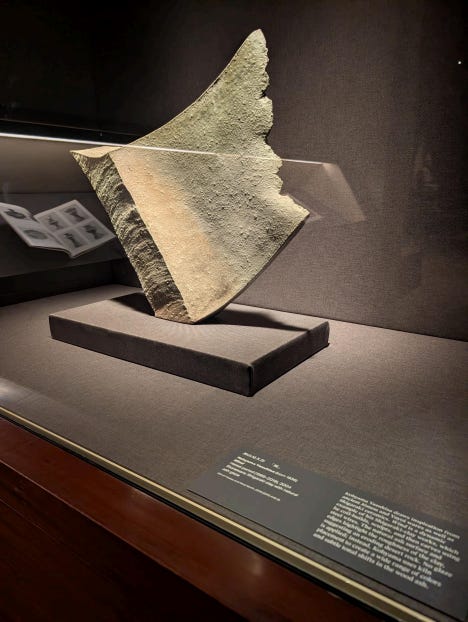
Sho Miyake’s 2025 film, Two Seasons, Two Strangers (旅と日々), functions as a cinematic extension of this aesthetic. Spanning 89 minutes of rhythmic, quiet observation, the film mirrors the “unbroken field of color” found in white wares, revealing that the most complex landscapes are often those rendered in a single, meditative tone.
The Tactile Glaze of the Everyday
Much like the “refined forms and sophisticated surfaces” of monochrome ceramics, Miyake’s cinematography focuses on the purity of the subject. In the film, the camera treats the passage of time as a glaze — an even application that emphasizes the “smoothness” and “balance of tone” in the characters’ lives.
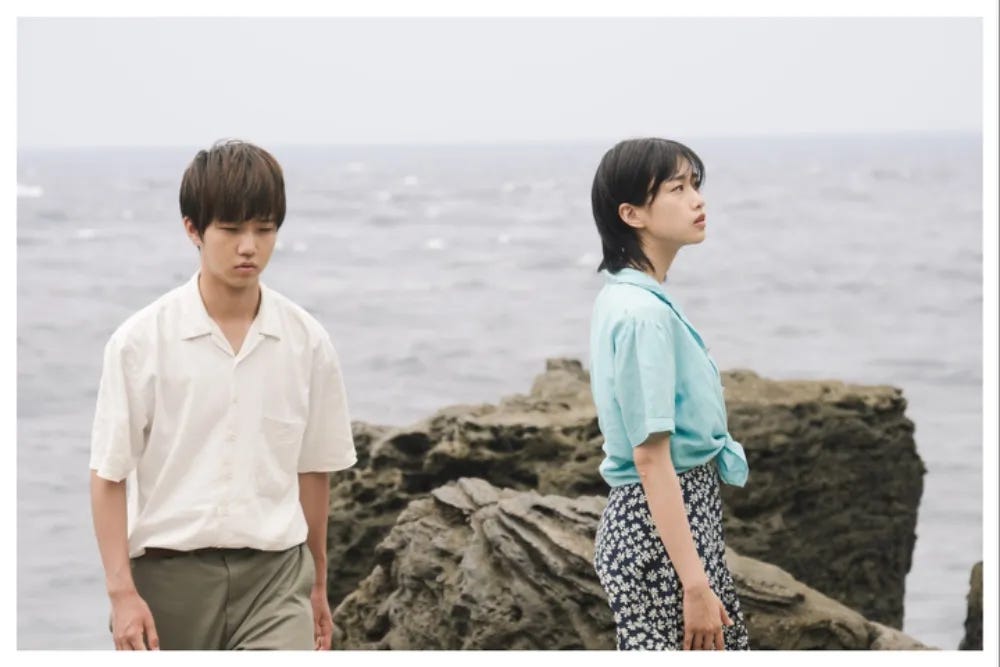
In the absence of high-octane plot points or “painted motifs” of melodrama, the viewer’s eye is forced to linger on nuanced variations: the texture of a character’s skin, the subtle shift in a gaze, or the way light hits a quiet room. These moments evoke a tactile intimacy similar to red lacquers; they feel organic, vulnerable, and profoundly human.
The Sound of Nature, The Ink of Suspense
Monochrome painting in East Asia — often rendered in shades of black ink — conjures natural scenery like bamboo and mountains through “restrained compositions.” Miyake translates this into a modern cinematic language where sound becomes the ink.
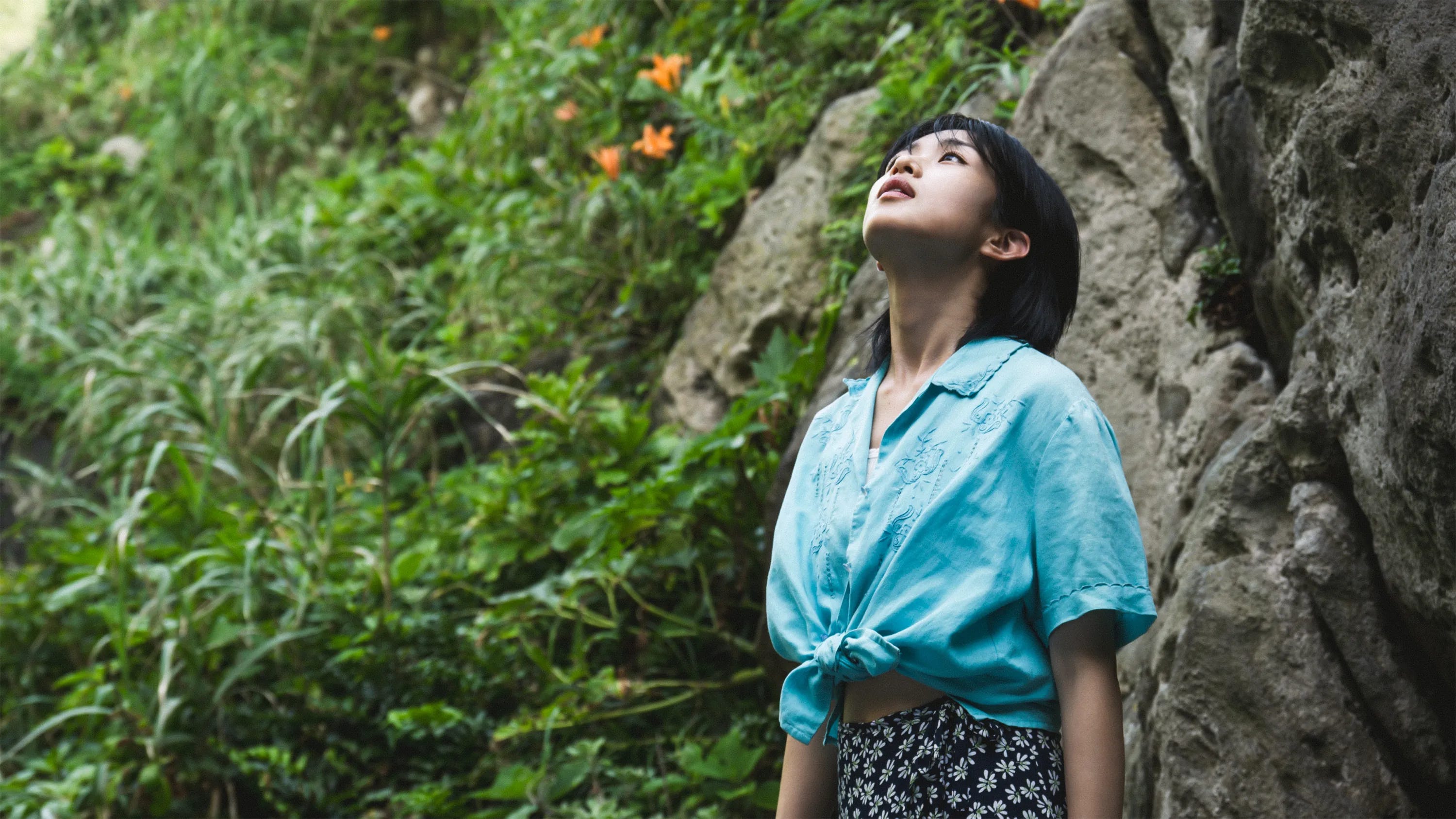
The “sounds of nature” act as the brushstrokes that guide the viewer through a state of “constant suspense.” This is not the suspense of the unknown, but the suspense of the present — the tension inherent in a single, perfectly placed stroke on paper. By emphasizing “shape and contour” through atmospheric sound rather than explicit dialogue, Miyake encourages his audience to “reflect on the process of perception itself.”
A Dream-Logic Handscroll: “What Can’t Be Helped”
The structure of Two Seasons, Two Strangers behaves less like a traditional Western narrative and more like a handscroll. As the story “turns,” it starts on a different spot but stays connected to a central emotional point, moving with the fluid, “artistic and calming” logic of a dream.
Central to this movement is the philosophy of acceptance: “What can’t be helped can’t be helped.” In the kiln of life, as in the kiln of the potter, certain outcomes are inevitable. The film suggests that the “humor” of existence is only truly visible once the viewer recognizes the “human sadness” that forms the base material.
The Meditative Landscape
Ultimately, Sho Miyake has crafted a film that functions as a “rich, meditative landscape.” By stripping away the distractions of traditional storytelling, Two Seasons, Two Strangers achieves the same “contemplative viewing” invited by a flawless porcelain vessel.
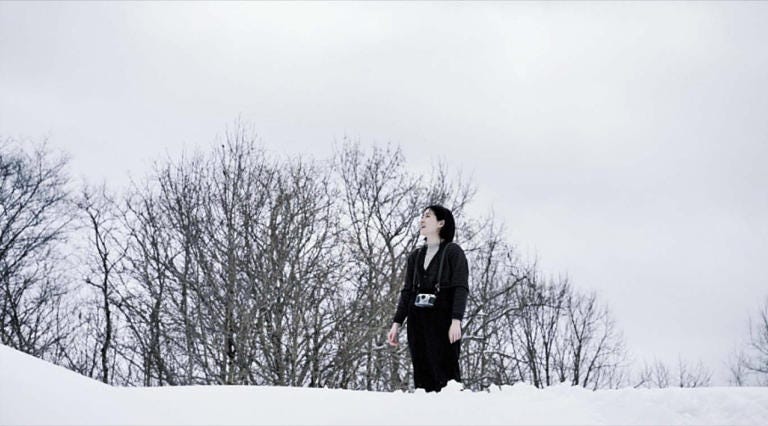
It proves that when we remove the motifs of the world, we are left with something far more enduring: the quiet, sophisticated beauty of the human spirit, rendered in a single, perfect hue.
— Yelena Fradlis
Where to Watch: Both films screen as part of the 55th New Directors/New Films, April 8–19, 2026, presented by Film at Lincoln Center and the Museum of Modern Art. Tickets at filmlinc.org and moma.org.
Chronovisor Screens Friday, April 10 at 8:45 PM and Saturday, April 11 at 5:30 PM at MoMA, with a Q&A featuring Kevin Walker, Jack Auen, and Anne-Laure Sellier.
Grasshopper Film releases theatrically Fall 2026.
Two Seasons Two Strangers has its North American premiere Thursday, April 17, with an additional screening Saturday, April 19. Several Futures releases the film theatrically at Metrograph on April 24.