



“It makes me hanker for the mild and soothing and tasteless red velvet interiors in which people lived so indiscriminatingly no more than twenty years ago. It was unhygienic, dark, cool, probably stuffed full of dangerous bacteria and pleasant.” — Joseph Roth, 1929
Ingmar Bergman is a filmmaker of faith, psychology, and the Swedish countryside, but his work resonates so strongly because he is the great elegist of the 19th century bourgeois world. In many ways, his entire cinema is a mourning rite for the world and the values that the 20th century destroyed.
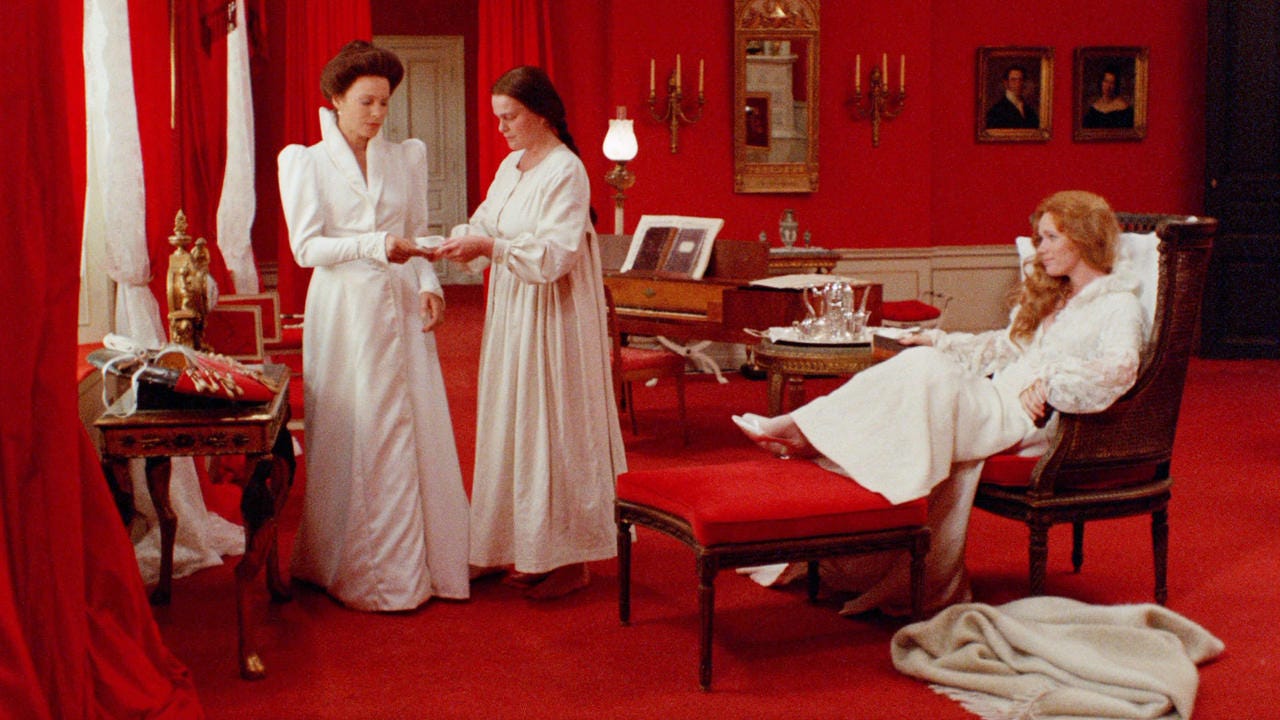
I came to this understanding over the course of a winter spent inside the Ingmar Bergman Criterion Box Set — 37 films, programmed thematically rather than chronologically, watched as part of a Film at Lincoln Center Discord watch-along where a group of cinephiles committed to the complete filmography together. From Crisis (1946), Bergman’s rough-hewn debut, to Saraband (2003), his devastating farewell. The early melodramas and the Faith Trilogy and the Fårö island period and the marriage films and the late chamber works.
I subsumed myself in deep Scandinavian winters, long close-ups, psychological explorations, and the incredible sweater fits that define much of Bergman’s work. By the time I had finished Cries and Whispers — somewhere in mid-January — I kept thinking of how this film in particular was a beautiful elegy for an era, now so far from memory it might as well be myth.
As Bergman chronicled time over again — the 19th century European bourgeois let their pain be perfumed and ornamented until it rotted away.
The Documents of Decadence
Bergman is a late addition to the literature that mourns the 19th century bourgeois world. Thomas Mann in Lübeck. Joseph Roth in Vienna and Galicia. Stefan Zweig in Vienna, writing from Brazilian exile. Anton Chekhov in Moscow and the Russian provinces. Strindberg in Stockholm. Ibsen in Norway. The tradition that produced this particular kind of elegy runs through Central Europe, Scandinavia, and Russia.
England and France had their aristocracies. Their great literature, from Austen to Flaubert, is organized around the struggle for or against the landed class — the drama of who gets to sit at the top table and what it costs to get there. In Pride and Prejudice Elizabeth Bennett gets her happily ever after when she ascends and becomes Mrs. Darcy.
But the German, Austrian, Swedish, and Russian traditions were organized around something different: families who built their identity on work, civic participation, cultural aspiration, and continuity across generations. An accumulated dignity of people who built something, and fought to pass it on.
Thomas Mann’s Buddenbrooks: The Decline of a Family (1901) is one of the key templates. The book follows four generations of a North German merchant family. The Buddenbrooks lack title and estate, but their wealth and success offer significant merchant and civic pride across four generations. We watch as this family’s fortunes rise and fall with the ruthless efficiency of the capital markets.
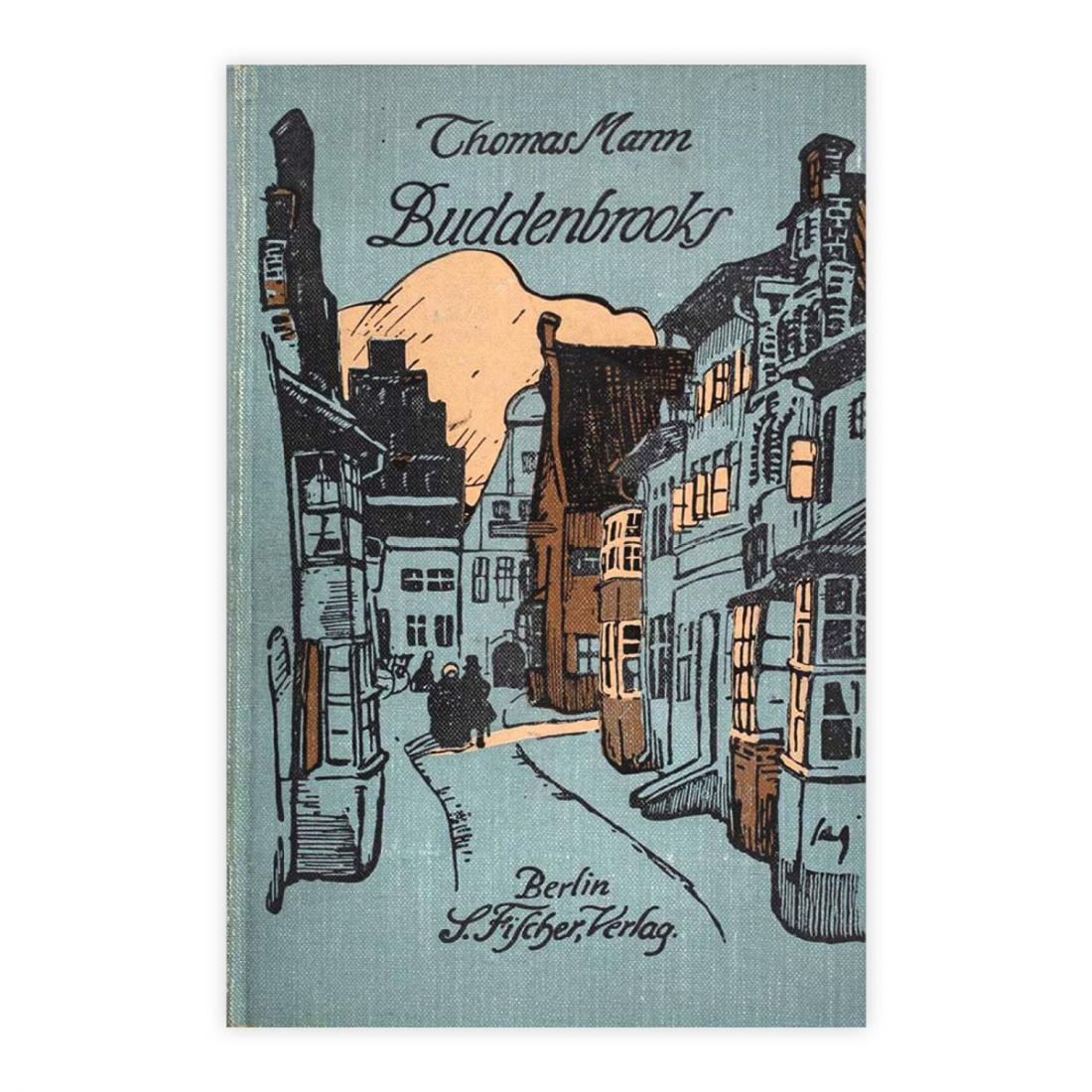
The bourgeois project was always supposed to be about more than commerce. A promise that prosperity creates the conditions for love, beauty, and family. Mann describes the warm Christmases and parties at the Buddenbrooks’ Mengstrasse home in such excruciating detail because he needs you to feel what’s at stake before he shows you how it goes cold.
But at every decisive moment, the Buddenbrooks heirs choose the firm over the family, the marriage contract over the living woman, the continuation of the line over the actual children. Gold over love. The system over human connection. They are left desolate.
Joseph Roth's novel Radetzky March (1932) is the same diagnosis in imperial uniform. The Trottas are a Slovenian border family — peasants, basically — elevated to minor nobility after the grandfather saves the Emperor's life at the Battle of Solferino. That single act becomes the family's entire identity. Each generation moves further from the frontier.
More refined, more Viennese, more hollow. It's the immigrant story told as imperial tragedy — the grandfather who built something real, the son who maintained it through discipline, the grandson who inherited the name but not the purpose. Carl Joseph Trotta drifts through drawing rooms with nothing to prove and nothing to believe in. He can barely look at his grandfather's portrait without feeling like a fraud.
Mann and Roth were clearly influenced by one of the most important artists of the 19th century who saw this coming and said so, loudly. The brilliant, but incredibly flawed, and anti-Semitic Meister, Richard Wagner.1
The Ring Cycle — four operas composed across nearly three decades, from 1848 to 1876 — is nothing less than a prophecy of bourgeois self-destruction.
The story begins in the depths of the Rhine, where a dwarf named Alberich — ugly, lustful, rejected by the beautiful Rhinemaidens who guard a hoard of enchanted gold — makes a terrible choice. He renounces love forever in exchange for the power to forge the gold into a ring of absolute dominion.2 It’s the first transaction in the cycle, and it poisons everything that follows: power purchased at the price of love, the original sin of the entire mythology.
Wotan — king of the gods, or Odin if you prefer his more MCU-friendly moniker — has problems of his own. He’s commissioned two giants to build Valhalla, his fortress in the sky, and to pay them he’s promised Freia, the goddess of love and youth. It’s explicit: the father of the gods trades love for the system — for gold, for order, for the institution. Without Freia, the gods begin to age. The apples of immortality wither. Wotan scrambles to steal Alberich’s ring as alternative payment, compounding one loveless bargain with another. He gets his fortress.
The entire four-opera cycle — roughly fifteen hours of music, spanning the creation of the world to its destruction — is the working-out of those original transactions. Brünnhilde, Wotan’s warrior daughter — punished for choosing love over duty — finally returns the ring to the Rhine and burns Valhalla to the ground. The world ends in fire because the gods built their house on a foundation of lovelessness.

.
Gustav Mahler heard it too. His Second Symphony opens with a funeral march — the death of the hero, the Romantic project crushed under its own weight — written in Vienna in the 1890s. His question: after the hero dies, after the warmth goes out, is there resurrection? His answer, like Bergman’s, is yes. But only through surrender.
August 1914.
An earthquake in civilization so large, we feel its aftershocks daily. The trenches were the final and most essential command of a culture that prioritized the firm over the family, duty over love, the system over the person.
Seen with over a century of perspective, it is clear that the trenches weren’t an interruption of the 19th century world. Reading Mann and Roth, listening to Wagner and Mahler make clear they were its logical conclusion, given their society’s abandonment of liberal and romantic values for an ornamented decadence.
Ingmar Bergman was born in 1918, amidst the wreckage. He grew up in a Swedish pastor’s household — strict, Pietist, emotionally repressed, culturally serious — surrounded by the aesthetics of a world that had just destroyed itself. He came of age reading Mann and Roth, attending performances of Strindberg and Ibsen, watching his country stand at the edge of a catastrophe it had narrowly avoided. When he picked up a camera, he was already asking the question these artists had all been asking. Why did it choose suicide — and what, if anything, could be saved?
The Buddenbrooks-Ekdahl Connection
Wotan’s bargain — love for power, Freia for Valhalla, feeling for system — is the sin that powers the Ring cycle. The god who was supposed to represent order and civilization traded the one thing that gives civilization meaning in order to build the institution that protects it. It’s circular, self-defeating, and absolutely recognizable.
Every Buddenbrook heir makes that trade. Every Trotta makes it. Every patriarch who chose the firm or the duty or the obligation over the living warmth of his family makes Wotan’s bargain and pays Wotan’s price.
Fanny and Alexander is Bergman’s answer to the Ring Cycle and very explicitly references the Buddenbrooks. His final theatrical film was his most explicit statement about what destroyed the European bourgeois and what must be saved from their lost culture.
The Ekdahl family: theatrical rather than mercantile, warm and sensual and chaotic, presiding over a large Swedish household at the turn of the 20th century. Oscar Ekdahl, the patriarch, collapses mid-performance and dies. His widow remarries a bishop — cold, ascetic, punitive, a man who has made Wotan’s bargain so completely that he cannot understand why anyone would want anything else. The film becomes a story of children fighting to preserve warmth against the encroachment of something dead and ideological.
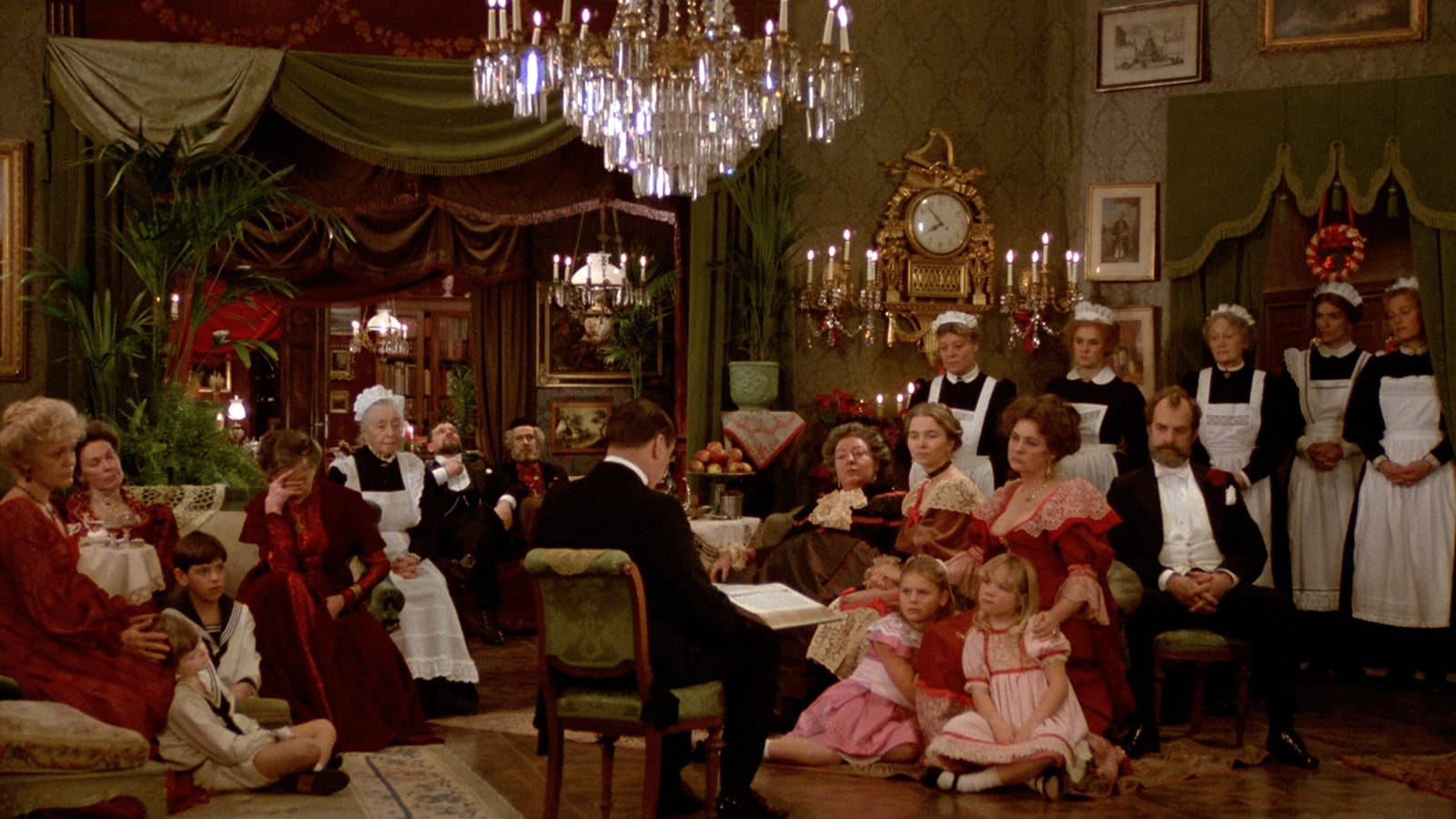
This is the Buddenbrooks plot in Swedish dialogue. But Bergman refuses Mann’s ending. Mann watches little Hanno exhaust the family line and concludes with extinction. The Romantic project dies because the bourgeoisie couldn’t stop choosing the firm over the child, the system over love, the coldness over the warmth they claimed to value.
Bergman counters with Gustav Ekdahl.
Gustav Ekdahl, Oscar’s brother — hedonist, impresario, lover of life, a man who has conspicuously declined to make Wotan’s bargain — gives a toast at the film’s conclusion that has become a kind of mantra for everyone who has watched it:
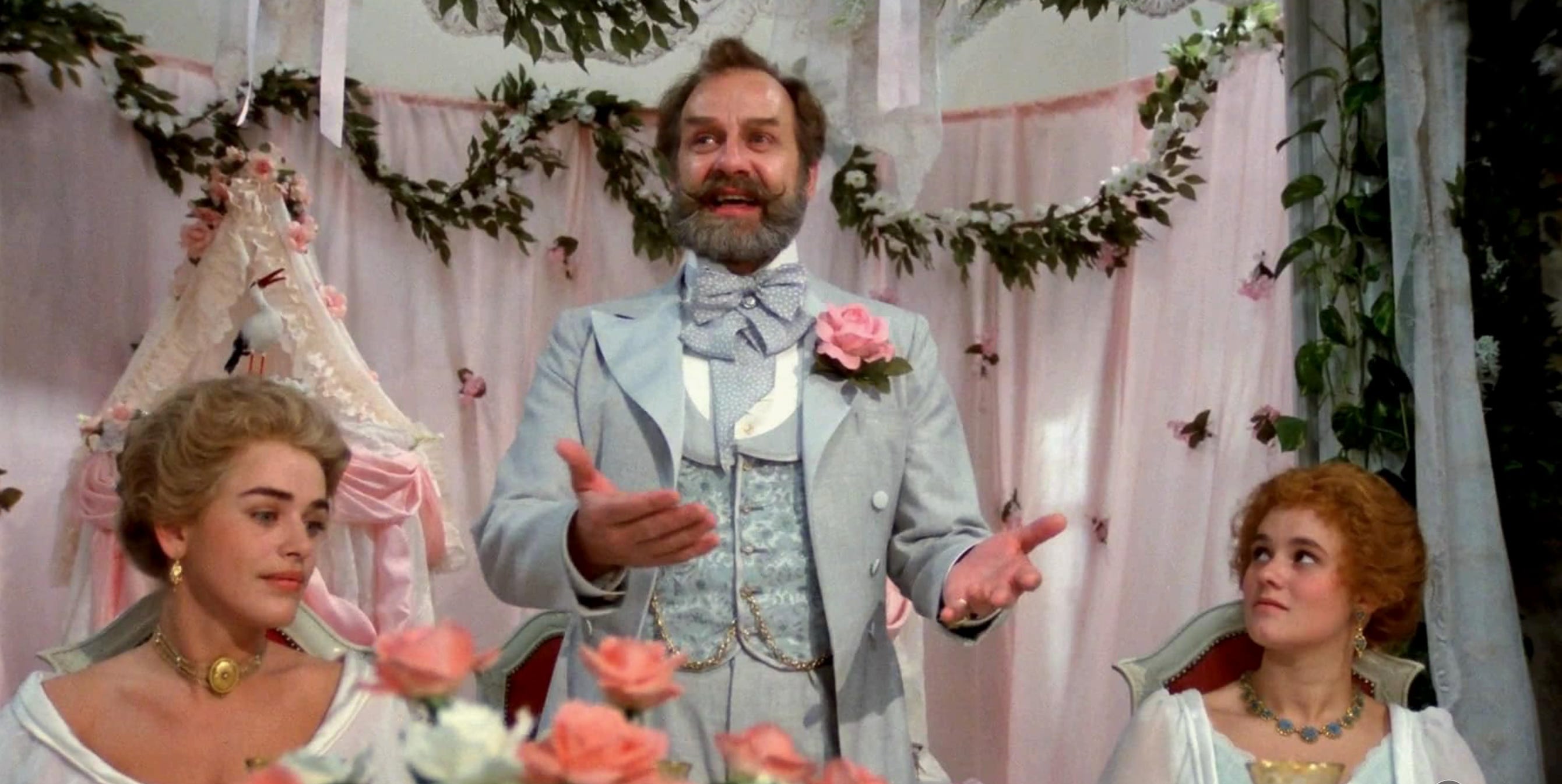
“We Ekdahls have not come into the world to see through it. We are here to live in it. To dream. To take pleasure. To feel a bit.”
Gustav is the Buddenbrook who looked at the firm and said: no. Not because he’s lazy or irresponsible but because he understands, bone-deep, what the firm is for. The warmth is the point. The beauty is the point. The pleasure and the family and the smell of a warm kitchen — these are not the reward for getting the system right. These are the system. Everything else is scaffolding.
That toast is Bergman’s answer to Wagner. In Götterdämmerung, Brünnhilde burns Valhalla because the system built on lovelessness cannot be reformed — she returns the cursed ring to the Rhine and lets the whole edifice come down. Gustav insists the system doesn’t have to be built on lovelessness in the first place.
The elegy doesn’t have to conclude with immolation. It can conclude with a toast. With the family surviving. With the choice, made consciously and daily, to feel a bit.
Bergman’s Cinematic Search for the 19th Century
Bergman’s films remind me of Picasso’s paintings. There are defined periods, consistent themes, and a prolific output across multiple generations. Picasso had his cubism, but he could also paint very standard portraits that were just a bit more pointed or complicated than his peers. Bergman’s first decade as a filmmaker works the same way — an artist circling his subject before he has language for it. The films are uneven — some are minor, a few are failures — but they share a preoccupation that becomes clearer in retrospect: the texture of domestic life under pressure. The warmth that leaks out of rooms. The look on a face when it realizes something is ending.
Even in his debut, Crisis (1946), Bergman reveals his hand. It’s Swedish Noir — a rough, visually striking melodrama that owes much to Renoir’s La Chienne and Lang’s Scarlet Street, but with far more family-centered pathos than those darker films. That first-film connection to Renoir is worth noting. It’s a lineage that will matter.
He starts with the visual vocabulary of the world he’s mourning. His early films are full of 19th century interiors — the kind Roth was hankering for. Heavy furniture. Long dining tables. Windows onto gardens that belong to another era. Even when the films are set in contemporary Sweden, they feel haunted by an earlier century’s arrangements.
Smiles of a Summer Night (1955) is where the love affair with that world becomes explicit. Every time I watch this film I want to move to Sweden in the 19th century. That’s the trap Bergman sets — he makes the lost world so charming, so full of erotic comedy and summer light, that you fall into it completely before you feel the melancholy underneath.
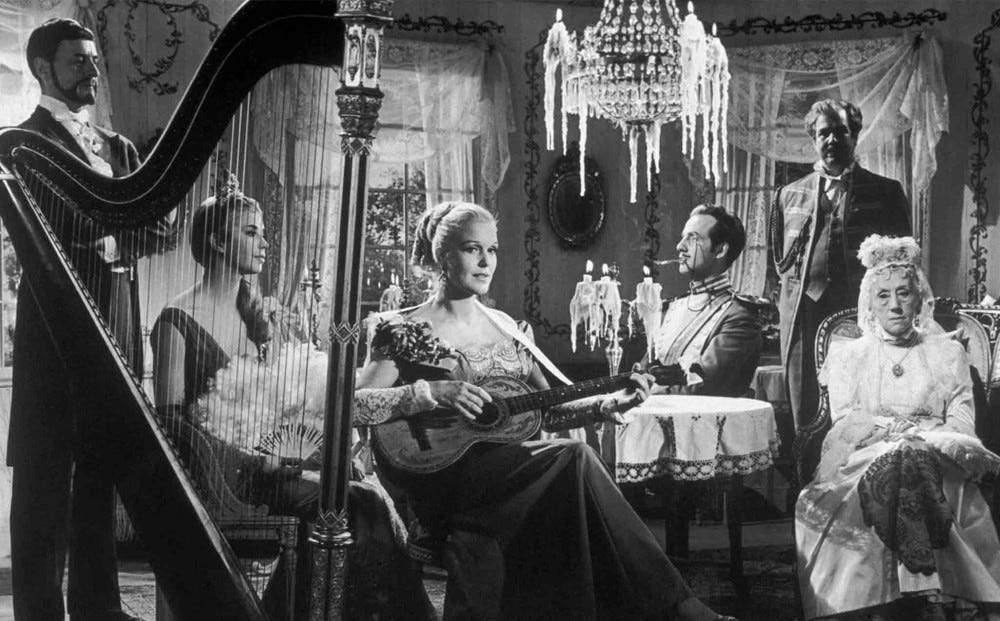
He learned the maneuver from Renoir’s Rules of the Game, yes. But Renoir was a sociologist examining his own class. Bergman is an elegist grieving something already gone. A Lesson in Love (1954), made the year before, reveals this impulse in embryonic form — Bergman attempting 1930s screwball comedy with all the standard ruinations about God and death, and producing what would become an early sketch for Johan and Marianne, the couple who would haunt him for decades.
Wild Strawberries (1957) offers another exploration of bourgeois values. Professor Isak Borg is the Buddenbrooks plot compressed into a single life: a man who converted his inherited warmth into professional distinction, who chose dignity over love, who built a monument and lost the thing it was supposed to protect. He made Wotan’s bargain quietly, over decades, one small choice at a time.
Driving across Sweden on the day of his honorary degree, revisiting his failures through dream and memory, he’s the last Buddenbrook — the generation that intellectualized everything and felt almost nothing.
The Faith Trilogy and the Fascist Temptation
Bergman was seduced by Hitler as a teenager. This is documented — he writes about it in The Magic Lantern, his autobiography. The German youth camps, the rallies, the sense that here was a movement that would restore order and meaning and beauty to a world coming apart. He later described it as one of the great shames of his life.
The fascist temptation, for someone with Bergman’s sensibility, was the promise of restoration — the 19th century world brought back by force and purity rather than earned through love. For a young Swedish pastor’s son surrounded by the aesthetics of the lost century, the appeal was real and terrible. But restoration through force is still the same trade — warmth sacrificed for power, Freia surrendered once more, this time at the barrel of a gun. The 19th century couldn’t be commanded back into existence. It could only be mourned and, possibly, salvaged.
The Magician (1958), made between the early comedies and the Faith Trilogy, is Bergman’s most explicit meditation on this very problem — the artist as conjurer, the showman who promises to restore wonder through performance and trickery. It’s an incredible magic trick of a film which keeps you guessing as to what it actually is.
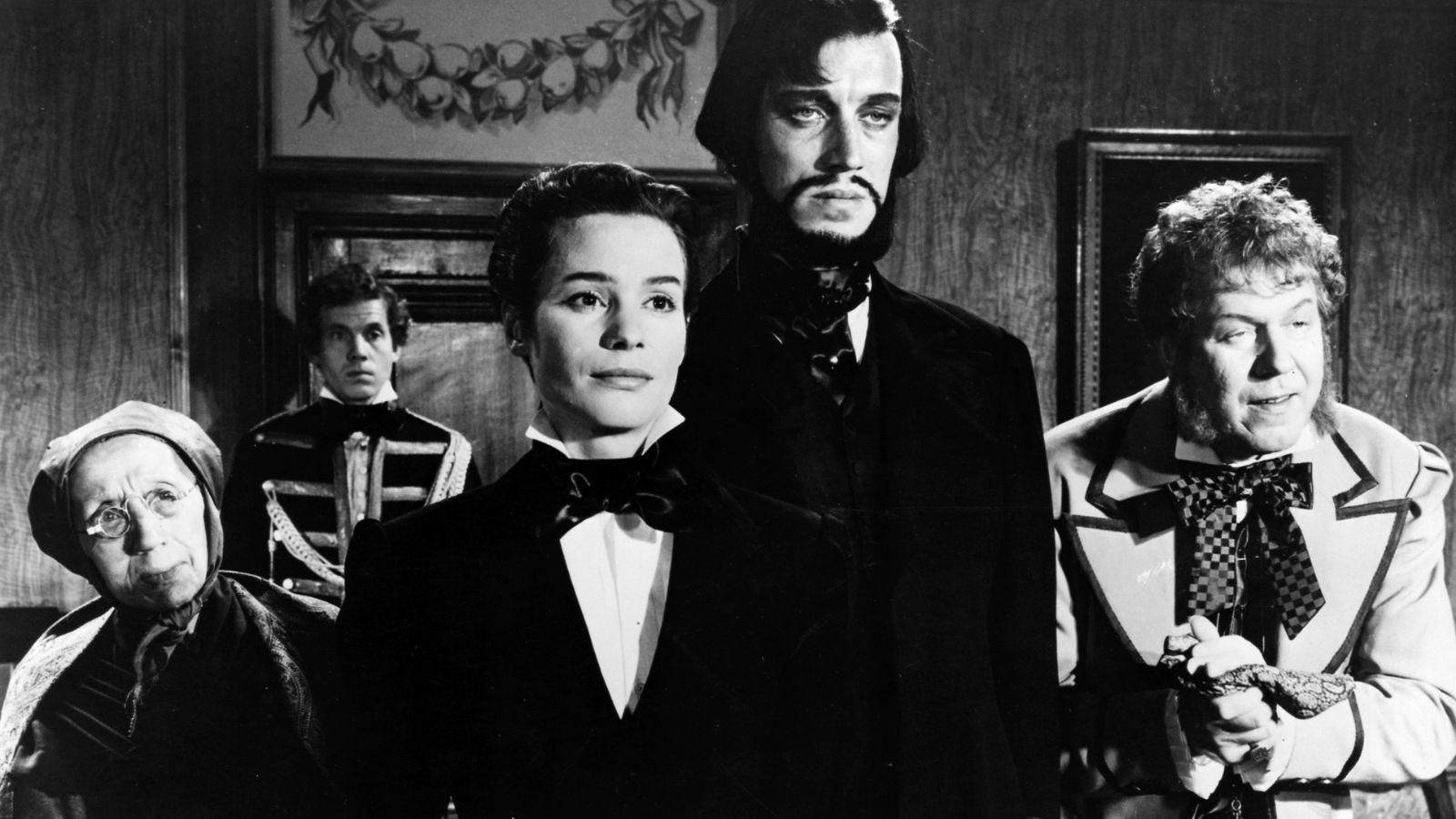
The question it poses is whether the illusion of meaning is the same as meaning itself, and whether the artist’s capacity to enchant is salvation or deception. Bergman leaves the answer suspended, which is the honest move.
Bergman’s Faith Trilogy is a theological accounting for the same crisis. If God is silent — if the 19th century’s faith in a providential order was a delusion — then what’s left?
Through a Glass Darkly (1961) opens the inquiry on Fårö island, where Harriet Andersson’s Karin — a creature of light and beauty and madness and cruelty, caught between two worlds — experiences something that might be divine revelation or might be psychotic break. The distant, disturbed father watches and takes notes for his novel. Bergman’s attempt to offer hope at the end is tough to swallow, but he insists: the lord created the light and the darkness, and each day creation is renewed.
Winter Light (1963) is the trilogy’s masterpiece and one of Bergman’s own favorites. A pastor’s crisis of faith at boiling point. He cannot believe, cannot save, cannot love. Everyone in this film is tempted with absolute despair.
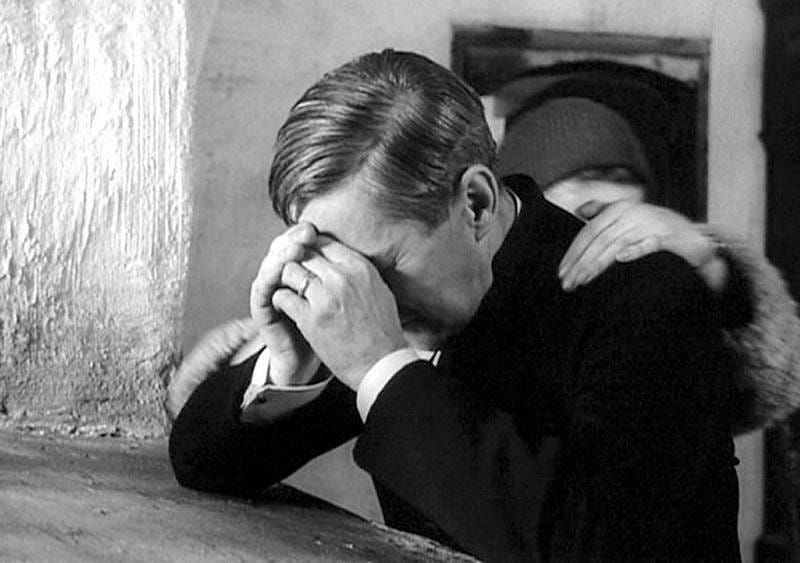
And yet Bergman refuses to let hope die. His faithless pastor chooses to persevere and connect, rather than let the lights go out. The choice to remain alive — to try to connect and serve despite feeling forsaken — is its loud and ringing answer to the purported silence of God.
Shame and the Thin Veneer
Shame (1968) is the political argument, stripped to the bone.
Jan and Eva Rosenberg are musicians — artists, educated people, the precise inheritors of the bourgeois world Bergman has been mourning. They live on an island, trying to maintain a life of domestic warmth while a civil war rages off-screen. They believe their cultivation, their sensitivity, their love of beauty, will protect them.
The war finds them anyway.
And what the film shows, inexorably, is the Buddenbrooks process accelerated to months rather than generations. Jan becomes a collaborator. Eva becomes capable of murder. The thin veneer of civilization is peeled away, one strip of varnish after the other.
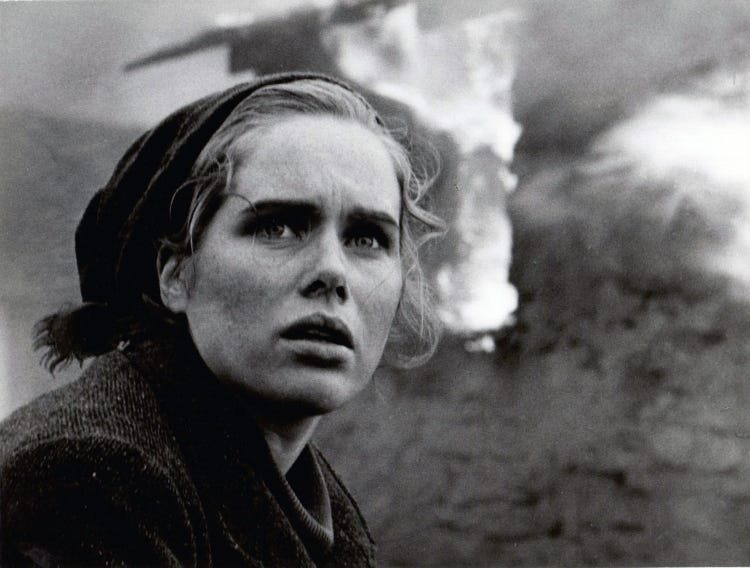
Liv Ullmann’s Eva says toward the end: “Sometimes it feels as if I’m being forced to live in someone else’s nightmare. When will they wake up and feel shame for what they’ve done?”
Bergman is so deeply attuned to true human motivations that the script feels incredibly real. Shame takes his deep understanding of human darkness and gives it political context. Even the educated, cultivated, beautiful people lose their humanity.
Shame is how Wotan’s bargain ends, when the fire finally comes.
The Bourgeois Mirror
Part of what makes Bergman so available to American audiences — more available, I’d argue, than Renoir or Godard or Antonioni — is that his tradition is our tradition. The Central European and Scandinavian elegy for the bourgeois world is the story of people like us: merchant families, professional families, people who built their dignity through work and civic life and cultural aspiration and the hope that the next generation would do more with it than they did. The Buddenbrooks could easily be outer borough strivers made good.
When Bergman films the Ekdahl household — its warmth, its theatricality, its absolute conviction that beauty and pleasure and family ritual are how human beings justify their existence — he’s filming something that resonates in an American heart in a way that has nothing to do with Sweden or the 19th century.
The American bourgeoisie is easily recognizable in his cinema. Bergman is telling us what happened to the last people who had what we have and kept making Wotan’s bargain until there was nothing left to burn.
Bergman is essential viewing for this moment precisely because he already lived through it — through the fascist temptation, the war, the theological silence, the slow erosion of everything he was born into — and emerged with something like an answer. An insistence on certain things: family, ritual, beauty, love, the presence of the dead among the living, and a responsibility to them both.
I’ve spent much of this miserable winter traversing the 19th century to the 21st, and Gustav Ekdahl’s toast has become my mantra. If in fact the mad dogs and demons are loose once more, then it is even more important for us to embrace art and beauty and compassion.
Therefore let us be kind.
———
Doug Hesney is the Executive Director of the Cognitive Film Society and the founding editor of Cognitive Frames.
Wagner is a considerable challenge to separate art and artist. Yet despite his deep anti-semitism he inspired Theodore Herzl’s early zionist writings. Go figure.
Yes, a Ring of ultimate power that corrupts. Tolkien always claimed the idea was his alone, but I mean come on.