



My college friends and I have a pretty robust Signal chat going across many different categories and topics.1 Our catch-all random conversation page captures a lot: current events, entertainment, shit about getting older, shit about being old, that sort of thing. And recently, my friend Jeff watched The Goonies (1985) with his kids and came back with a pretty strong thesis:
Chunk was the hero.
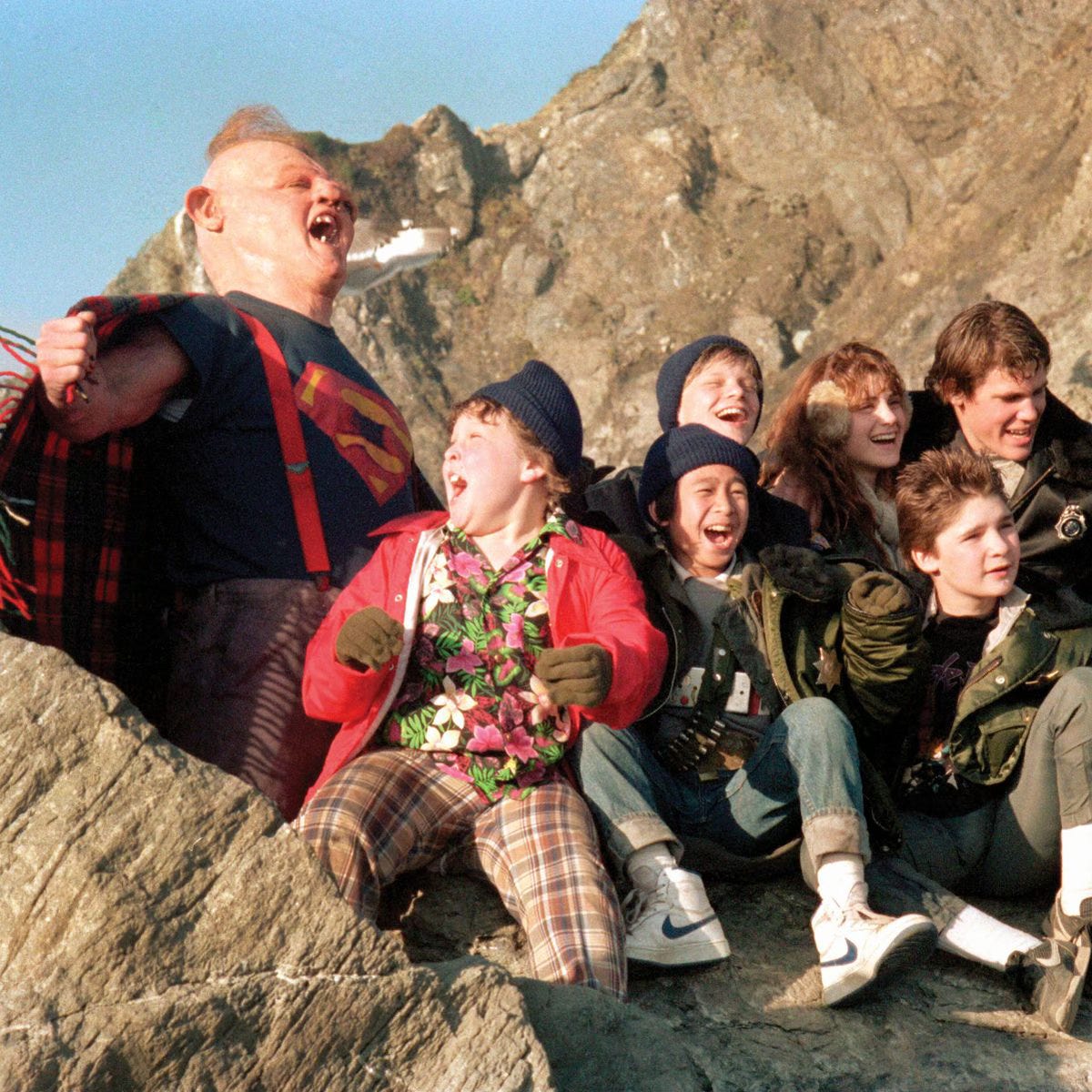
Rewatching The Goonies as an adult is a strange experience. When we were young, in the halcyon days of the 1980s, the world was a pretty different place, and that makes watching a movie like The Goonies now heavy with the weight of nostalgia2: kids on bikes, no screens other than an old school TV, booby traps, secret maps, a summer that seems to stretch on forever. The kind of freedom that doesn’t really exist anymore (for a lot of reasons). It’s a movie we remember as being about friendship, bravery, and the last gasp of childhood freedom before things change (in this case, the town was being bought by a bunch of rich jerks).
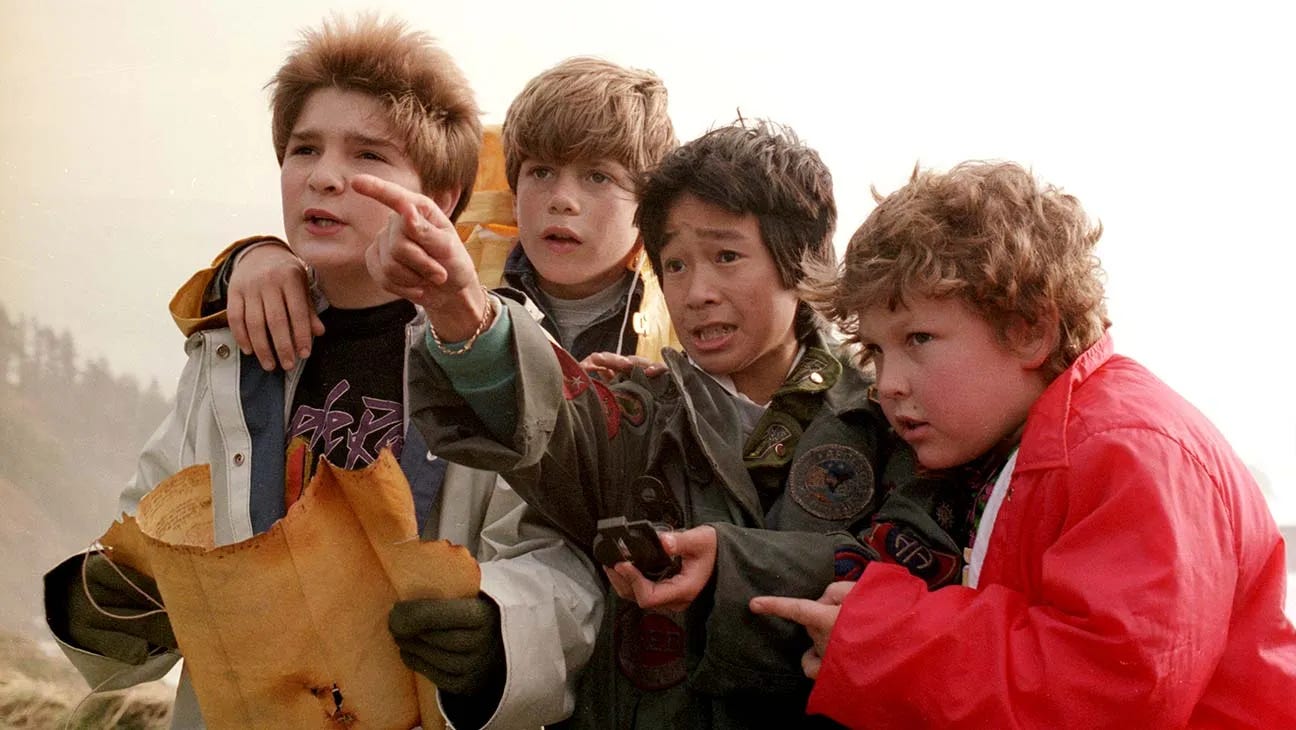
As a child, the heroes are obvious. Mikey’s belief keeps the group moving forward. Brand’s protectiveness gives them muscle and structure. Mouth’s fluency is Spanish. Data’s ingenuity supplies the tools.3 Andy and Stef bring courage and resolve. Each plays a recognizable role in the mythology of the quest.
But watching it as an adult, something else floats to the surface.
Chunk is the true hero of the film. And that matters more than it first appears.
Because beneath the pirate ships and chase scenes, The Goonies is telling a deeper story about outcasts, marginality, and how real change rarely comes from the center. It comes from the edges.
A Story About Outsiders
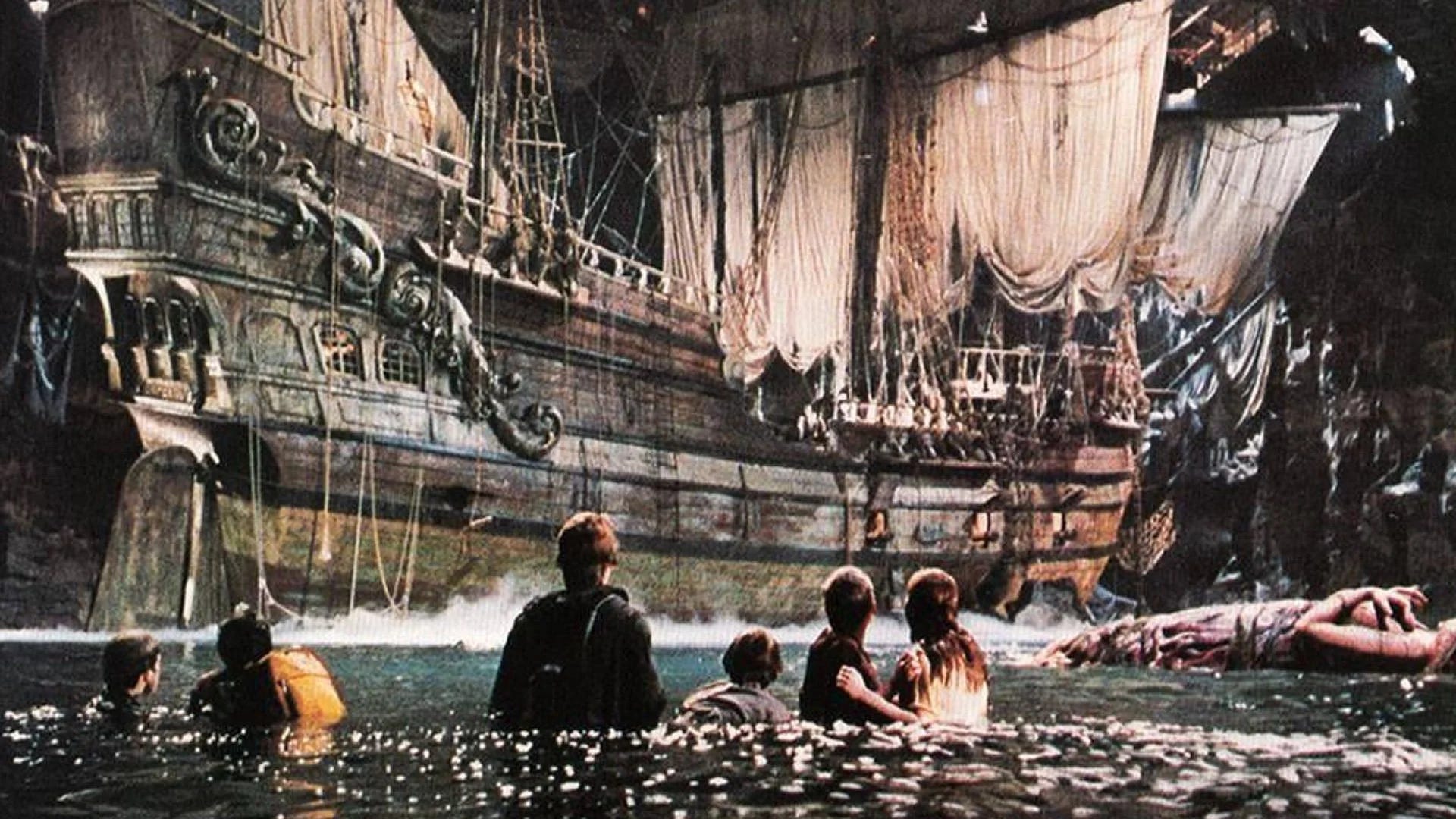
At its core, The Goonies is already a movie about kids on the margins. They’re working-class families in a town about to be erased by development. Their homes are being foreclosed on by moneyed interests that don’t give a single shit about what’s going to happen to them or where they’re going to go. Adults dismiss them because they’re kids. Institutions fail them. The future feels as though it’s on an inexorable march forward and worse, it doesn’t seem to include them.
The adventure itself is an act of resistance. A refusal to accept that erasure is final. A belief that there might still be another way out.
Remember: Goonies never say die.
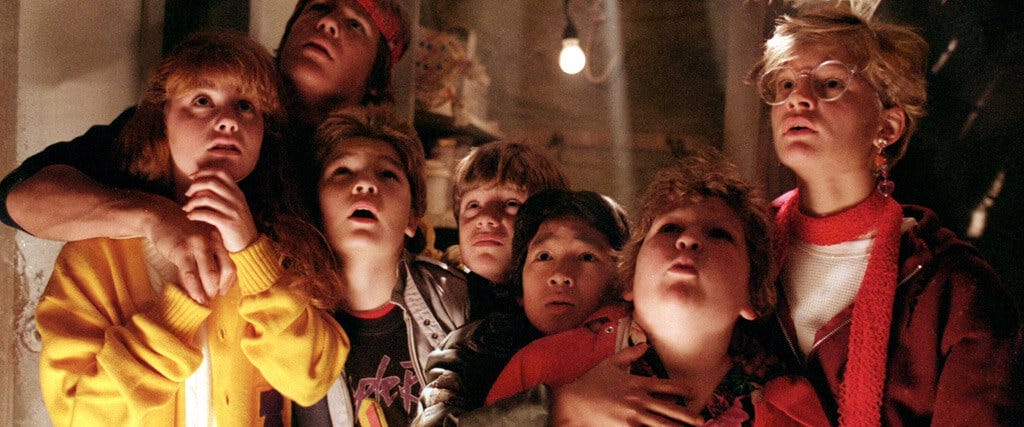
But even within this band of outsiders, there are hierarchies. Even among the marginalized, there are degrees of belonging.
There are outcasts. And then there are outcasts among outcasts.
Chunk, on the Outside Looking In
Chunk’s position in the group is unmistakable. He’s the comic relief. The emotional one. The kid who cries, panics, lies badly, and feels everything too much. He’s physically different, socially awkward, and often the butt of the joke even among his friends. And so at the outset, Chunk seems as though he’ll be a side character, someone who rounds out the Breakfast Club-type stereotype in a group.
He’s not the leader. Not the athlete. Not the inventor. Not the romantic interest.
His role is humiliation-adjacent: the Truffle Shuffle, the exaggerated fear, the confessions played for laughs. And when the story really gets going, something telling happens.
They leave him behind.
Not out of cruelty. Not even consciously. They just… do.
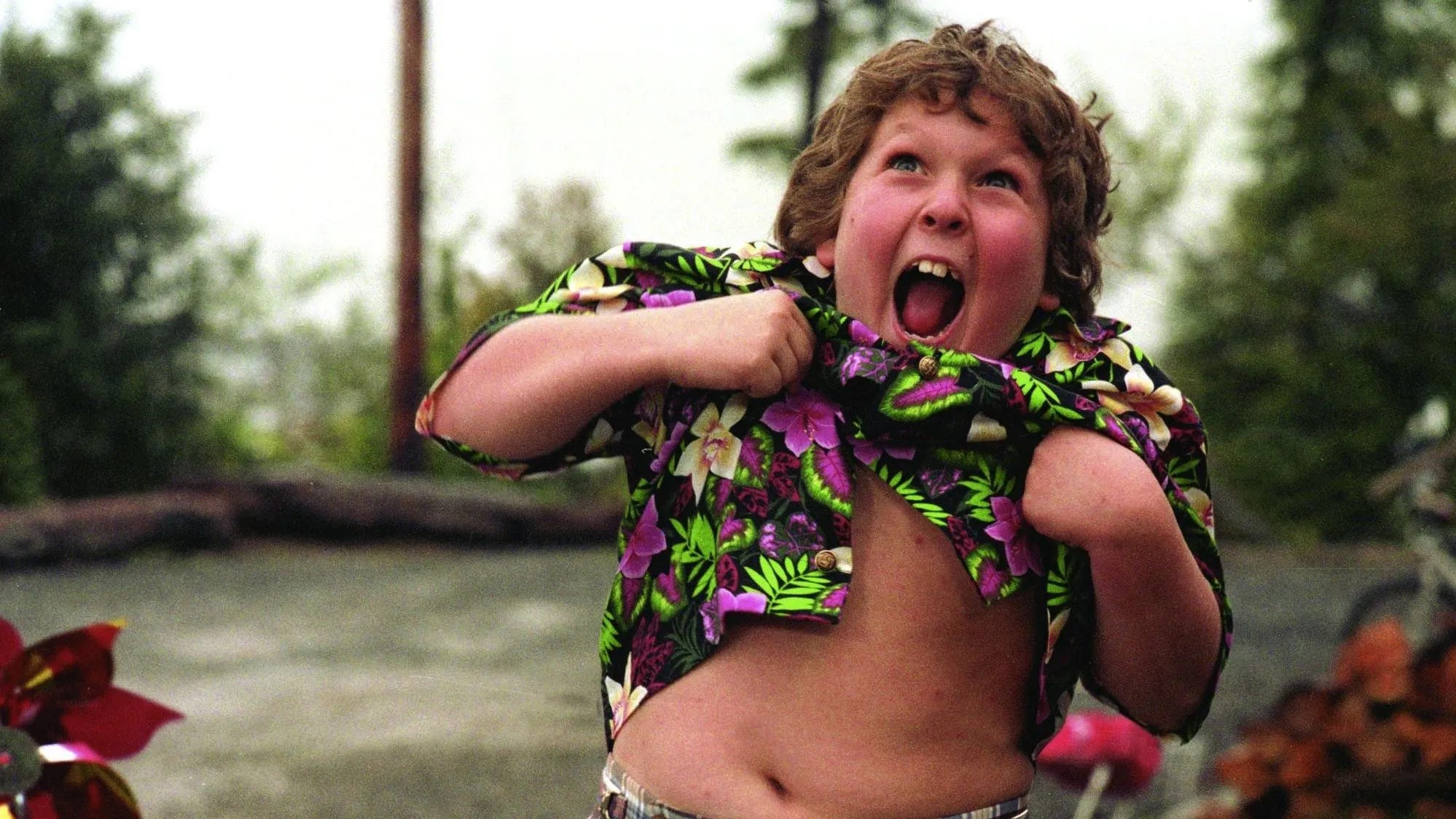
Chunk is separated from the narrative center of the film and that separation becomes the whole point.
In stories, heroes at the center push forward. They overcome obstacles head on. They advance the plot through force, cleverness, or belief. But outcasts at the margins see sideways.4
Chunk’s removal from the group isn’t a failure of courage; it’s a narrative necessity. It’s what allows the film’s moral center to shift. While the others race ahead through tunnels and traps, Chunk is forced into stillness. Into vulnerability. Into proximity with someone else the story has hidden away.
This mirrors real life more than we often admit. Innovation rarely comes from the most comfortable seat. People who exist outside dominant systems are forced to develop different muscles: empathy, adaptability, unconventional alliance-building, HUMOR. Vulnerability becomes not a weakness, but a survival strategy.
Sloth, the Other Outcast
Sloth enters the story framed as a monster.5 But it doesn’t take long to see what he really is: abused, isolated, hidden away, treated as disposable by his own family. He’s an outcast even among villains.
Their similarities are striking. Chunk is rejected socially. Sloth is rejected physically. Both are defined by what makes others uncomfortable or what they don’t want to see.
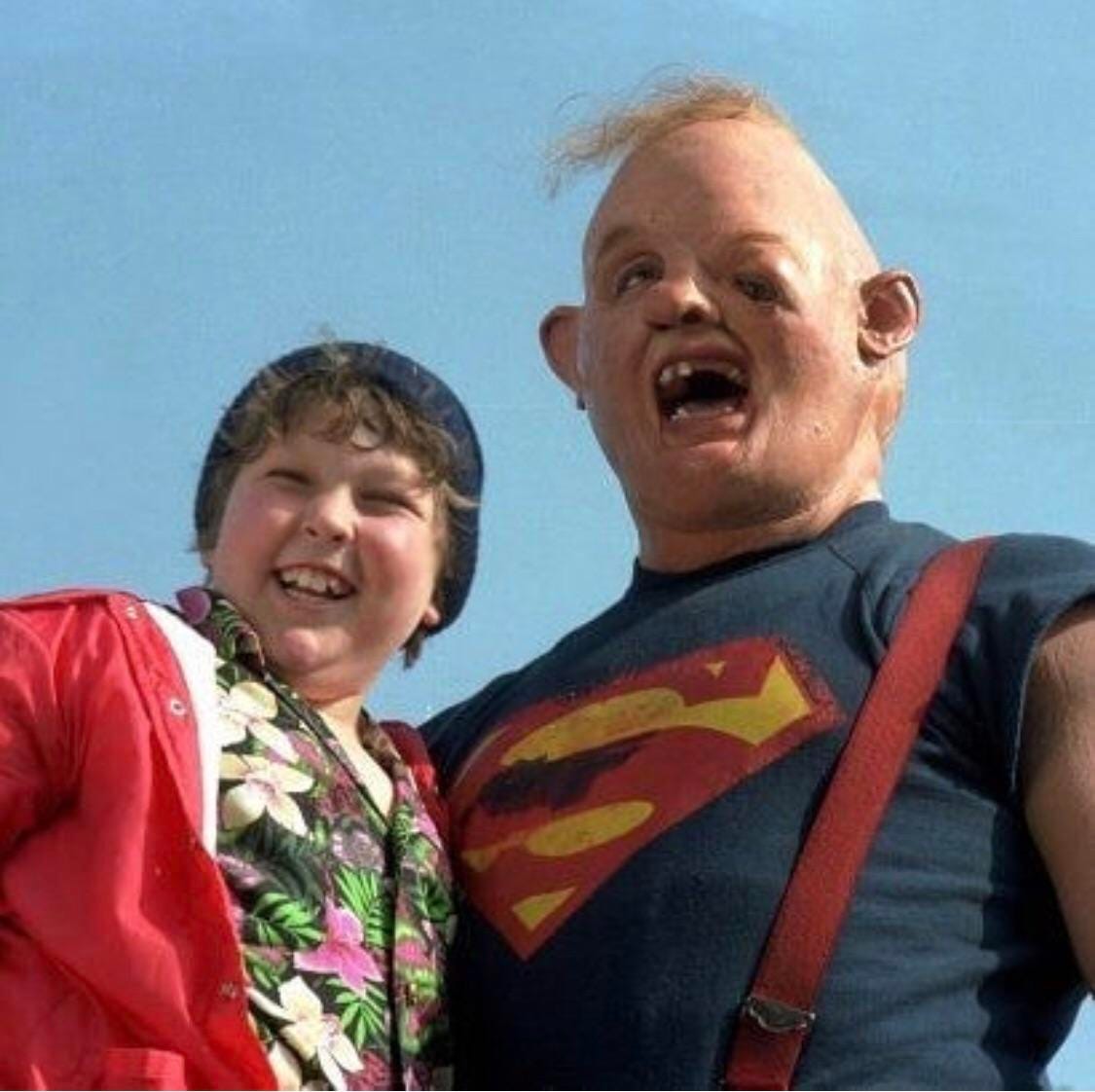
And this is the moment The Goonies quietly reveals its brilliance: only Chunk is capable of seeing Sloth clearly, for who he is. Where others would see threat, Chunk sees loneliness. Where others would react with fear or dominance, Chunk reacts with recognition. Their bond isn’t strategic. It isn’t clever. It’s instinctive.
Two people who have spent their lives being told they don’t belong see each other immediately.
Chunk’s defining trait isn’t courage in the traditional sense. It isn’t intelligence. It isn’t even belief.
Chunk’s defining trait is radical empathy.
He doesn’t befriend Sloth to win. He doesn’t manipulate him to escape. He befriends him because he understands him. Because he sees himself reflected back. This reframes heroism entirely. The movie’s primary and advertised victories come from overcoming obstacles. Chunk’s victory comes from changing a person, and in doing so, changing the outcome of the entire story.
Not domination or cleverness or belief alone.
Connection.
How Chunk Saves the Day
Strip the plot down to its essentials and the truth becomes unavoidable: without Chunk, the Goonies fail. The villains aren’t defeated by traps alone. They aren’t undone by bravery or teamwork at the center of the group. They’re defeated because an outcast forms an alliance with another outcast. With someone no one else bothered to see.
Sloth’s choice to help isn’t coerced. Chunk doesn’t try to trick him. He earns his trust through understanding and authenticity. Sloth’s choice is relational. He gets Chunk.6
This is spoiler energy in the truest sense: not smashing the rules, but rewriting the game from the margins.
This pattern repeats everywhere, not just in movies.
In art, tech, politics, and culture, meaningful disruption almost always comes from people who never fully fit. Outsiders aren’t invested in preserving broken systems because those systems never worked for them in the first place. They notice what insiders normalize. They ask different questions. They form alliances that seem illogical until they work.
Outcasts are generally seen as a threat, not because they’re loud or violent, but because they see alternatives where others see inevitability. And that doesn’t just make them a danger to the status quo; it makes them extremely valuable to society at large.
Chunk is a natural extension of that lineage.
Why This Still Matters
We live in a culture that increasingly valorizes polish, confidence, and certainty. “Main character energy.”7Optimization. Personal branding. Protagonists who never doubt themselves for too long. We’re all the hero of our own story, but many people now seem to take that as a directive on how to behave, as opposed to a lived experience.
Chunk offers a counter-model.
He’s emotional. Afraid. Soft. He cries openly. He needs reassurance. He leads with compassion instead of dominance. All in the name of trying to relate to people.
In a world that sidelines softness, Chunk’s heroism feels quietly radical.
The Goonies endures because myths don’t just entertain us—they tell us what we value. And intentionally or not, this one suggests something profound.
That the kid who cries. The kid who’s left behind. The kid who makes friends in unlikely places.
That kid might be the most important one of all.
Chunk isn’t the hero despite being an outcast.
Chunk is the hero because he is one.
Where to Watch
THE GOONIES (1985) — Directed by Richard Donner
Physical Media: 4K UHD available from Warner Bros. The transfer is solid, though the film’s naturalistic 1980s cinematography doesn’t benefit from HDR as dramatically as more stylized fare.
Streaming: Available on HBO Max.
Note: Watch it with someone who hasn’t seen it. The generational transmission of this film is part of its cultural function.
Random Stuff, Sports, Workout Accomplishments are probably the top 3. Conversation about top secret strategic national defense initiatives is probably #4.
Case in point: Cola wars were a real thing. Coke and Pepsi pretty legit flamed each other over the airwaves nonstop. The 2020s equivalent of this is insurance commercials.
Both now and then, I’m not sure I ever laugh harder than when Data opens his coat and the boxing glove comes out and hits Joey Pants in the nuts.
Even though he’s the main character of the film, Peter Sellers’ Chance the gardener in Being There gives similar outcast as the hero energy.
A moment to pour one out for John Matuszak. 10-year NFL career, working actor for another 8. Dead at 38 from an overdose of prescription pain meds, given to him like M&Ms by team physicians in the NFL so he could play through injury.
What’s also funny is that the other brothers get him too. When Chunk is confessing all of the things he’s done through his life (also perhaps the funniest scene in the entire film), the other Fratelli brothers can’t help but relate to him either.
Individuals currently on notice: people who listen to social media posts on public transportation without headphones, anyone driving a pick up truck with wheels larger than 30”, the person in the grocery store who “needs to speak with the manager”, people who routinely carry selfie sticks, anyone who pronounces it “nucular”, anyone who wants to talk about CrossFit for more than 60 seconds.