



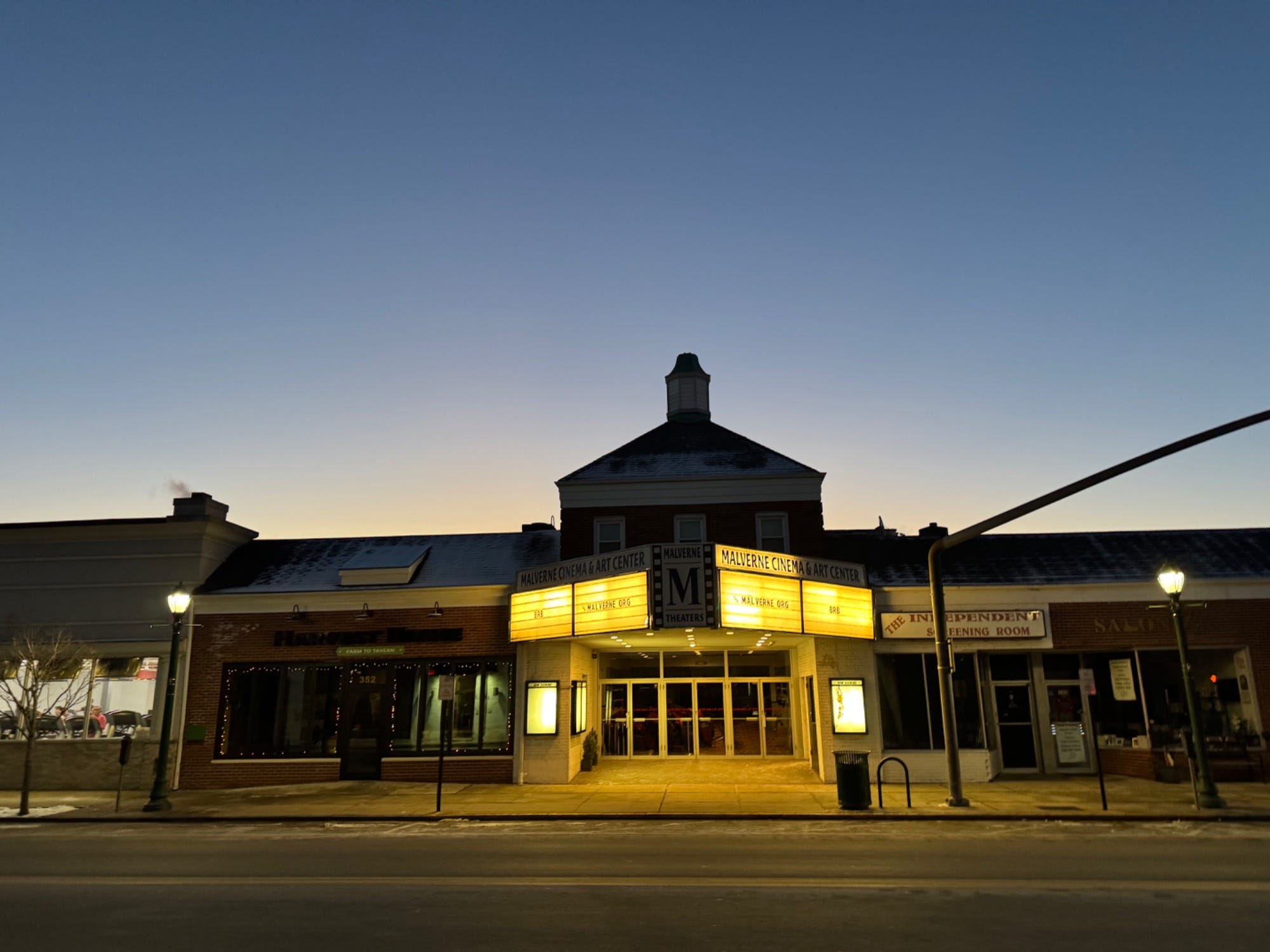
On Long Island’s South Shore, construction on the Malverne Cinema began before World War II, the brainchild of B.S. Moss Theatres, one of the great early New York exhibition chains. When wartime halted building supplies, a skeleton of steel girders stood in the center of the village for years — probably serving, as Cinema Treasures notes, as monkey bars for the local kids. The building waited. The village waited. When the theater finally opened on May 26, 1947, the first film it screened was Frank Capra’s It’s a Wonderful Life.
The Malverne Cinema opened with a story about how places hold the lives of the people who pass through them. Seventy-eight years later, that is exactly the argument being made for its survival.
I visited the Malverne with my son on Martin Luther King Day. It was freezing. The building sits at 350 Hempstead Avenue, right on the main drag in the middle of town, just off the LIRR — an anchor that can be one again.
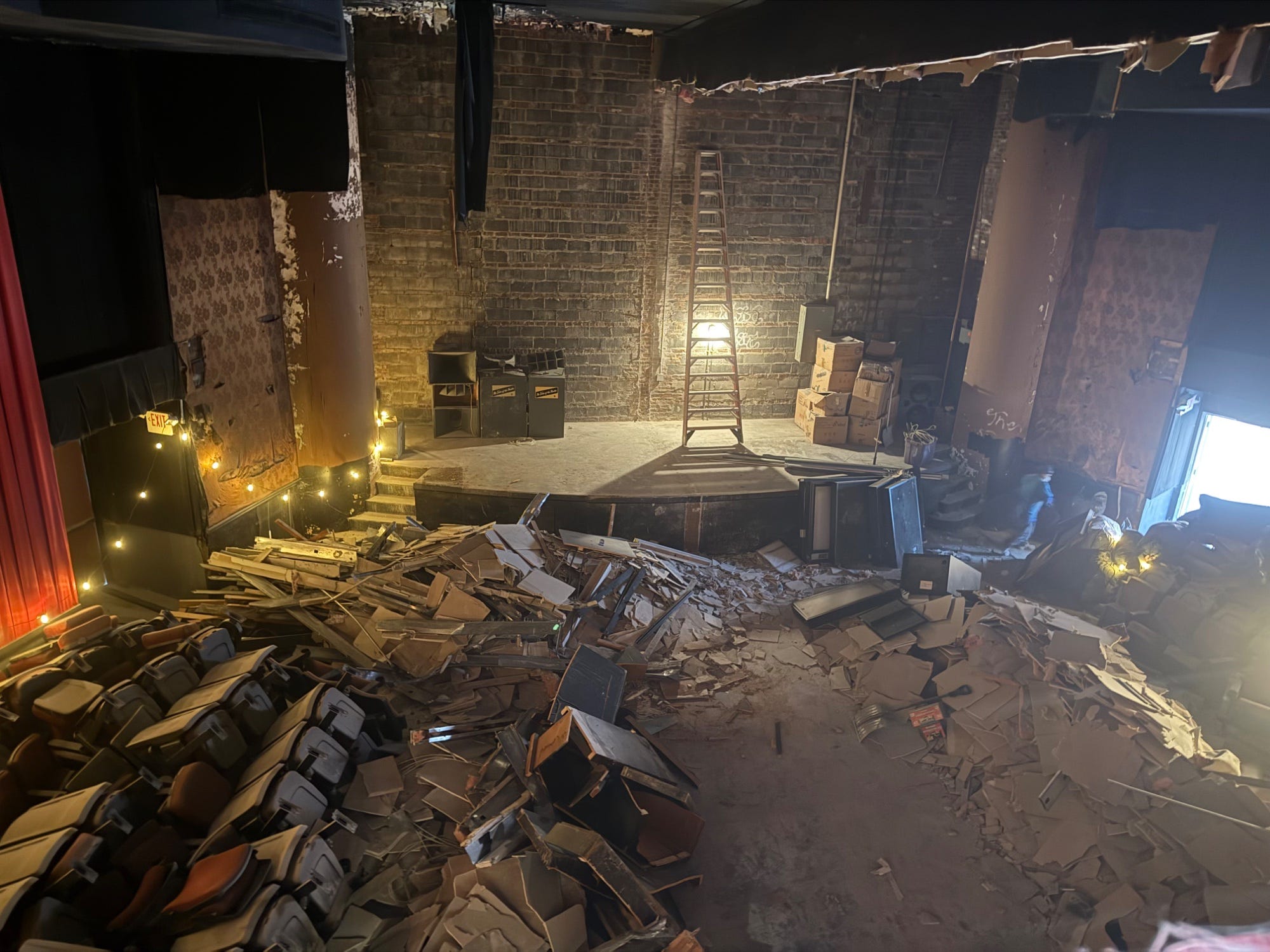
Nick gave us a brief tour as the renovations were really getting started. Inside, it was grungy — down to studs and exposed wiring, the wall between theaters three and four freshly demolished, electrical cables hanging from the ceiling. But you could see it.
You could see the massive potential for an independent community theater with room for a bar, live events, repertory screenings, all of it, steps from the train. The cement stage that had been hidden behind two movie screens for decades was finally visible. My son looked up at it and I thought: this is what it looks like before the curtain goes up.
Three weeks later, we spoke over Zoom, and the progress was already visible.
For decades, the Stampfel family operated the Malverne with the kind of care that has no corporate equivalent. Anne and Henry Stampfel — she started as a candy salesperson, he as a projectionist, they met at a theater in Oceanside — expanded the single 700-seat house to five screens and built a reputation for curating independent, foreign, and documentary films that drew cinephiles from across Long Island. “It would be sold out all weekend Thursday through Sunday,” their daughter Joanna Volpe told the Herald. “They trusted it would be good because they knew films would be carefully curated.”
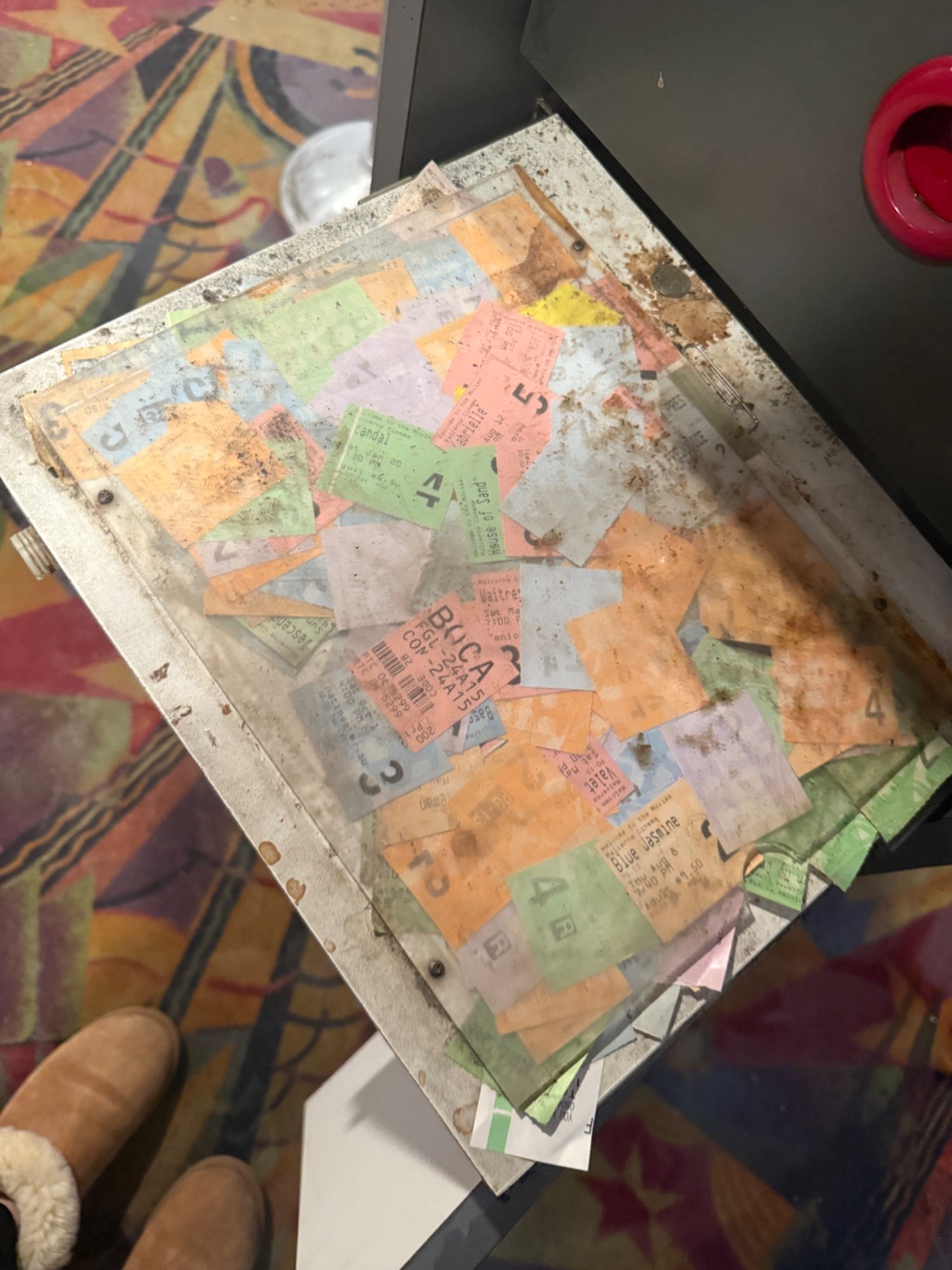
On September 29, 2024, the Malverne went dark. The HVAC had failed, the landlord wouldn’t cover repairs, post-pandemic attendance never recovered. Malverne’s chief of police, John Aresta — whom Anne Stampfel had hired as an usher in 1981 — stood in the lobby one last time. It felt, by all accounts, like a shiva call.
When we first wrote about what happened next, we called it “The Malverne Miracle.” That language still holds.
Nick Hudson has deep family roots in Malverne. His grandfather grew up down the block on Malverne Avenue; his great-grandfather lived in Lynbrook and walked to the cinema each day for his job as ticket taker. Hudson runs E2AC, a 501(c)(3) that connects filmmakers and funders to produce social impact entertainment — now supporting over 300 projects, with an emphasis on social impact documentaries. He’d spent over a decade watching what happens to independent theaters after they close. They become retail. They become residential. They become anything except what the community needs.
He connected with Maria Dente, a 13-year special education teacher and founder of Dente’s Dreamers, a Lynbrook-based nonprofit that creates opportunities for people with disabilities across every aspect of theatrical production. She’d been looking for a permanent home. The Malverne had a cement stage behind those movie screens that hadn’t seen light in decades.
On May 29, 2025, more than 200 people packed the patio at Connolly Station for a community information session. They’ve raised over $100,000 toward a $500,000 goal. On New Year’s Eve 2025, Hudson and Dente signed the lease. They picked up the keys on January 2nd.
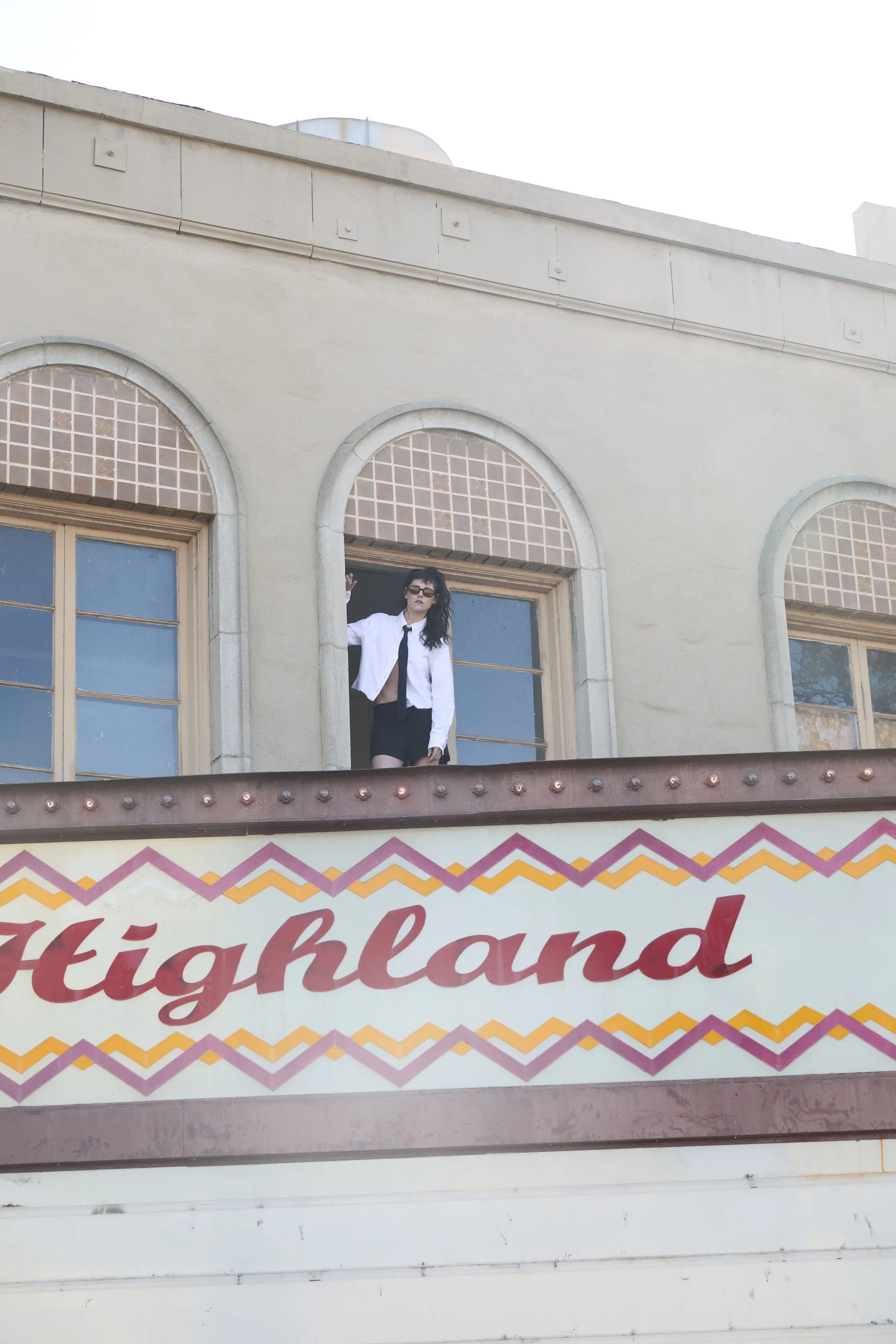
The timing of our conversation was perfect. Days before, Kristen Stewart confirmed she’d purchased the Highland Theatre in Los Angeles — a 1925 movie palace that went dark in 2024. “Buying this theater feels a little desperate in, like, the most beautiful way,” she said. She joins Tarantino at the New Beverly and the Vista, and a coalition led by Jason Reitman that saved Westwood’s Village Theatre.
Something is happening. But here is what strikes me about this moment: the story of independent exhibition in 2026 is not the story of what we have lost. It is the story of what is being built in its place — often by people with no Hollywood millions, no Architectural Digest photo shoots. It is the story of softball dads hauling broken chairs out of gutted screening rooms on Long Island.
Here’s what Nick and Maria told me about the ongoing Miracle in Malverne.
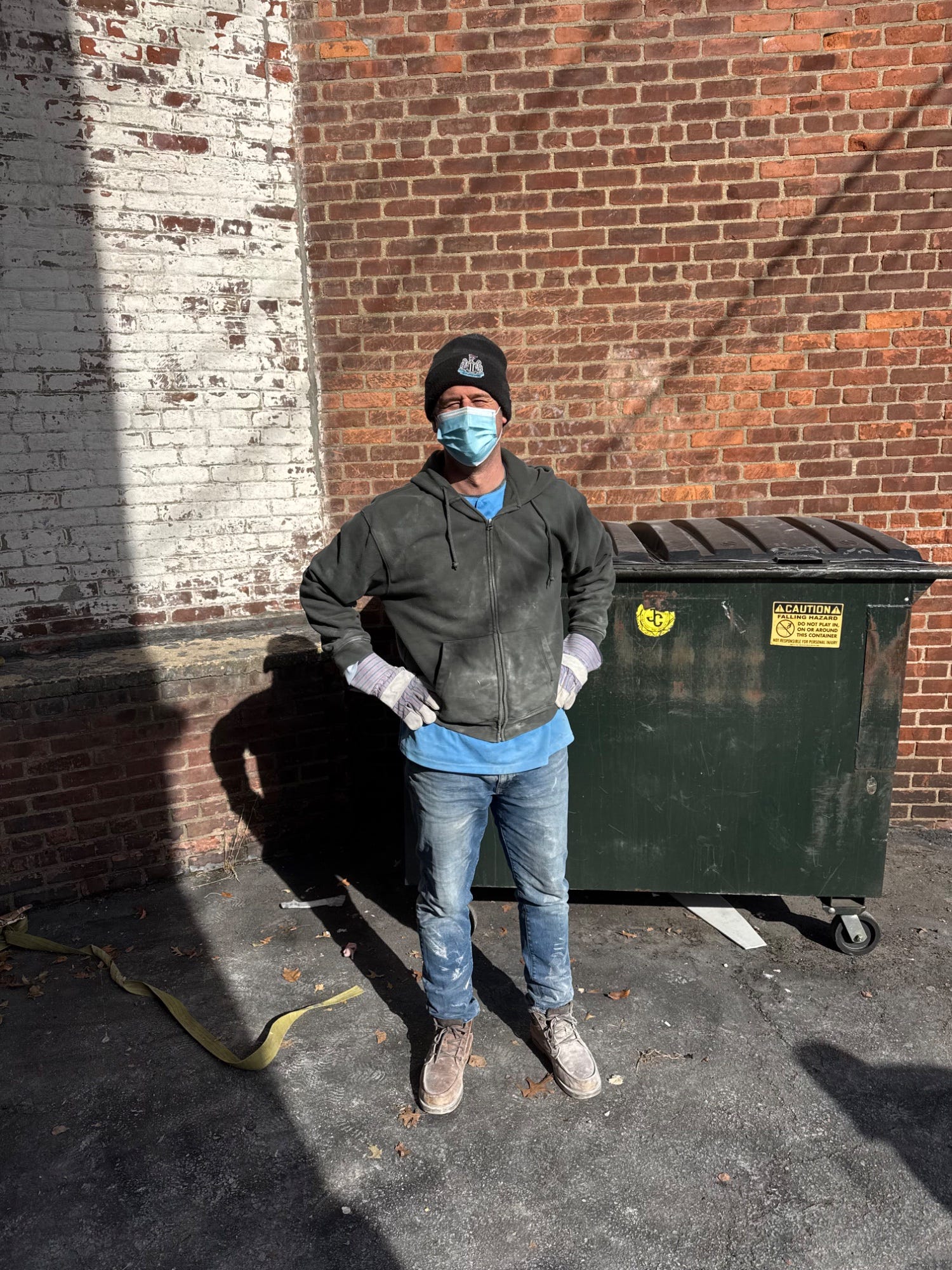
When I saw the space on MLK Day, you were ripping things apart and pulling seats out. What’s the progress since then?
MARIA: Theater Five — the Independence screening room — is officially down to bare bones. Brick wall, cinder block walls, getting ready to become our coffee shop and bar area. Theaters One and Two are still the same; they’ll get a cleaning and a refresh to become our classics lounge and our independent film lounge. But the most exciting part is theaters three and four. The wall is officially down. The stage is exposed. The seats are out. We’re getting the electrical fixed in the ceiling, the HVAC systems are going in. It’s pretty awesome to see that stage finally out from behind those two screens, getting ready to be renovated and have the stars shining on it.
Nick, how are you thinking about programming? The traditional tension in exhibition is always core audience versus wider reach — do you cater to cinephiles or cast a wider net?
NICK: It’s a great question, and honestly, it’s the same thing any business struggles with. In a normal cinema, it’s really hard to negotiate that tension because you have a limited number of screens, not a lot of space, and you’re in competition with other groups. But I think the way we’re building this one, you really can do both. When you think about it as a twin cinema that sits inside a larger event space, it gives you the opportunity to say, okay, if we have a really cool indie coming out that we know is going to draw, let’s flex it out to the back room and have 400 seats. A normal setting can’t do that.
And structuring it as a nonprofit where the people who helped found it don’t have a specific personal financial interest — it really does give us the chance to say, what do you want to see? Because of the history of the cinema, it’s always going to have a really strong indie and foreign streak. That’ll never go away. But I think it’ll be cool to see how many people we can drag into that who never would have gone there in the past other than for a birthday party.
Maria, you’re one of the driving forces behind uncovering that stage. What’s your vision for how live performance works alongside cinema?
MARIA: The fact that we were able to take the stage out and bring it back — that’s probably my personal favorite part about the cinema so far. Dente’s Dreamers will be able to do their productions there, but also teach the community of those with disabilities the ins and outs of the theater. Whether it’s being stage crew, whether it’s being a ticket taker, publicity, concessions, usher — there really are so many phenomenal life experiences to be had in a theater on a regular day. Whether your disability is visible or not, when you walk in there, you are there to be part of a show. You are there for your job. You are there for all these really cool and important things.
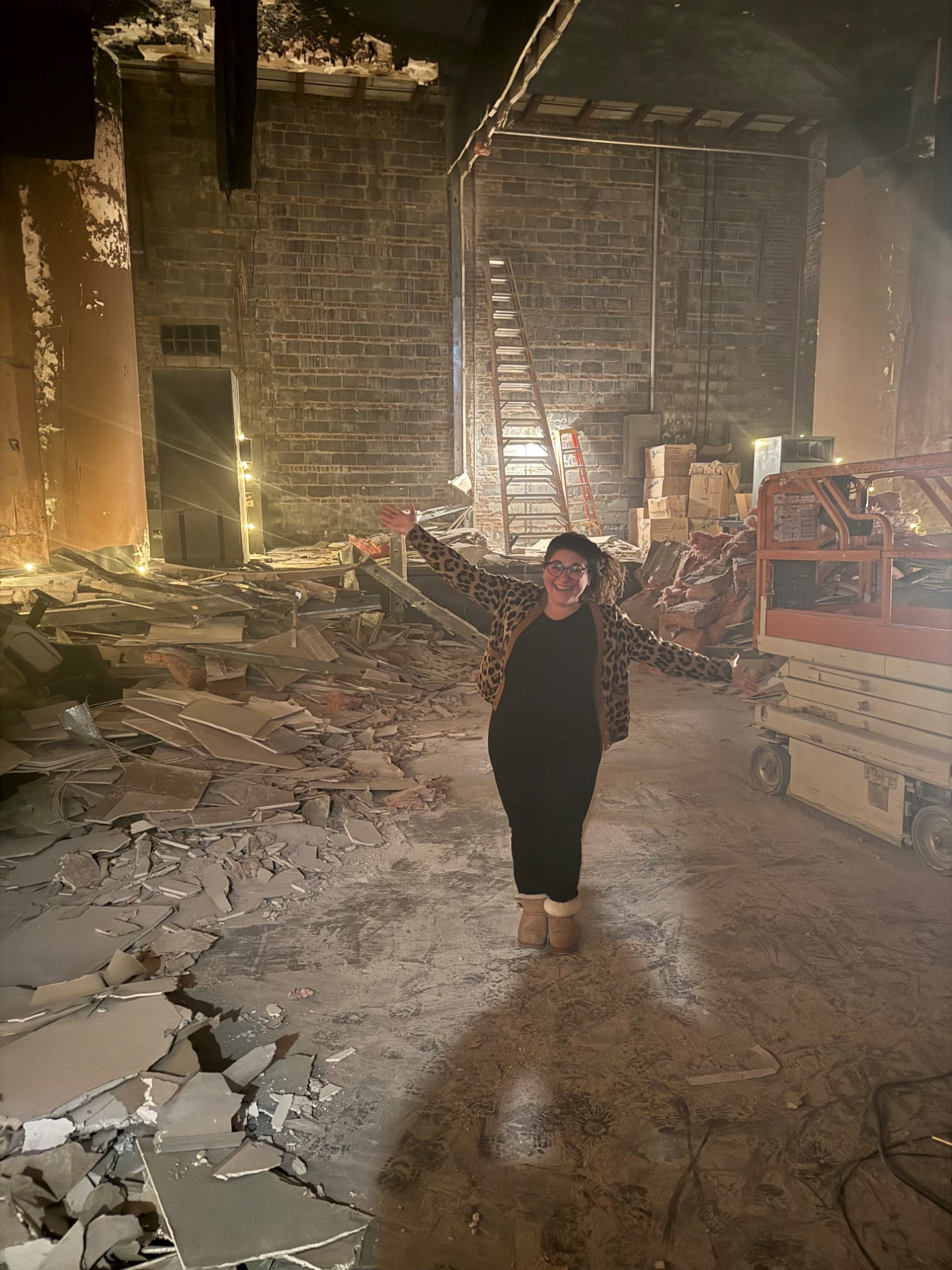
I was at the one-act plays at Hewlett High School recently — my daughter’s very involved in theater there — and I was thinking about community theater groups that might want to rent the space.
MARIA: That’s so important. When I was teaching in the city, we only got one day to do a show. A gymatorium. The seats were just set up for our one day. It’s really not fair. They should get their whole weekend. They should get the matinee. I just directed the life skills musical at New Hyde Park Memorial High School on Friday. Just being able to do it twice was awesome. Being able to rent out this space, have your practices, have your performances more than one night — I think that alone is going to remind people just how important live theater is. We deserve more than one night.
Let’s talk about the bar and café space. The Metrograph in the city has something similar. Are you thinking of this as a broader community gathering space or more of a lobby?
NICK: There’s the concession stand, which was already there — that’ll be a little more traditional, but with community-specific offerings. There’s a mom in town who has something called Rare Treats — her child is allergic to a lot of different ingredients, so she started making them and they’re delicious. We want to sell stuff like that. If we have members-only screenings in conjunction with the film society, we can bring in outside food. It doesn’t just have to be the typical concession stand stuff.
For the front part — it’ll probably lean more toward bar, especially in the beginning. The idea that’s come up a lot is to make it members-only. Because that’s so important to independent cinemas — driving membership and having it be affordable. The cinema has been there since 1947. It’d be really cool if there was a $19.47 recurring donation every month.
I dig that so much.
NICK: And if it does become the membership space, it’ll still be accessible for rentals. Birthday parties, private events — that’s another way to drive revenue, but also open it up to people who are like, where is this? I didn’t know this was here. We’re getting a lot of that because it’s right on Hempstead Avenue.
What are you most excited about?
MARIA: The fact that we’ve received such awesome support from the entire community from the very beginning. Both Nick and I found out about this because of local community members who loved the theater so much and were very sad that it was closing. And I don’t just mean the community of Malverne and Lynbrook. I mean the film societies. I mean the theater friends. Everyone, and especially the disabled population.
Once we did that first walk-in with the keys, we realized something special was happening. It’s for real.
That day we went to turn the key, my husband was videotaping and a gentleman just happened to be walking on the street. He said, “Are you the ones that are taking over the theater?” And we said yeah. He told us this wonderful story. His name was Rob. He used to be a supervisor custodian in a building close by. He was telling us he took his wife there on their first date and remembered the movie.
We’re really excited to have more community members walk through that door and tell us their story, because we get to keep it going for them.
There is a precedent for what Hudson and Dente are attempting. The Bedford Playhouse in Westchester — also opened in 1947, also went dark, also rescued by a grassroots nonprofit — raised $2.5 million in three months, attracted a Clive Davis endowment, and is now one of the most successful nonprofit cinemas in the metro area: three screens with Dolby Atmos, a café, a bar, Broadway performers on the lawn. The model works. It required what cannot be purchased: a community that shows up.
In Malverne, they showed up. Two hundred people on a Thursday night. Marion Dill told the village board: “I was born in this town just about the time when the movie theater opened.” The Stampfels left behind quality projection equipment. Mayor Sullivan told the board the goal was not to “put a coat of paint, throw the lights back on and go back to a business plan that wasn’t really working.” Hudson told the Herald something that sticks with me: “We’ll probably be the first ones to do this. And if all goes well, we will get copied by a lot of places around the country, which adds to the importance that we do this right.”
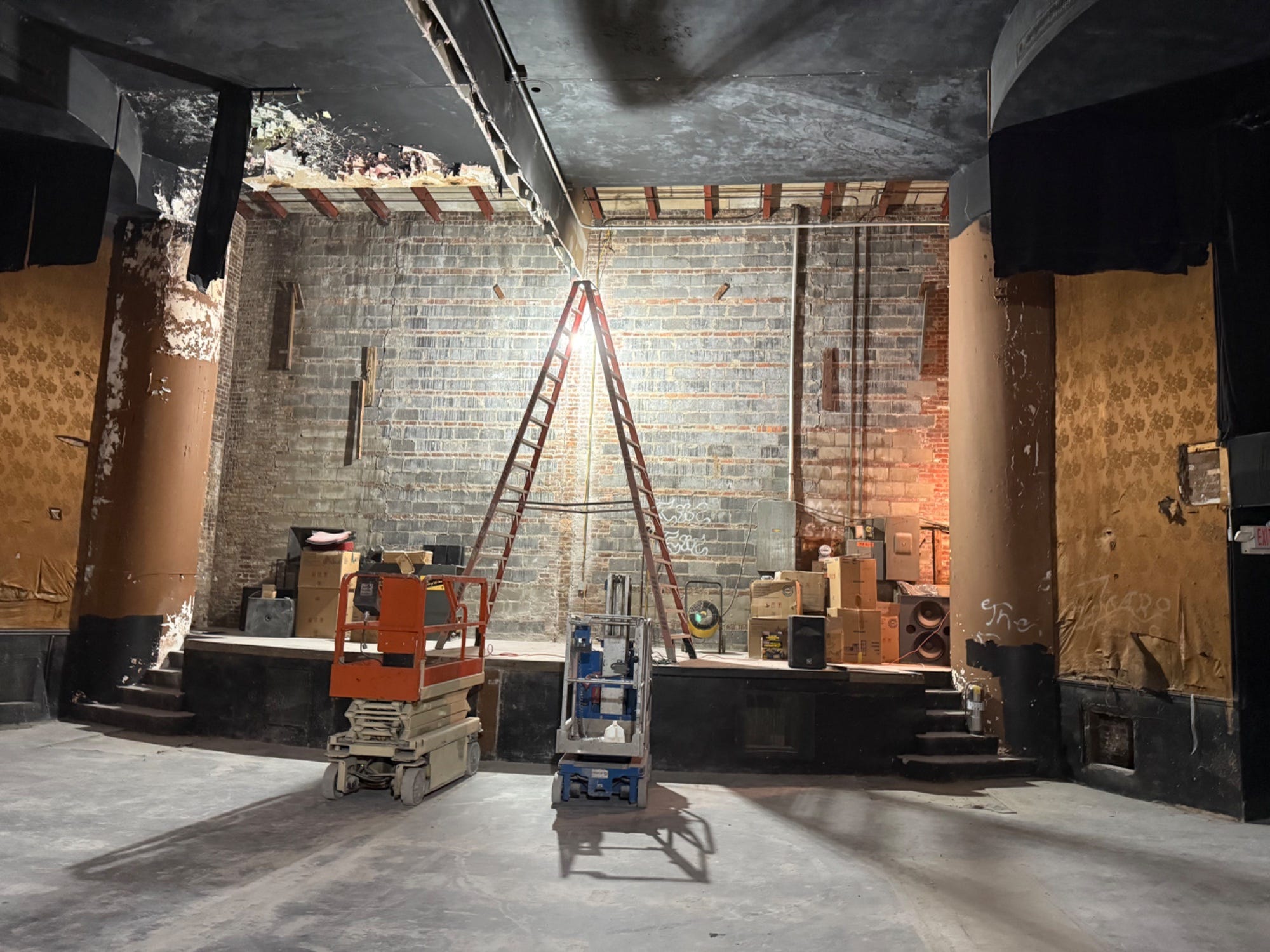
The steel girders stood in the center of the village through the war, waiting to become something. They became a theater. The theater stood dark through a pandemic and an economic collapse, waiting to become something again. The stage is exposed. The HVAC is going in. There is a $19.47 membership that honors 1947. A documentary crew is filming.
And Rob, a custodian from a building close by, walked up to the new operators on the street and told them about the night he brought his wife there on their first date.
The miracle continues.
The Cognitive Film Society is planning a collaboration with the Malverne Cinema. When the cinema opens in full, we intend to help partner on repertory programming — bringing the kind of curated screenings and community events that have defined our work at the Gold Theater to a venue built for exactly this purpose.
Our Diane Keaton tribute on March 1st — screening Annie Hall at 1pm EST at the Gold Theater, Hewlett-Woodmere Public Library — will feature information about the Malverne restoration. Nick and Maria will join us that afternoon to discuss the restoration and the growing enthusiasm for cinema culture across Long Island.
We’re building film culture on Long Island together.
Support the Malverne Cinema restoration: malvernecinema.org
Donate — tax-deductible
Merch — pick up Malverne Cinema gear
Volunteer — they need skilled labor now and will need ushers, concession staff, and more when they open
Follow: @themalverne on Instagram
Join us March 1st for Diane Keaton at the Gold Theater, Hewlett-Woodmere Public Library. Free admission.
All photos courtesy of the Malverne Cinema & Art Center.
This is such outstanding news!