



“What’s your favorite movie?”
It’s a common, anodyne small talk question. Its asked by friends and partners, going around the table at a work event and as an ice breaker arriving at college.
It isn’t an easy question. You may have different answers based on where you are in your life or even your current mood.
A even more difficult question is why. What drew you to the movie? Was it the actors in the film? The subject matter? The characters? And what made you stay? The plot development? The jokes? Hugh Grant’s hair?
Well, Filmstack, The Cognitive Film Society is giving you the opportunity to answer those questions and more. We’re launching our new series “My Favorite Movie” and we want to open the doors wide open to hear about the films people love the most, from our friends (both old and new) across this platform.
If you’d like to contribute, we’d love to have you! Send us a quick note at dhesney@cognitivefilms.org with the name of the film and a quick paragraph telling us why it’s your favorite.
We’re kicking off the series with our West Coast editor Geoff Wolinetz and his exploration of infrastructure and identity in the seminal 1970’s classic Saturday Night Fever.
We hope you enjoy, and we hope to hear about your favorite movie next!
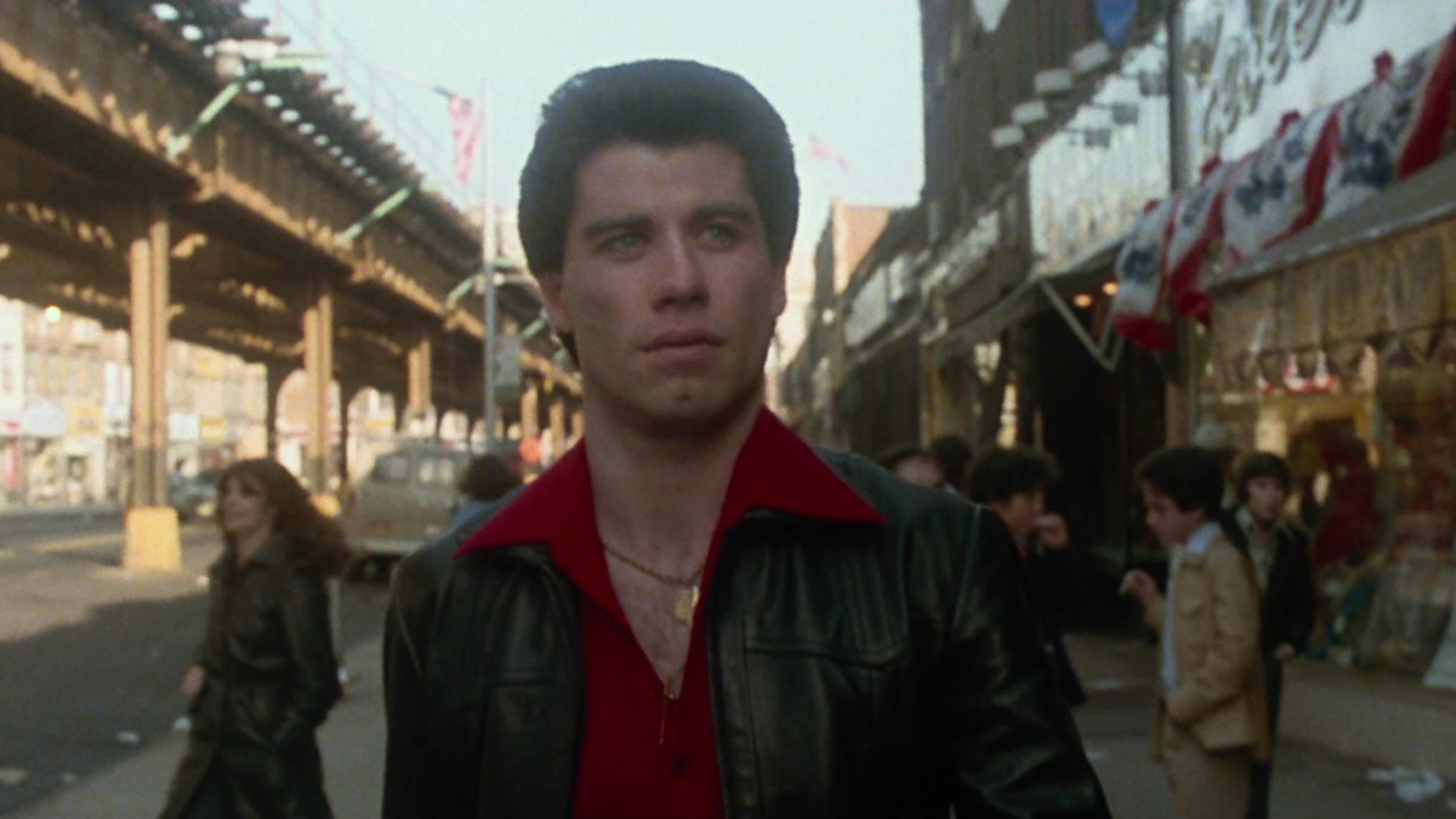
I’m not exactly sure why, but I love bridges1.
When I was really young, probably in the 1st or 2nd grade (I’m too lazy to look it up right this moment), the Brooklyn Bridge celebrated its 100th birthday and I remember in school we had a day where we celebrated the bridge. We all built bridges out of cups and construction paper and whatever we used to decorate it and that was our project for the day. I don’t know if that was part of the curriculum or what2, but it was fun and it’s pretty wild that’s stuck with me all these years. And so the first time that I watched Saturday Night Fever and saw that the Verrazzano Bridge isn’t just in the movie, it’s effectively a character in the film, I knew that the film was for me3.
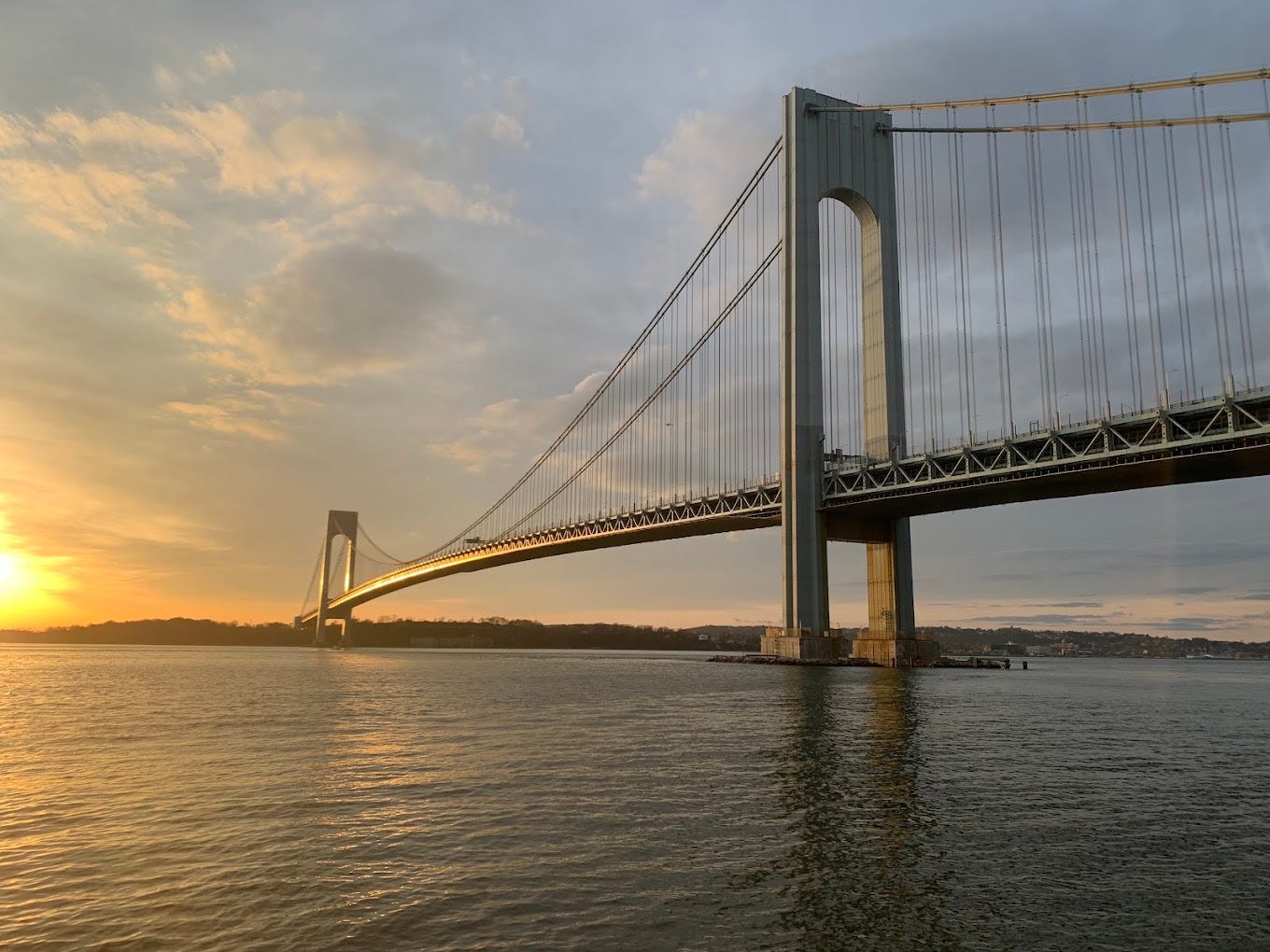
Even if you’ve never seen the movie, you know the opening. There’s a few establishing shots of New York City and a gradual pan to Bay Ridge, Brooklyn. The Bee Gees’ Stayin’ Alive kicks in, and then you see a foot through the window of a shoe store comparing itself to the shoe in the window.
And then the iconic opening: feet walking down 86th St. and a gradual pan up to see Tony Manero walking down 86th St. in Bay Ridge. You can feel the rhythm and energy of the city as he struts through the streets like he owns the place, grabs a couple of slices of pizza and ogles a couple of girls.4.
Tony Manero looks like the king of Brooklyn with his swagger and his confidence. And as my friend Nick says, it’s good to be the king, even if it’s just a small universe. But the film is about him realizing that Brooklyn might be the smallest kingdom in the world. And Saturday Night Fever isn’t just a disco movie. It’s a story about identity, masculinity, class, and the painful moment when someone realizes the world they dominate is too small for the life they desire.
The Two Faces of Tony Manero
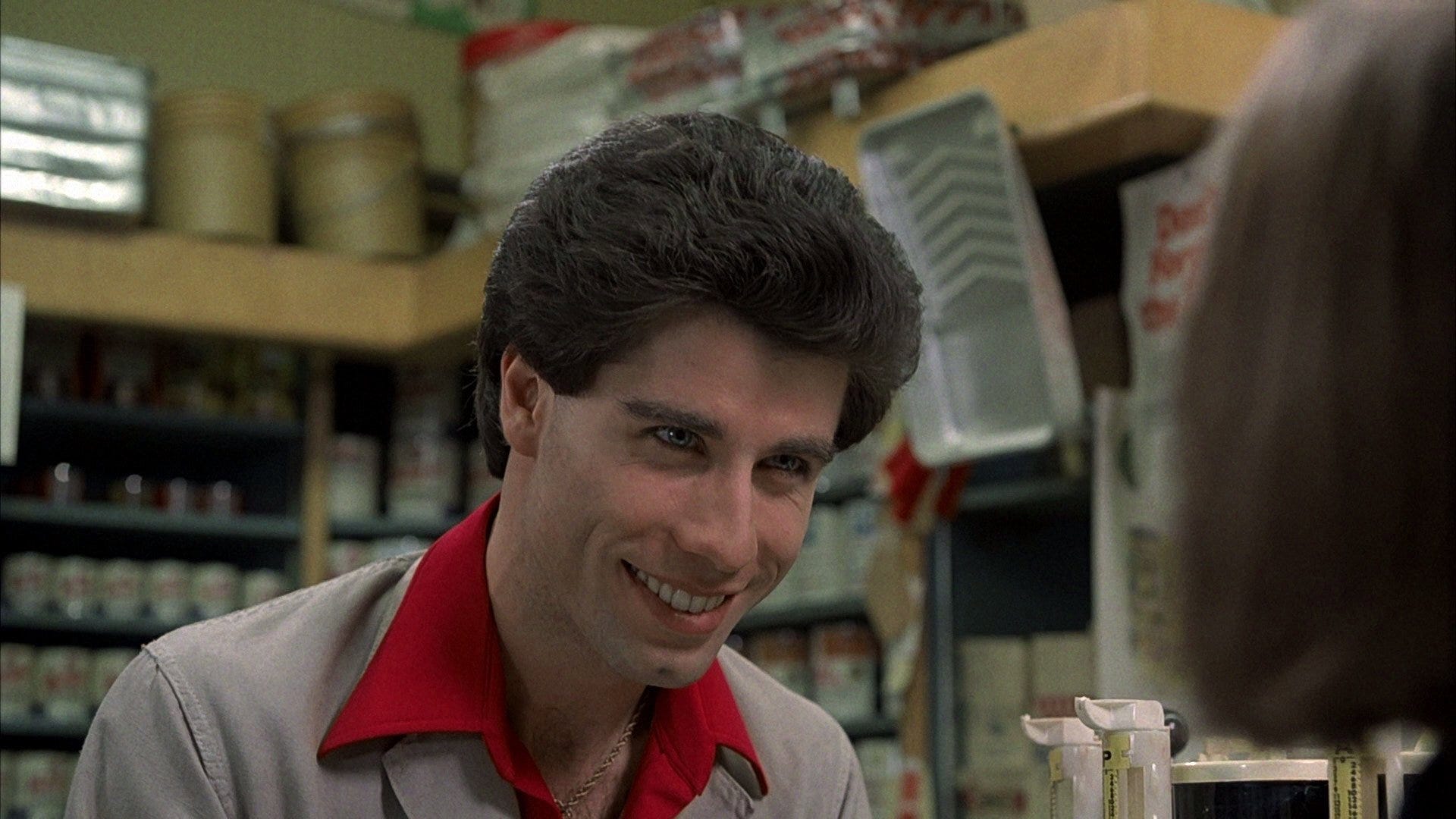
Tony lives two completely different lives. By day, he’s Tony the paint store clerk working for Mr. Fusco at Pearson Paint5. He’s the working-class son of an unemployed construction worker father and a hyper-religious Catholic mother crammed into an unremarkable Brooklyn house on an unremarkable Brooklyn street. He’s ignored and belittled by his family. In fact, one of the illuminating scenes in the film is when Tony brings home a $4 a week raise and his father makes fun of him for being proud of it. Tony explodes at that and tells him the raise and dancing represent the only time anyone has ever told him he’s good at something. Tony is well aware that his future is limited by the world he lives in, even if he doesn’t really want to admit it.
Because at night, a different Tony emerges. This Tony is charismatic and admired by everyone at the 2001 Odyssey disco6. He widely seen as the best dancer in the room and a local celebrity. He’s known by the bouncer and gets admitted quickly, skipping the line. He’s greeted warmly as he walks through the club, shaking hands and hugging people. And eventually, he takes over the dance floor.
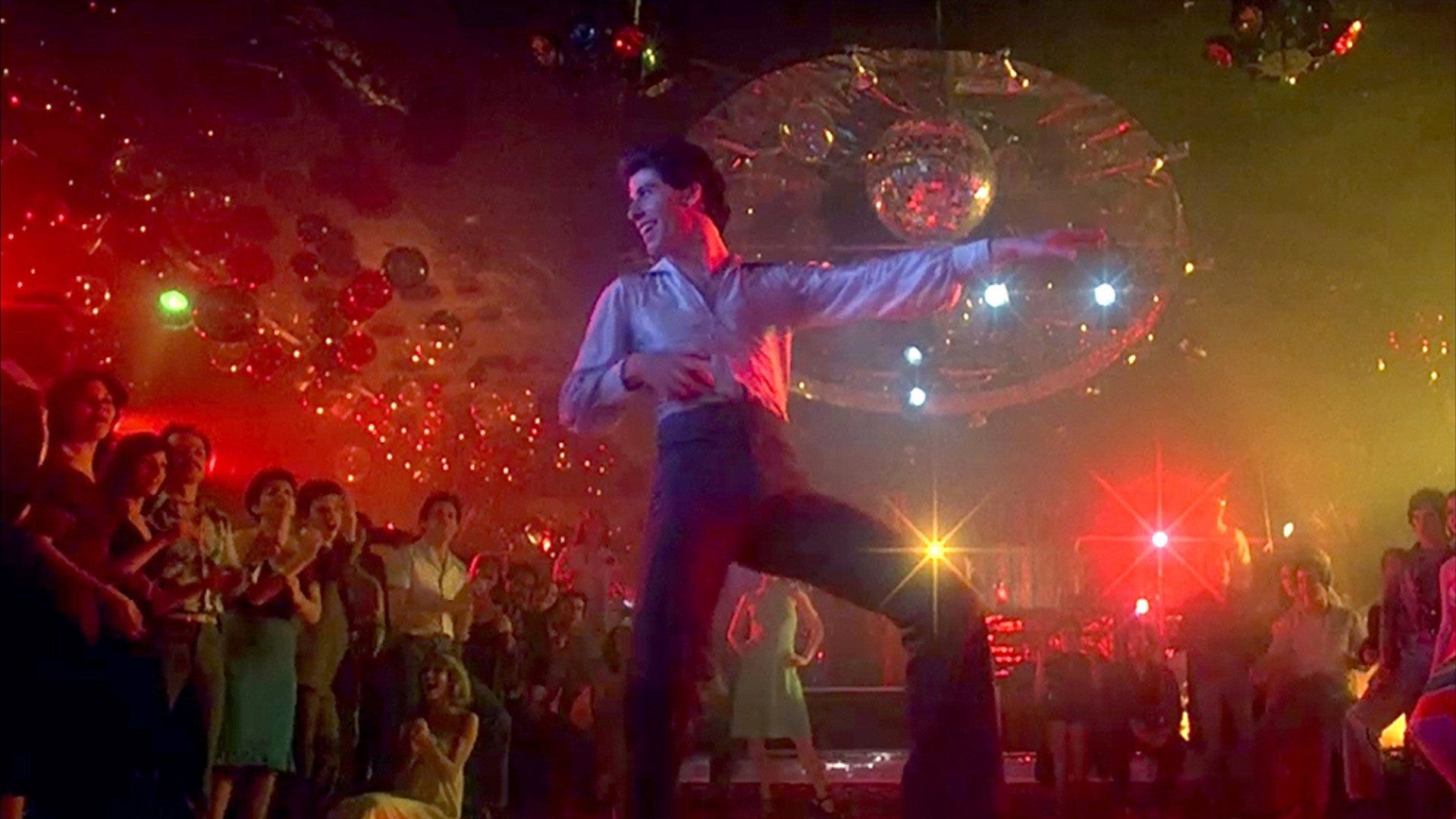
For Tony, the disco is a temporary alternate identity. And the disco providing escape for Tony makes the soundtrack the emotional engine of the film. The music itself is transformative for Tony, akin to Clark Kent stepping into a phone booth and emerging as Superman. The moment he steps on the dance floor he becomes someone else, a more self-actualized version of Tony Manero. And it’s a strong contrast to his bleak everyday life as a paint clerk. The music doesn’t just accompany Tony’s life; it actively creates a space where he feels powerful.
While we’re here, let’s take a moment to nod to the creators of the soundtrack, the powerhouses of the Disco Era and the raw deal they got being pigeonholed by the “Disco Sucks” movement. The Bee Gees were international music stars well before disco. In the 1960s, they had pretty big hits with “Massachusetts,” “I Started A Joke,” and “To Love Somebody.” Those songs aren’t just “not disco”; they’re born of the time they were recorded. Disco just made them omnipresent and arguably the most famous musicians in the world for a time. The issue is that the association with disco obscures their actual songwriting talent7, which is evident on the soundtrack with not just the 6 (!) songs they wrote and performed for the soundtrack themselves, but also “If I Can’t Have You” written by the Bee Gees, but performed by Yvonne Elliman.
The soundtrack is almost a character in its own right, the way that the Verrazzano is. And there are a lot of interesting currents that sit beneath what happens in the disco: the cognitive dissonance between the two lives that Tony lives is one of them, and that’s worth exploring, but the other really interesting undercurrent through the movie are the versions of masculinity that Tony is exposed to and if the film generally is about an awakening, what each version of masculinity means to his personal evolution is one of the more compelling throughlines.
The Many Faces of Masculinity
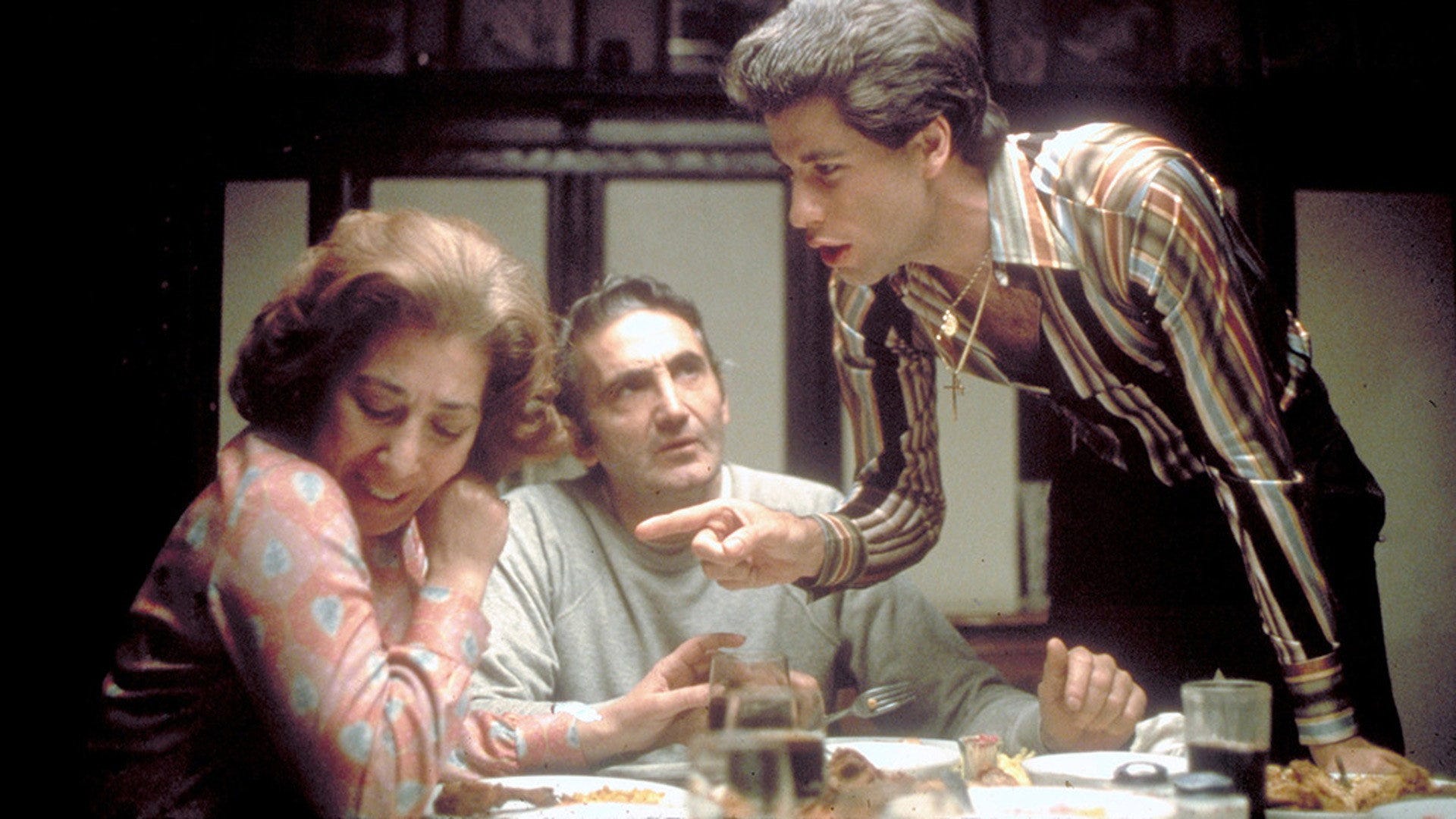
New York of the late 1970s was a micro version of the macro trends facing the entire country. The economy was struggling, racial tensions were exploding with issues like bussing at the forefront, working class neighborhoods were fracturing and the institutions created to support them were failing.
That’s the version of masculinity that Tony’s father represents. He rules his house with what could be called “dominance without purpose.” He now projects authority through anger, with the bulk of that anger coming through the loss of his status as breadwinner of the family, which was the very foundation of his authority in the first place. Now having been out of work for an extended period of time, he has no other model to fall back on as husband and father. He’s a relatively minor character in the film, but it’s clear that his impact on Tony weaves its way through the entire film, despite his vocal rejection of it. It emerges most clearly in his treatment of Annette: the more she openly desires him, the worse he treats her. But this is a model that’s collapsing in more ways than one in the late 1970s, not just literally, but economically and emotionally.
If dominance without purpose is the model of masculinity that Tony’s father subscribes to, Tony’s mother subscribes to a version of masculinity that’s authoritative through virtue and manifests itself through Tony’s brother, Frank Jr. the priest. His position in the church provides a moral authority and that religious commitment is what drives his respect from the family. There’s a poignant exchange in the film that underscores how fragile that respect and authority are. In a conversation with Tony, Frank Jr. admits that he only became a priest because he was inhabiting the idealized version of what their parents wanted for him8. As it turns out, the version of masculinity that Frank Jr. represented didn’t just collapse. It never really existed at all.
Tony’s friend group exhibits an entirely different version of masculinity, one that’s more performative and rests on a foundation of emotional immaturity and an inferiority complex. It’s the most toxic form available to him as a model. It’s racist, as seen by Gus’s assumption that the Puerto Ricans who attacked him were in the rival group the Barracudas rather than actually knowing who did it. It’s homophobic, as seen when they throw a bunch of slurs at a couple of guys walking past them while they’re discussing the Knicks9. It’s grotesque sexual aggression, seen across the entire film. They’re in this constant competition to assert dominance amongst each other and Tony is initially the central participant in this environment.
But over the course of the film, he begins to recognize its emptiness, and he sees it most clearly through the least assertive member of his group of friends, the one person who won’t make it across the metaphorical or physical bridge.
Bobby C: Tony’s Possible Future
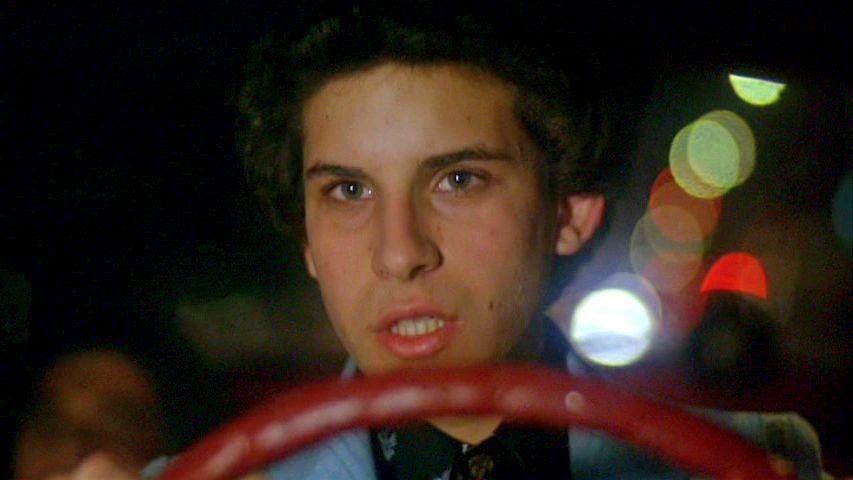
Bobby C isn’t a literal look at the future for Tony, but he’s a projection of what Tony’s future could become if he maintains the path he’s on and never finds the ability to leave. Bobby has everything that’s expected of a man his age in Bay Ridge: a girlfriend and an impending marriage and a child. But none of that represents choices that Bobby has made. Those things happened to him, and they mirror the underlying fear of the film for Tony: that life is going to choose him rather than the other way around.
Bobby is paralyzed by the expectations and overwhelmed by the responsibility of his life and his conversations with Tony reflect that10. Bobby needs help of course, but that’s not what he’s looking for from Tony. Bobby is desperate for escape, but incapable of imagining another life for himself. What he wants more than anything is validation from the person whose judgment carries the most weight in their group. He wants Tony to tell him that marrying Pauline is the right thing to do, that it’s what he’s supposed to do. The tragedy is that Bobby catches Tony right at the time he’s beginning to question those very assumptions.
And while Bobby C exposes the fragility of the world that Tony inhabits, Stephanie Mangano represents the possibility of reinvention.
Stephanie: The Door to Another World
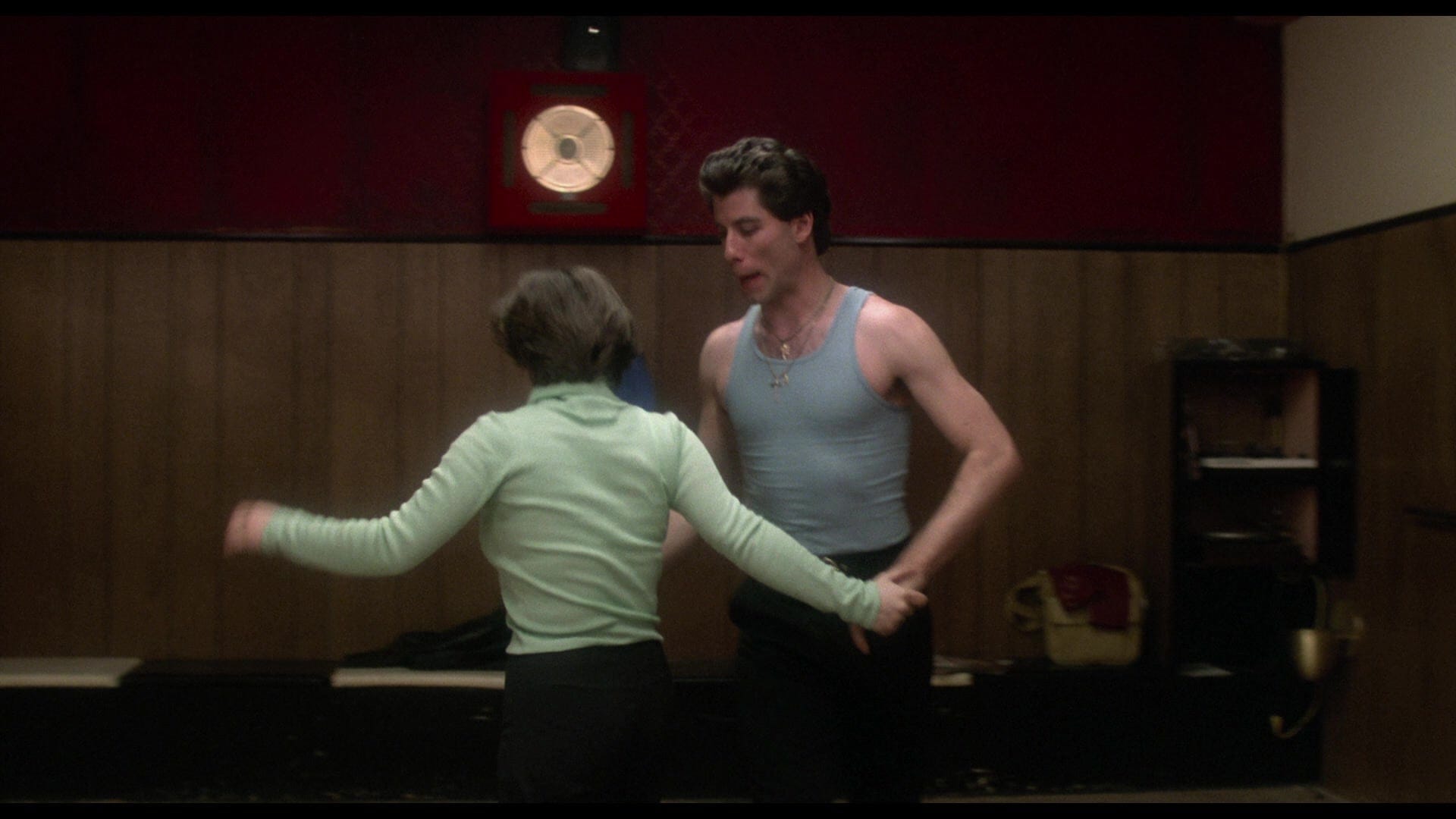
Stephanie11, like all of the characters in the film, isn’t perfect. Above all, she’s wildly pretentious at times and has an overinflated sense of where she fits into the world she’s moved herself into in Manhattan. But in spite of that, Tony is attracted to her because she possesses things that Tony’s friends lack. She’s ambitious and curious. But most importantly, she has a willingness to leave Brooklyn behind to create something new for herself. And that’s where Tony’s fascination with her kicks in. Initially, she’s just another woman for him to pursue, but his interest in her quickly evolves into something different and uncomfortable for him. Tony’s true fascination with Stephanie stems from the larger world she exposes him to.
What makes Stephanie interesting, both to Tony and as a character, isn’t that she represents something Tony should aspire to. She’s simply proof that identity doesn’t have to be something your surroundings assign you, as Bay Ridge has done to Bobby C. Identity can be something you assign yourself.
Which makes the bridge as a character even more interesting. It doesn’t necessarily matter that the Verrazzano doesn’t connect Brooklyn and Manhattan. The bridge isn’t a map; it’s a metaphor. The construction of the bridge itself was a massive disruption to the insular neighborhood of Bay Ridge, in the same way that Stephanie is a disruption to Tony’s provincial life. But there’s also a “so close, yet so far” element to the bridge, the geographical proximity of a different life and the difficult journey for Tony to evolve from who he is to who he wants to become.
The Awakening
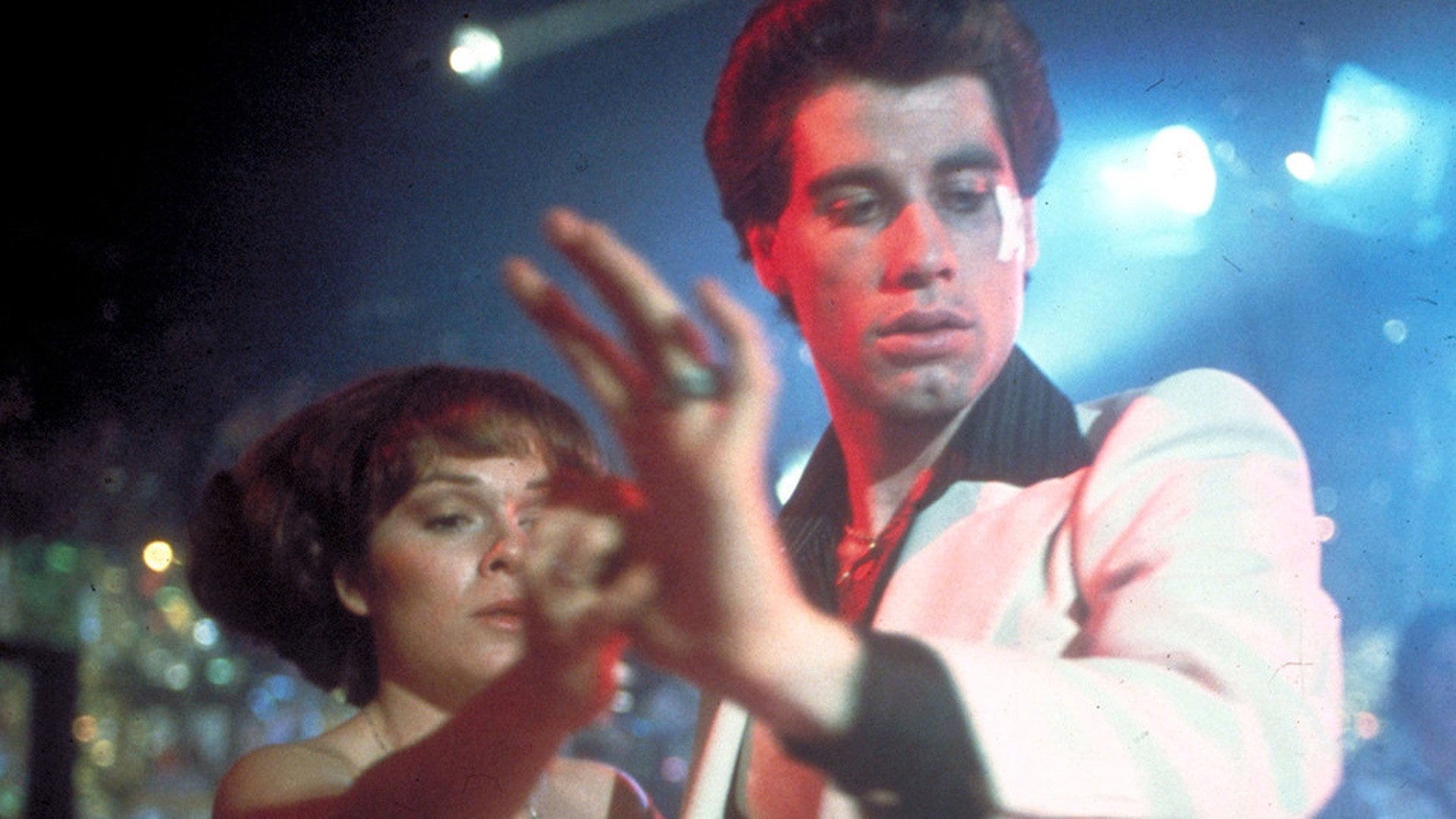
It’s the final act of the film that finally forces Tony to confront the illusions he has been living inside and make a decision about who he wants to be.
The final 10-15 minutes of the film show how messy and uneven true awakening can be. Tony and Stephanie win the dance contest, and in the world that Tony inhabited at the beginning of the film, that should be the ultimate validation. Again, Tony has told us only two things have ever made him feel good at something: his $4 weekly raise and dancing. But the Puerto Rican couple danced better. More importantly, Tony saw it immediately and rather than look past it because it benefits him, he sees the contest as another manifestation of the racial bias. Earlier in the film, identity was sufficient evidence of guilt. Now, it’s sufficient evidence of inferiority.
Winning the dance contest should have been the moment that confirmed Tony Manero as the king of his small universe. Instead, it’s the moment he realizes he no longer wants to be its king.
He receives the biggest validation that his world could give him and he rejects it because he sees the evidence that his kingdom is corrupt. His personal awakening can’t unfold if the disco is a viable refuge and it no longer is. His family has failed him. His friends are increasingly ugly to him. Bobby C is unraveling in front of his eyes. And now the one place that was a consistent sanctuary for him has revealed that it’s also not what he thought.
But the reality is that recognition and transformation are not the same thing. And this is where the film really exposes how difficult it is to change. In a just and fair world, Tony would complete his transformation at the end of the dance contest. But almost immediately after, Tony sexually assaults Stephanie and tries to rape her in the back of Bobby C’s car. The film refuses to let Tony off the hook because he did one decent thing. You can recognize prejudice and still be a misogynist. You can reject an undeserved plaudit and still behave like a monster. Those things can both be true at the same time.
And then comes the bridge. Bobby C falls to his death, forcing everything Tony has confronted in the film into a single moment. Tony can no longer pretend that his world is harmless or temporary. Bobby C’s death forces him to confront the future he’s been trying so hard not to see. It’s not the moment that he transforms, but it is the moment that he sees he needs to.
The Ending: Humility
And so he travels to Manhattan and visits Stephanie. This is the beginning of Tony’s transformation. And for the first time, he arrives without trying to own the place.
The old Tony would have tried to assert his dominance again. This Tony apologizes for his conduct.
The old Tony would have demanded a relationship. This Tony asks for her friendship.
Because the way to Manhattan and a new life isn’t only the RR train. It’s humility. And this is the very first time we’ve seen that from Tony. It signals the beginning of a different life.
Closing: Leaving the Dance Floor
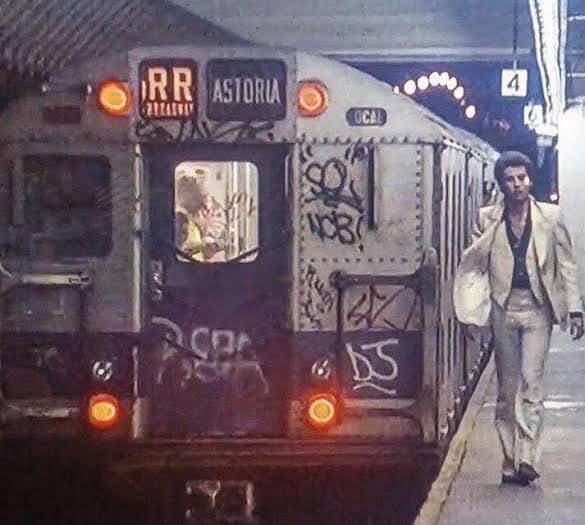
Saturday Night Fever endures not just because of the music and the dancing and its window into a New York that seems completely unrecognizable today. It endures because it’s about the moment someone realizes the life they’ve mastered, the one that they rule and the identity they’ve spent a lifetime crafting, isn’t the life they want.
It’s good to be the king, sure, but sometimes the universe is too small. The dance floor gave Tony the confidence he needed, but stepping away from it is ultimately what will allow him to grow.
Tony hasn’t finished transforming when the credits roll. He’s finally started.
If you’re a fan of New Journalism, bridges and/or mid-century New York City, I’ll throw a book recommendation at you: The Bridge by Gay Talese is about the ideation, naming and construction of the Verrazzano Bridge, written stylistically as a story, not atypical nonfiction text
Probably not
I’m footnoting this, even though it probably deserves more focus than a footnote, but the scene where Stephanie and Tony are sitting along the New York Harbor across the BQE from Bay Ridge and he’s talking about how much he loves and knows about the bridge strikes me as both a) a parallel to the Woody Allen/Diane Keaton scene in Manhattan with the 59th Street Bridge and b) the moment where Tony lets his guard down and stops being the old version of himself and begins to be the new version.
As I rewatched this movie to write this piece, it really struck me how different the world really is now from 50 years ago. Even in this opening, Tony puts a shirt on layaway. Does anyone do layaway these days? Does anyone even know what layaway is anymore?
I recognize this is a lot of footnotes for not a lot of writing, but one of the great exchanges in the film is when Mr. Fusco and Tony are discussing the future and Tony says “fuck the future” and Fusco responds “you don’t fuck the future, Tony. The future fucks you. It catches up with you and it fucks you”
The 2001 Odyssey disco turned into a Volkswagen dealership for many years, which is one of the stranger turns of the area and also one of the least interesting facts I’ll mention
Among Barry Gibb’s post-disco songwriting success: Barbra Streisand’s entire Guilty album (her best selling album), “Heartbreaker” (a top-ten hit for Dionne Warwick), “Islands in The Stream” (#1 for Kenny Rogers and Dolly Parton); “Chain Reaction” (written with his brothers - a #1 in the UK for Diana Ross). And that’s just in the 1980s.
One of the best lines in the film that’s almost never thought of comes in this scene. Tony admits to Frank Jr. that he’s always felt like the family screw-up. Frank Jr. tells Tony he’s now the disgrace, so maybe Tony isn’t the screw-up anymore. Tony takes a beat and says “Maybe if you ain’t so good, I ain’t so bad, you know?”
The Knicks rule all
There’s actually something particularly brutal about how Bobby constantly tries to get Tony’s attention. Tony is the person with the most status in their group, so Bobby naturally thinks he’s the one person who might be able to help him. But Tony repeatedly refuses to hear him. It’s one of the more heartbreaking lines through the film.
A wild fact about Karen Lynn Gorney that I discovered while researching this: Karen Lynn Gorney’s father wrote the Depression-era song “Brother, Can You Spare A Dime?”