



I’m absolutely positive the first time I ever saw a Nazi, he was pursuing Dr. Indiana Jones and Marion Ravenwood in a remote Nepal waterhole. The Gestapo agent Arnold Toht is as relentless as Jaws (1975), or the truck driver in Duel (1971)- but is a far more personal force of merciless malevolence and cruelty. In Raiders of the Lost Ark (1981), the Nazis actually defeat Indiana Jones1, who is saved only through a literal Deus Ex Machina.
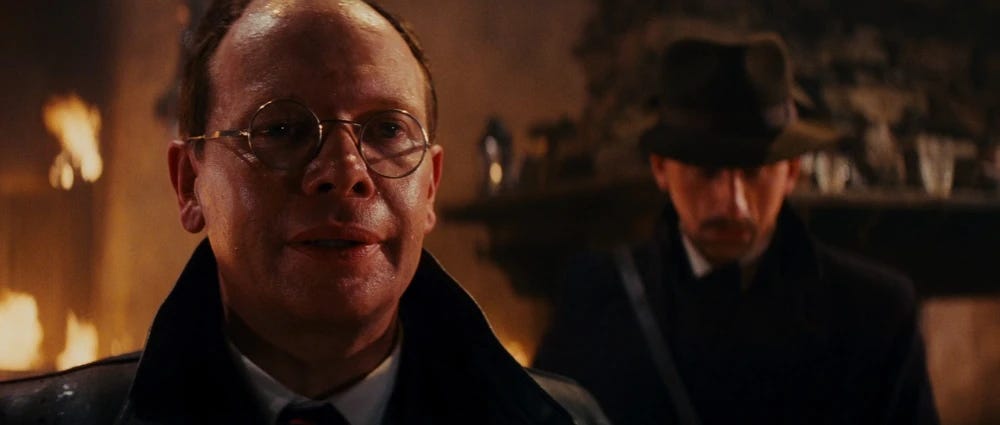
At five years old, the message was received loud and clear. These villains were terrifying in their persistence, their cruelty and their ridiculous yet somehow intimidating uniforms and trench-coats. And only an act of God could defeat them.
WWII might as well have been ancient history to kids born in the 1970’s. These were words and pictures and stories we read about in school and Hebrew school. Our grandparents didn’t want to discuss it. Our Boomer parents were still obsessed with Vietnam. But Spielberg’s filmography - in particular Raiders of the Lost Ark and Indiana Jones and the Last Crusade (1989), and later Schindler’s List (1993) and Saving Private Ryan (1998) really defined the Nazi terror and the American response for Generation X.


These films were spectacle, but they were also warnings and moral fables. These are the bad guys. Look upon their evils great and small. Look at the righteous people like Oskar Schindler who resisted from within, and the boys who landed at Normandy to liberate from across the seas.
“Never again!” is a prominent theme of each film. Indiana Jones sums it up for the audience perfectly:
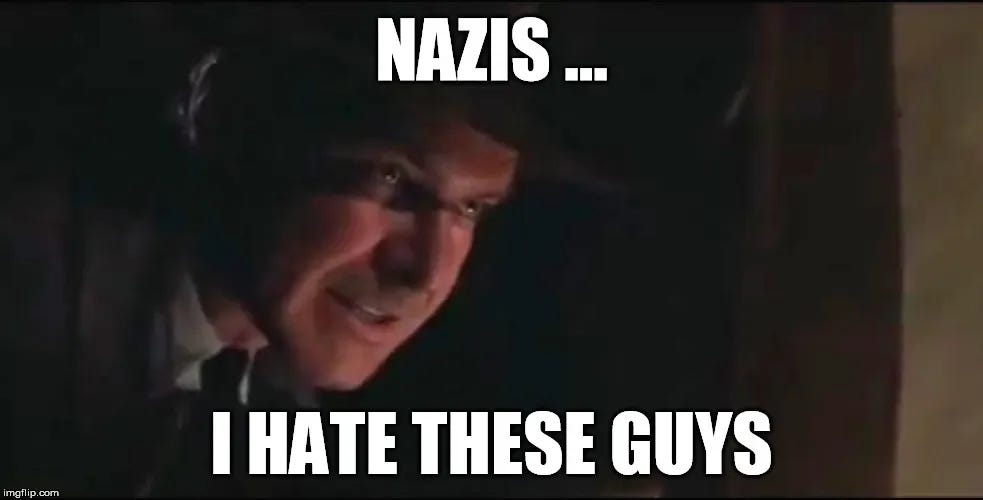
Each of these films is a grand and spectacular statement designed to shake the audience by the shoulders. They demand your attention and force you to see the truth of evil and the imperfect heroism that left it in defeat.
But in 2026, with the world careening between catastrophes - fueled by hatreds, rhetoric and political divisions that more than passingly resemble those of the 1930’s - do we still believe in the power of a spectacular truth, a miracle like the Ark of the Covenant, or a righteous German industrialist, or a company of soldiers dedicated to the prospect of life above all?
Or has it all descended into brutal cynicism and separate realities?
Disclosure Day (2026) is Spielberg’s resounding answer. It is a statement of faith in truth, human empathy and spectacle.
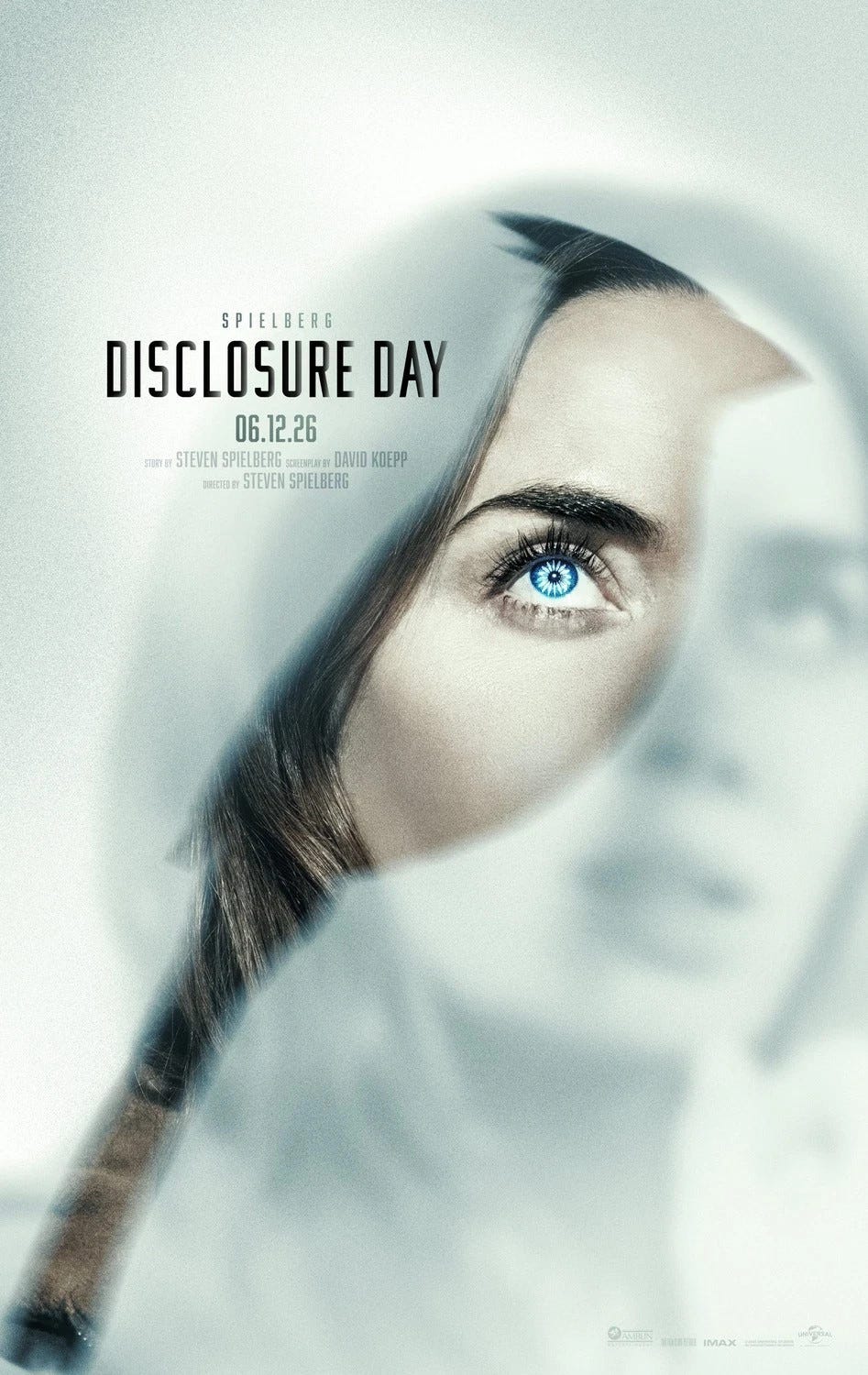
As the spiritual (and maybe actual?) sequel to Close Encounters of the Third Kind (1977) and E.T. the Extra Terrestrial (1982), Disclosure Day shares both films’ sense of chase and obsession — both with alien visitors, and our own human weaknesses.
But as the capstone of that trilogy, he’s chosen The Day the Earth Stood Still (1951) as its touchstone inspiration. The film includes tremendously humane performances from Josh O’Connor, Colin Firth, Eve Hewson and especially Emily Blunt — who plays her character like Annie Hall imbued with Rogue-like superpowers. She delivers a massive tour-de-force.
And while I found the film incredibly moving — the criticisms of the film’s naiveté must be taken seriously — especially when one looks at the critiques of spectacle that emerged during the 1930’s.
François Truffaut, a close Spielberg influence and collaborator memorably said “I don't think I've really seen an antiwar film. Every film about war ends up being pro-war”.
Spielberg’s filmography bears this out. In each of his big four WWII films, there is a nominally happy ending. The good guys win. The bad guys are vanquished by man and a righteous God. The audience should never forget the glorious fight of the Greatest Generation. It is spectacular and emotional and wonderful.
Spectacle has been a powerful tool in showing us the terrible realities and impact of the Nazi terror - but it is ultimately an impotent weapon in showing the truth of its appeal and rise to power. Worse yet, an understandable sense of triumphalism left many believing the fight against such inhumanity was won forever. Indiana Jones literally rides off into the sunset.2
The past 25 years have been more than a rude awakening from this sort of end of history optimism. Today our world bears more than a passing resemblance to the exhausted Liberal Europeans who made the fatal mistake of plunging the world into darkness.
Like them, we’ve been exhausted by small but sapping conflicts in far off lands. We’re experiencing radical technological change, and have been whipsawed between pandemics, market crises and political instability that swings from one extreme to the other.
Are we really so different? Weren’t the Nazis a unique and demonic form of evil? More like Thanos or Emperor Palpatine. Wasn’t it all Hitler?
The broadened access to restored and translated media tells a far more complicated and familiar story. Were bourgeois Germans uniquely susceptible to evil? Are we more resistant or resilient? Could “it” or some version of “it” happen here? What were the human stories that led to the cinematic spectacle of the Nazi Terror and WWII?
Written contemporaneously in the waning days of Weimar, Gabriele Tergit’s Käsebier Takes Berlin (1931) feels like an old school 1930’s screwball comedy that takes place in the world of Cabaret. Berlin in 1929 is stocked with grouchy old school newspaper editors, young writers on the make and women with snappy remarks — who might just be too clever for their own good.

Gabriele Tergit’s real name was Elise Hirschmann, but it might as well have been Lois Lane. According to her official biography — she was the court reporter for the Berliner Tageblatt, where “she covered abortion trials, thefts, murders, bankruptcies and political violence”. Her 1933 escape from the SA is a tale worthy of a Jean Renoir film — with escapes to Prague and trips to Jewish Palestine before settling to safety in London.
But before all of that, Käsebier Takes Berlin was a huge commercial success. Tergit’s ironic, enervated cosmopolitans are cynical about politics, despite the highly polarized environment (and people) who surround them. The journalists and novelists and playwrights decry the death of the intellectual, and the serious newsmagazine but also help the rise of a marginally talented, nostalgia wrapped folk singer Georg Käsebier (translates to George Cheese and Beer) capture the hearts and minds of the city. As the over-the-top hoopla devolves into brain-rot and cheap merchandise, they snark passively and waste money and time on nonsense.
And who can blame them?
After a “long inflation”, and forty-plus years of seemingly endless wars, Tergit’s Berliners have sardonic humor about their decline. There’s a languidness and seen-it-all before attitude — even as they endure long waits for reservations at the hottest restaurants and chatter about the latest fashions and popular entertainment. On the margins there are insane right wingers and dogmatic Leftists arguing and sniping at each other — but no one takes them, or anything else too seriously.
In many ways, Käsebier Takes Berlin is the spiritual sibling to the Carole Lombard classic Nothing Sacred (1937). The “nothing” of this film is Lombard’s Hazel Flagg, a girl from Warsaw, Vermont, reported to be dying of radium poisoning. Her doctor catches that this is a misdiagnosis and tells her so — but Hazel is sick to death of Warsaw, and when a New York reporter named Wally Cook (an all time great straight man performance by Fredric March) turns up smelling a story, she lets him carry her to the city as a beloved doomed angel.
Hazel takes New York by storm — even as her ruse becomes harder and harder to maintain. Carole Lombard was a master at generating sympathy for her morally challenged screwball heroines, and this is one of her finest comedic performances.3
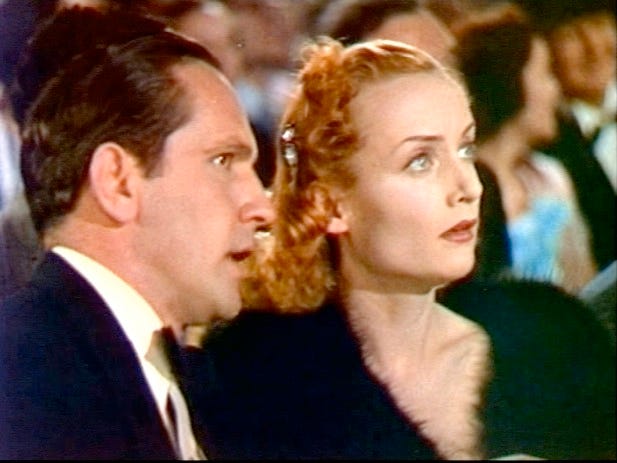
Nothing Sacred is one of the first films shot fully in Technicolor and features glorious aerial and on-location photography of Art Deco-era New York City. The screenwriter Ben Hecht was known as the “Shakespeare of Hollywood”, winning the first screenwriting Academy Award for Josef von Sternberg’s noir essential Underworld.
Two years after Nothing Sacred he famously punched up the screenplay for another Technicolor classic — Gone With the Wind.
Hecht and Tergit might as well have been fraternal twins. They were born four days apart in the late winter of 1894 — Hecht on February 28th in New York, Tergit on March 4th in Berlin. He was the son of Russian-Jewish immigrants from Minsk who made their way to Racine, Wisconsin; she was already working Berlin’s courtrooms while he worked an incredibly similar beat in Chicago. Both shared gritty experiences in 20’s era journalism to fuel their artistic endeavors that revealed the machine behind mass media spectacle.4


Of course there are critical differences. The world of Nothing Sacred is one of confidence and progress. Its New York is the city of the future — unbound by history, or pockmarked by war. The President (whose photo appears in a few scenes) is the kindly FDR, who is clearly presiding over a nation that is recovering in strength and capability.
Nothing Sacred has a happy ending. America’s cynicism has always been balanced by its corniness — and that is on full display in Hecht’s script.
But so many fundamentals and particulars of the societies remain eerily similar in kind and reaction .
Philip Roth explored this theme memorably in his alternative history novel The Plot Against America (2004), but other films from the 1930’s like Gabriel Over the White House (1933) had similar ideas. This Hearst funded film has Walter Huston taking power as a benevolent authoritarian dictator (blessed by the angel Gabriel playing Brahms no less) who assassinates criminals and cancels WWI debt.
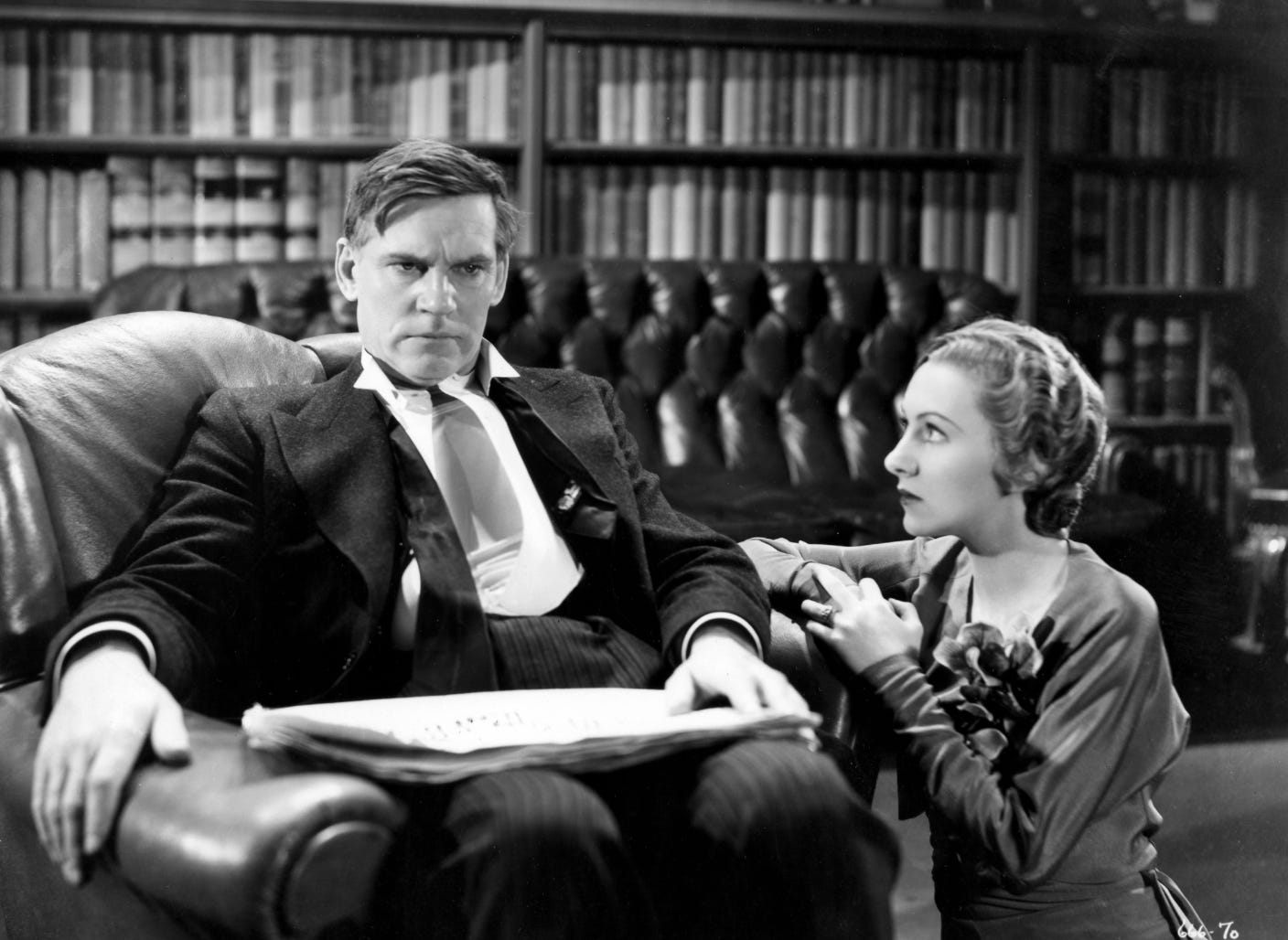
Ultimately he threatens the entire world with a massive war of American power and strength, unless everyone submits to our will. This is played heroically.
The realities of a country mired in deep segregation, regional/racial polarization, anti-immigrant sentiment and an economic depression were considerably more complicated. So, it’d be nice if we were actually a country of Bucky Barnes and Steve Rogers running off to “defeat bullies” - but looking back clearly, that may have only been Jack Kirby’s wish fulfillment, and FDR’s willful leadership.
Is today’s America less immune from the hubris and ennui that infected Weimar Germany? Has mankind truly learned anything? In Disclosure Day, Spielberg gives us an emotionally satisfying conclusion that answers — possibly? He posits that a truth, spectacularly delivered to even the most jaded audience is more than mere distraction. It can be divine and unifying.
It is a highly attractive vision, and one that I was brought up to believe as a creed. But Tergit’s warnings must be taken seriously. She skewers Käsebier because his communion was counterfeit — nostalgia sold to an exhausted populace, who were starved for any sort of relief. Spectacle as brainrot, wholly manufactured for profit and greasing the slide into decadence.
Spielberg’s films reach for honest awe and wonder that he bases in essential truth. Humanity, empathy, a freedom from fear and terror and lies. These are values that Tergit herself never lost faith in, even as the SA chased her out of Berlin.
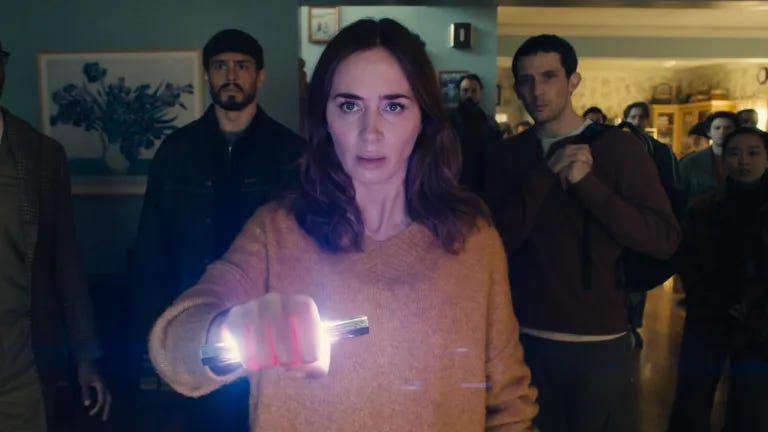
Disclosure Day distinguishes itself from the empty spectacle that Nothing Sacred and Käsebier Takes Berlin by focusing its last act on a moment that has the potential to shake the world from its doldrums.
Many have picked over the logistics and the “reality” of this moment with extraordinary cynicism — ignoring the hunger for unifying moments we see all around us. But who can deny the power of singing along with tens of thousands at a concert, packing a parade for an NBA championship, or being moved with others in our community at the cinema?
This scene gives the lie to the idea that we’re too divided and warped by digital life to ever be redeemed or experience widespread joy.
Spielberg has always been a believer who wears his faith and his heart right on his sleeve. Did I fully buy that revelations on TV would capture the world’s attention? In our current age? Not necessarily. But it’s the movies! It is supposed to be fantastical to make the larger point. Disclosure Day urgently insists that radical empathy is humanity’s saving grace.
In an era where cruelty, atomization and loneliness plague so many — Disclosure Day’s “obviousness” and “naïveté about how the world really works” exemplifies our greatest weapon against the cynics. This is a faith shared by Ben Hecht, Gabriele Tergit, and Steven Spielberg, who each confronted the evils of their day with an ever-present hope in human connection.
And while imperfect, it’s still the only path to heroism and redemption.
A memorable Big Bang Theory joke has Amy accurately call out the fact that Indiana Jones is completely superfluous to the conclusion of Raiders of the Lost Ark
Let’s not discuss the times he rode back in…
I’d like to imagine Gabriele Tergit sitting in a London cinema in 1938 and comforting herself during some very dark times by seeing a variation of her Käsebier brought to life by none other than Carole Lombard.
In 1943, while the State Department stalled and the cautious Jewish establishment counseled patience, Hecht threw the full Hollywood arsenal at the slaughter in Europe: “We Will Never Die,” a memorial pageant he wrote, Kurt Weill scored, Moss Hart directed, and Edward G. Robinson and a cast of stars performed — two nights at Madison Square Garden and a national tour more than 100,000 people saw. Staged with Peter Bergson’s renegade rescue committee, it helped shame Washington into creating the War Refugee Board in 1944.
Oh, hold on you’re a good writer. I enjoyed this. I’m not eye to eye on everything that is stated in this article. However, I enjoyed listening to you think.
Wonderful essay. The Weimar Era of filmmaking is my obsession, ever since one night in college oh so many moons ago when I caught TheGolem on a public access channel in Seattle. Stoned out of my mind, I was simultaneously terrified and mesmerized. I dove into the movies of that era and saw just how prescient they were.