




“Oh ashes of Troy! O flames of the doom of my people!
Witness that had I died by the will of the Fates
At the hands of the Greeks I would have earned that death.
There was no hazard that I did not face.”
-The Aeneid, Book II - Virgil
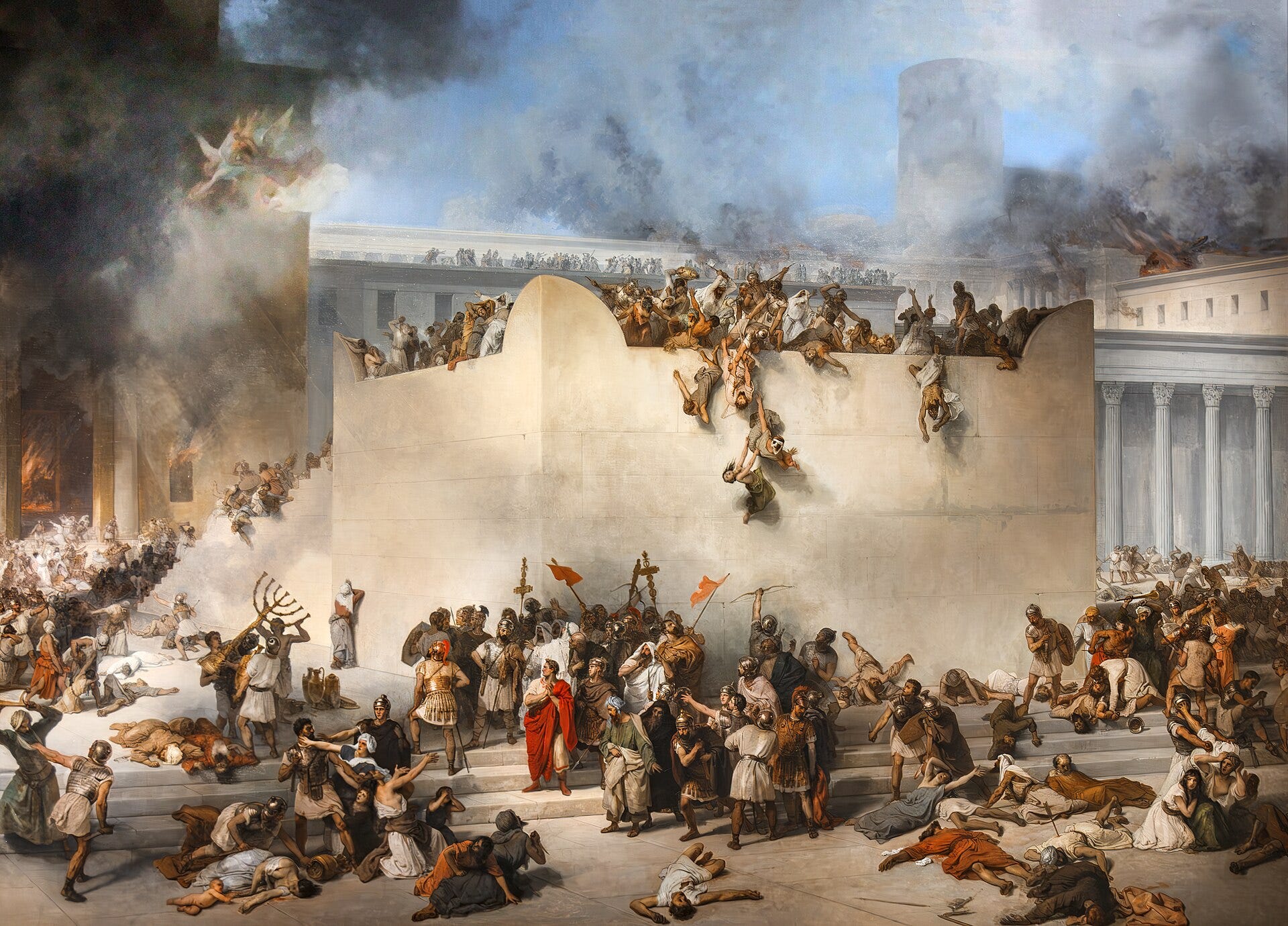
GOD gave full vent to fury,
And poured out blazing wrath—
Kindling a fire in Zion
That consumed its foundations.
- Book of Lamentations, 4:11 - Jeremiah
Do you believe in a moral order? In good and evil? That the sins we routinely commit - small and large — are being judged? That those judgments come with consequences for individuals, societies and nations? And if so - who governs? The laws of man or the laws of the supernatural?
In times of apparent magic, when angels and demons roam the earth, wars of cruelty and destruction rage in historic and holy places and machines summoned from the sand can speak and reason - what are we to believe? The world we can perceive with our senses? Or the worlds of supposed “myths” and “divine truths” that have persisted for thousands of years longer than anything produced by politics.
Christopher Nolan’s The Odyssey (2026) is the work of a true believer and an act of profound faith. The film is devoted to divinely inspired and universal natural law, and details a sinner’s path in finding redemption in love, family and home.
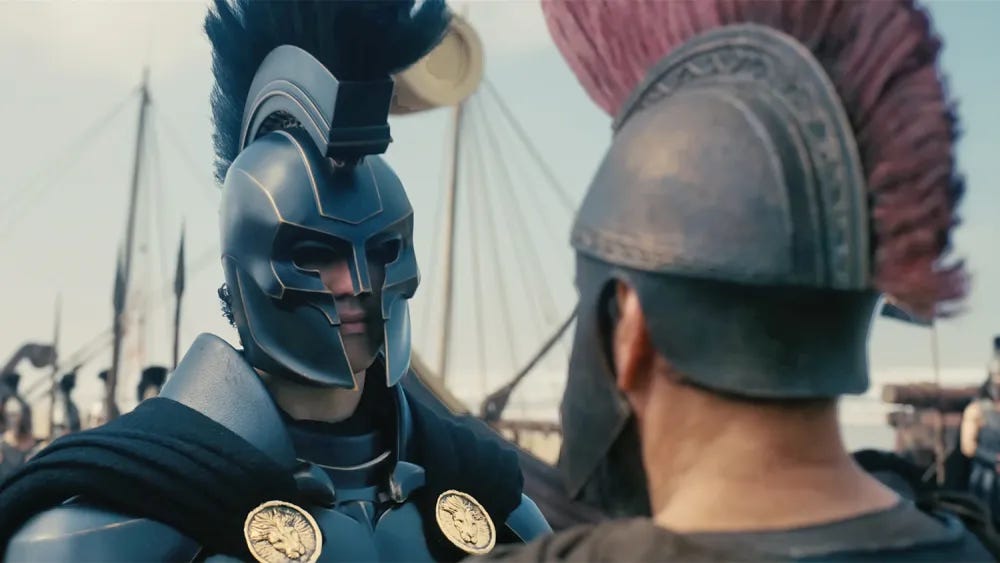
These are classic Judeo-Christian ethics, and a version of Odysseus that Hellenistic Greeks of antiquity would likely find highly foreign. It is a big philosophical jump from “the gods” could be disguised as anyone so tread lightly — to God is everywhere and committing a sin will result in His judgment.
The Odyssey’s point of view on “Zeus’s Law” and its moral order has far more basis in Torah and the New Testament, than the ancient Greeks might have liked. Yet watching this film days before Tisha B’Av1 - the commemoration of the Jewish Temple’s destruction, I could not help but think of the deep similarities to the film’s portrayal of Troy’s fall — particularly the razing of Athena’s temple, and the murder of her priestess.
These events are not mentioned in Homer’s Odyssey in any great detail, but they precipitate Virgil’s The Aeneid and were central to the founding myth of the Roman Empire. The sacking of Troy and the destruction of the Temple are hinge moments that haunt humanity. In a cycle of mythic violence, each led to the fall of glorious Empires and triumph of ignorance and darkness. Each event a black mark that broke the chain of humanity’s progress.
After proud Ilium fell and the smoke from the rubble
Of Neptune’s Troy rose up from the desolate ground,
We are in accordance with the auguries
Of what the gods ordained, sent forth to seek
What places we could find in deserted lands
In which to spend our exile.
- The Aeneid, Book III - Virgil
The elders are gone from the gate,
The youngsters from their music
Gone is the joy of our hearts;
Our dancing is turned into mourning
The crown has fallen from our head;
Woe to us that we have Sinned!
Because of this our hearts are sick,
Because of this our eyes are dimmed:
Because of Mount Zion, which lies desolate
Jackals prowl over it.
- Book of Lamentations, 5:14-18 - Jeremiah
We sing these songs through the ages because we instinctively grasp the momentous nature of the loss. We sing them, because we continue to repeat the same violations of the moral order. The ancient Romans who besieged Jerusalem surely believed they were the inheritors of Troy’s glory, and yet they burned the Judean Temple and sacked the city without hesitation or mercy.
Are we any different?
The Odyssey knows that all times are tinged with “apparent magic” but the moral order persists eternally. Nolan makes clear that the same forces that sacked Troy and Jerusalem now besiege our own cities and temples. Internal strife, growing fear and disgust for the stranger, lust for personal ambition and glory, excuses for murder and pillage — always precipitate the dark times.
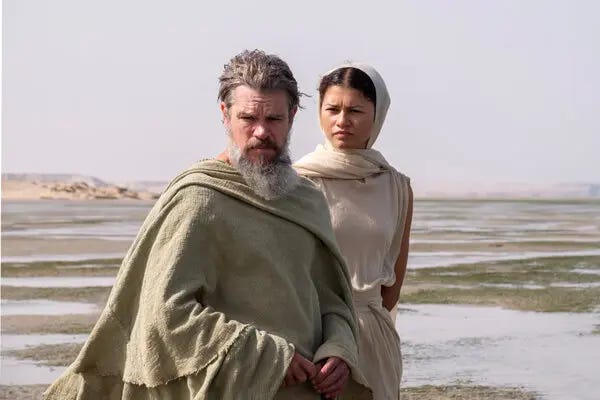
Matt Damon’s Odysseus is both witness and participant in the birth of this dark age. He is the honorable and talented man, who nonetheless lets his honor and talents be subverted for blood lust and theft. And in desperation, he invades the home of the Cyclops, plunders villages for food and supplies and drags his men to Hades. There is no glory in this new age - for him, or the other Greek kings.
The world had moved on.
Or as Nolan’s Odysseus describes the Sirens song - “What you most want is what you can’t have, and what you already had. It’s all the promises you failed to keep. You don’t want to go home.”
For Odysseus now knows that home only exists in memory, and exile goes beyond physical distance.
The film, its set pieces and its themes reminded me so strongly of a recent historical novel I recently read, that had emerged from the late Weimar/early Nazi era in Germany.
In exile from the Nazis, the German-Jewish author Lion Feuchtwanger tried to make sense of the destructive turns of his own society by drafting an allegorical novel about Flavius Josephus - the only recorded witness to the Roman destruction of the Temple in Josephus, The War of the Jews (1932).2
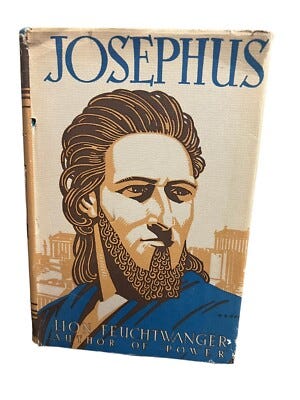
Long decried as a Jewish traitor, Josephus was a Judean priest who left Jerusalem to serve the Emperor Vespasian, and acted as a Roman negotiator during the Jewish revolt. Josephus is a man caught between the ancient Judean and Roman worlds and a fascinating subject for a novel. Feuchtwanger’s novel charts Josephus’s path from a Roman tourist, to a Judean nationalist, to the slave and senior advisor to the Emperor Vespasian and his son Titus.
His path, both consciously and subconsciously tracks the Patriarchal Joseph of Genesis. Both rose to the highest levels of Imperial government, only to leave their people in exile and bondage.
In the novel, Josephus is both welcomed and alienated by the Roman secular world. He empathizes with his fellow Judean’s oppression, but also desires the glory and trappings of a Roman citizen. He is an Odysseus like figure - a polytropos, or “complicated” man3 who is a scholar, diplomat, military leader, writer and involved in many love affairs with women from across the Roman Empire and Eastern world.
As Feuchtwanger writes:
“…[H]is namesake Joseph had married the daughter of an Egyptian prince, Moses had married an Midianite, Solomon an Egyptian woman. Humbler folk must put up with a lesser allowance of freedom, for they ran the danger of losing their customs among the daughters of strange people and of worshipping strange gods. But he, Joseph was one of those who were strong enough to accept strange customs without being swallowed up by them. Cast thyself free from thine anchor, saith Jehovah. Suddenly he understood the dark saying that man should love God with all his powers, the evil as well as the good.”
- Josephus, the War of The Jews - Lion Feuchtwanger
Josephus longs for Jerusalem and to see the Temple, yet serves the Emperor and facilitates its destruction. Living by his wiles, his cleverness serves him well, until the destruction of the Temple on the Ninth day of Av seals his fate, and that of his people.
The historic Josephus is the sole recorded witness left to that day of inhumanity. His words ring out with tragic clarity through the millennia:
Grief might well be bitter for the destruction of the most wonderful edifice ever seen or heard of… for the lavish construction of its holy places….
All who were caught were put to the sword. There was no pity for age, no regard for rank; little children and old men, laymen and priests alike were butchered. Through the roar of the flames they as they swept relentlessly on could be heard the groans of the falling…
Yet more terrible than the din were the sights that met the eye. The Temple Hill, enveloped in flames from top to bottom, appeared to be boiling up from its very roots; yet the sea of flame was nothing to the ocean of blood, or the companies of killers to the armies of killed.
-The Jewish War, Book VI, 277- Josephus
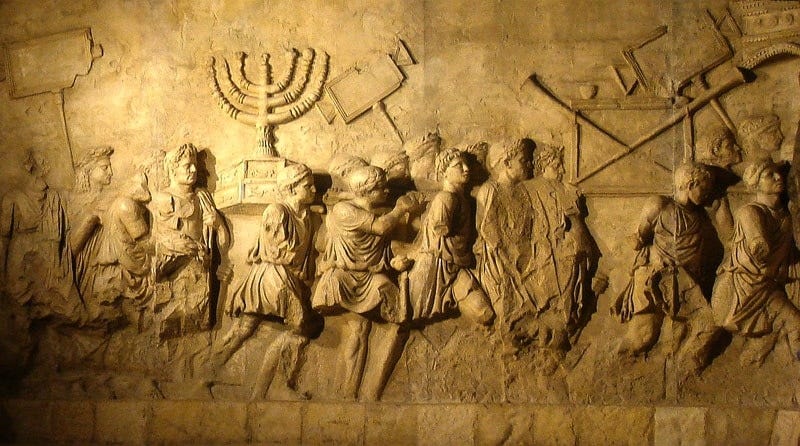
Troy is gone. Rome and the Temple’s remains are well-tended ruins. Yet ancient hopes for a loving and welcoming home persist as strongly as ever.
Odysseus has always been a character who aligns well with Jewish theology. Stubborn, clever, and chosen and cursed by the supernatural to have the world turn on his actions. Eternally wandering, until a violent return to a promised home ends his ancient story.
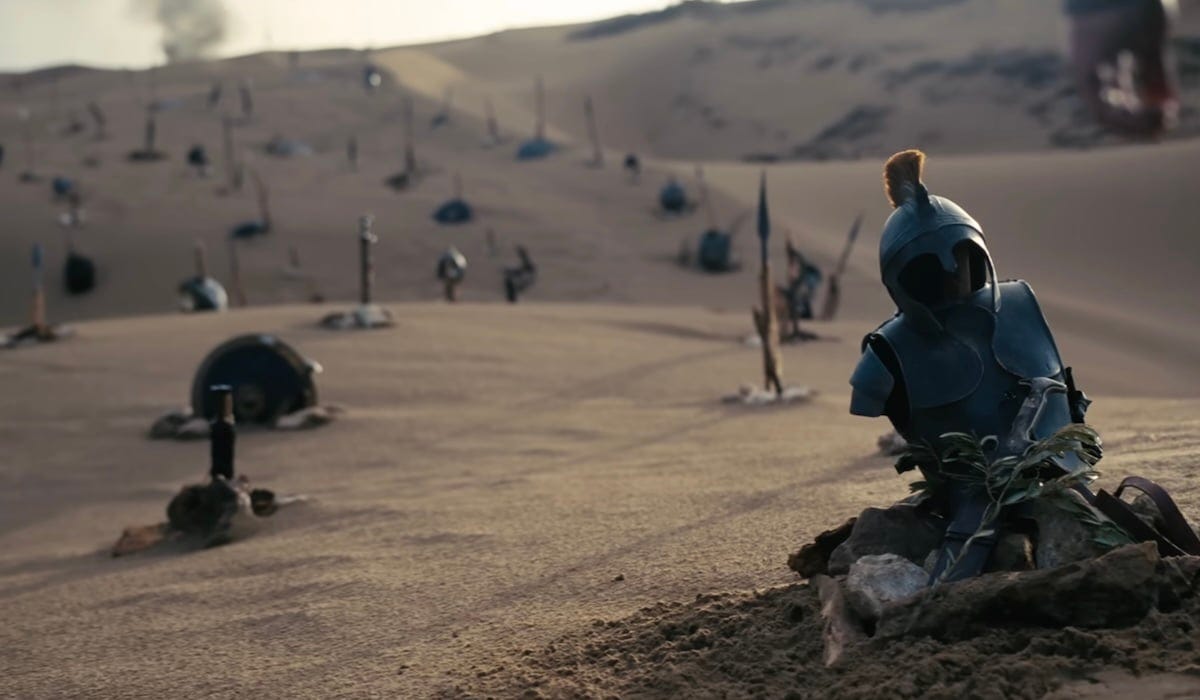
The Odyssey laments ancient glories anew, and stands with faith in the idea that redemption is only possible when love, honor and truth can be found in abundance. These are essential truths of the moral order we all live by instinctively. They are as core to this film’s overwhelming box office success as the Cyclops and the IMAX cinematography.
So do you believe in a moral order to the universe? Are our myths just good rip-roaring tales, made up to entertain and sentimentalize the masses?
Or is there something more to it, that we cannot see.
As Psalm 146 says:
“Do not rely on nobles, on a human being, who holds no salvation. When his spirit departs he returns to the earth, on that day all his plans perish. Praiseworthy is one whose helper is Jacob’s God… the Maker of heaven and earth, the sea and all that is in them.
He safeguards truth forever. He performs justice for the exploited. He gives bread to the hungry. He releases the bound. He gives sight to the blind… He loves the righteous. He protects strangers. He shall reign forever — your God, O Zion — from generation to generation. Hallelujah!”
Christopher Nolan’s The Odyssey is as pure a cinematic expression of the Psalms as you’ll find.
It’s his most moving and spiritual work, which will either stand as a memorial to our era’s rapidly closing age of wonders, or a heeded warning.
Does the fate of Troy and Jerusalem await us as well?
In 2026, Tisha B’Av begins on the evening of July 22nd. and commemorates the destruction of the First and Second Judean Temples. According to tradition, and Josephus’s record the Roman’s razed the second Temple on the same day, the Babylonians razed the first. For the observant, it’s a solemn day of fasting and prayer.
I read Feuchtwanger’s The Oppermanns (1933) as part of a recent German/Jewish lit in translation phase I’ve been going through - which led me to Josephus. Feuchtwanger really should have more readers in the US. His novels are incredibly cinematic and presage work from Herman Wouk and Leon Uris.
Emily Wilson nailed it with her characterization and translation of Odysseus and his essential nature.