


The Cognitive Film Society screened Annie Hall on Sunday, March 29 at the Gold Theater at Hewlett-Woodmere Public Library — our third screening at the library, and our biggest crowd yet, with about sixty-five people in the house. The afternoon was a tribute to Diane Keaton, who passed away last year, and whose work in the 1970s helped define what we now call New Hollywood.
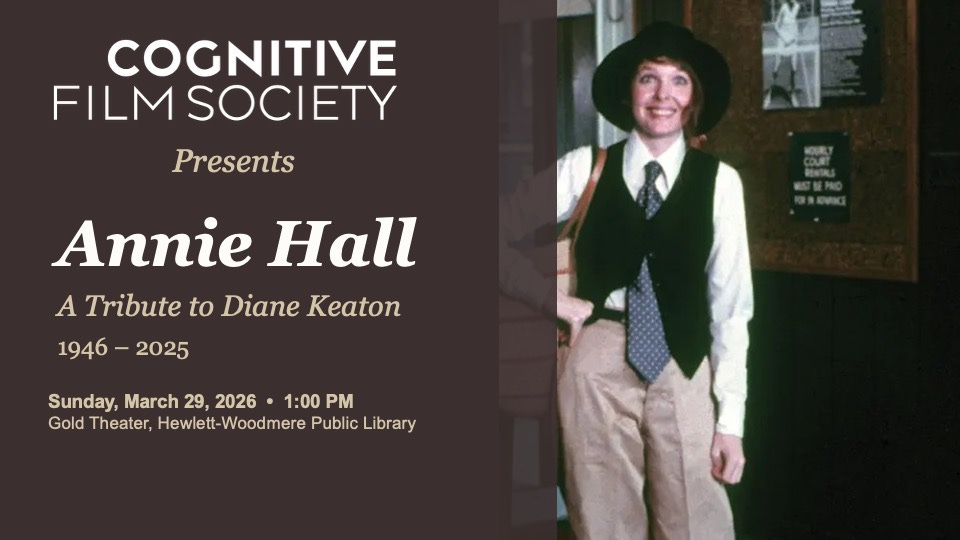
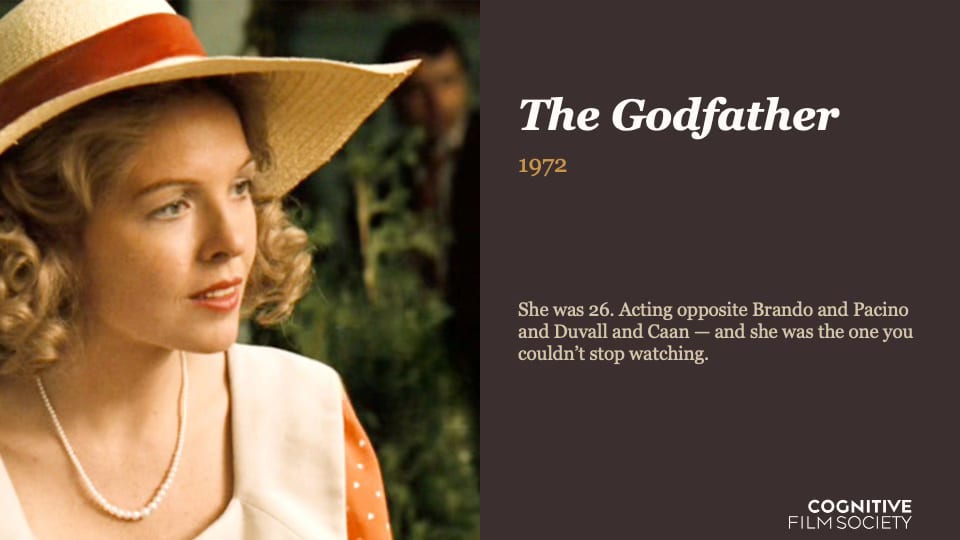
Before the film, we walked the audience through the roles Keaton played in the years around Annie Hall — The Godfather, Looking for Mr. Goodbar, Interiors, Reds — to show the range that makes her Annie Hall performance land the way it does.
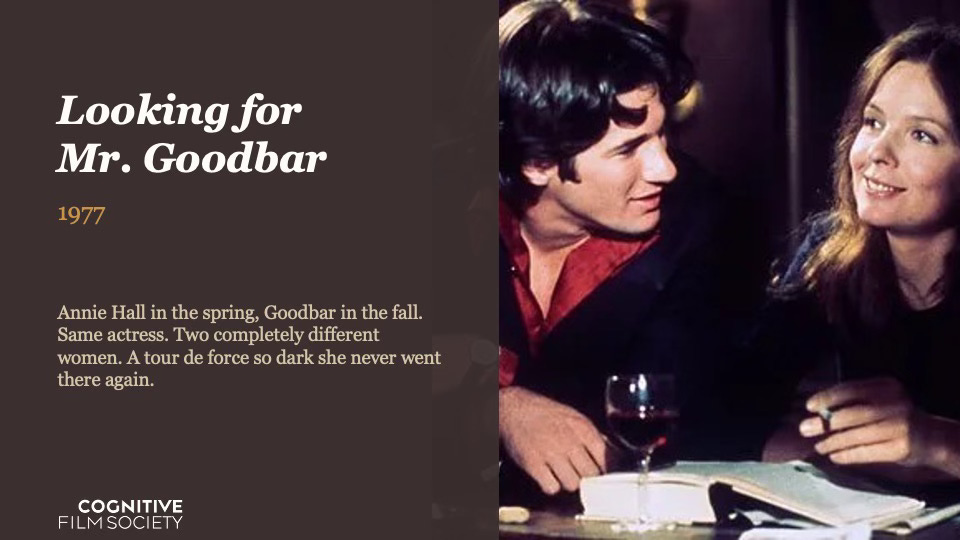
Looking for Mr. Goodbar came out the same year as Annie Hall and is basically a darker, female Saturday Night Fever.
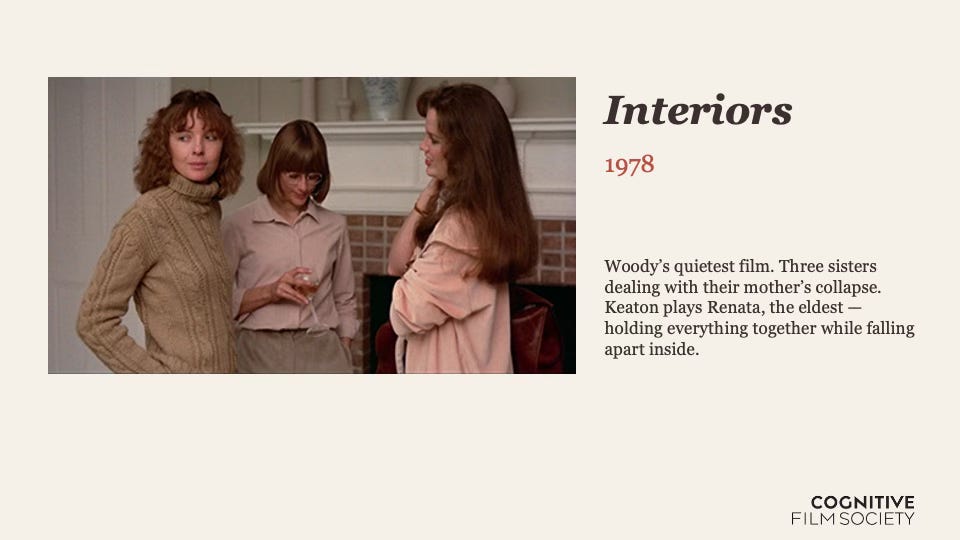
Interiors is Woody Allen’s quietest film, deeply influenced by Bergman, where the ripping of tape sounds like the explosion of the Death Star.
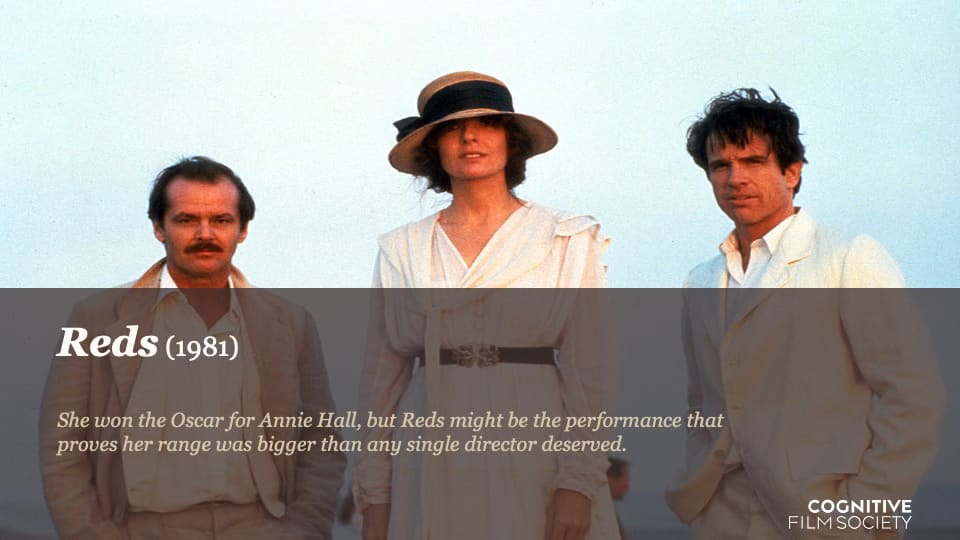
Reds — my favorite Keaton performance, full stop — is one of the great American films of the latter half of the twentieth century.
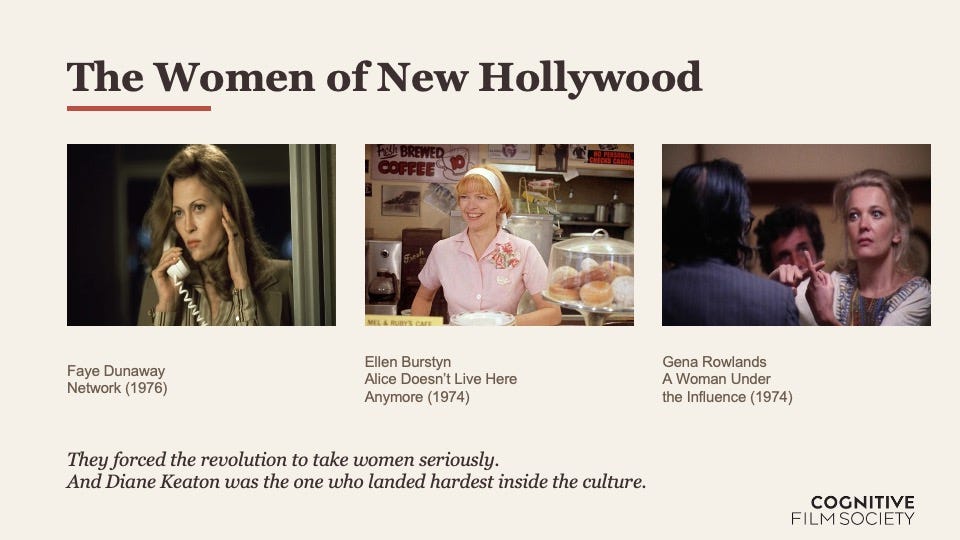
Keaton’s work is critical given the context of her contemporaries: Faye Dunaway in Network, Ellen Burstyn in Alice Doesn’t Live Here Anymore, Gena Rowlands in A Woman Under the Influence. Actresses who broke from the theatrical style of the generation before them and brought a naturalism that changed what women were allowed to do on screen.
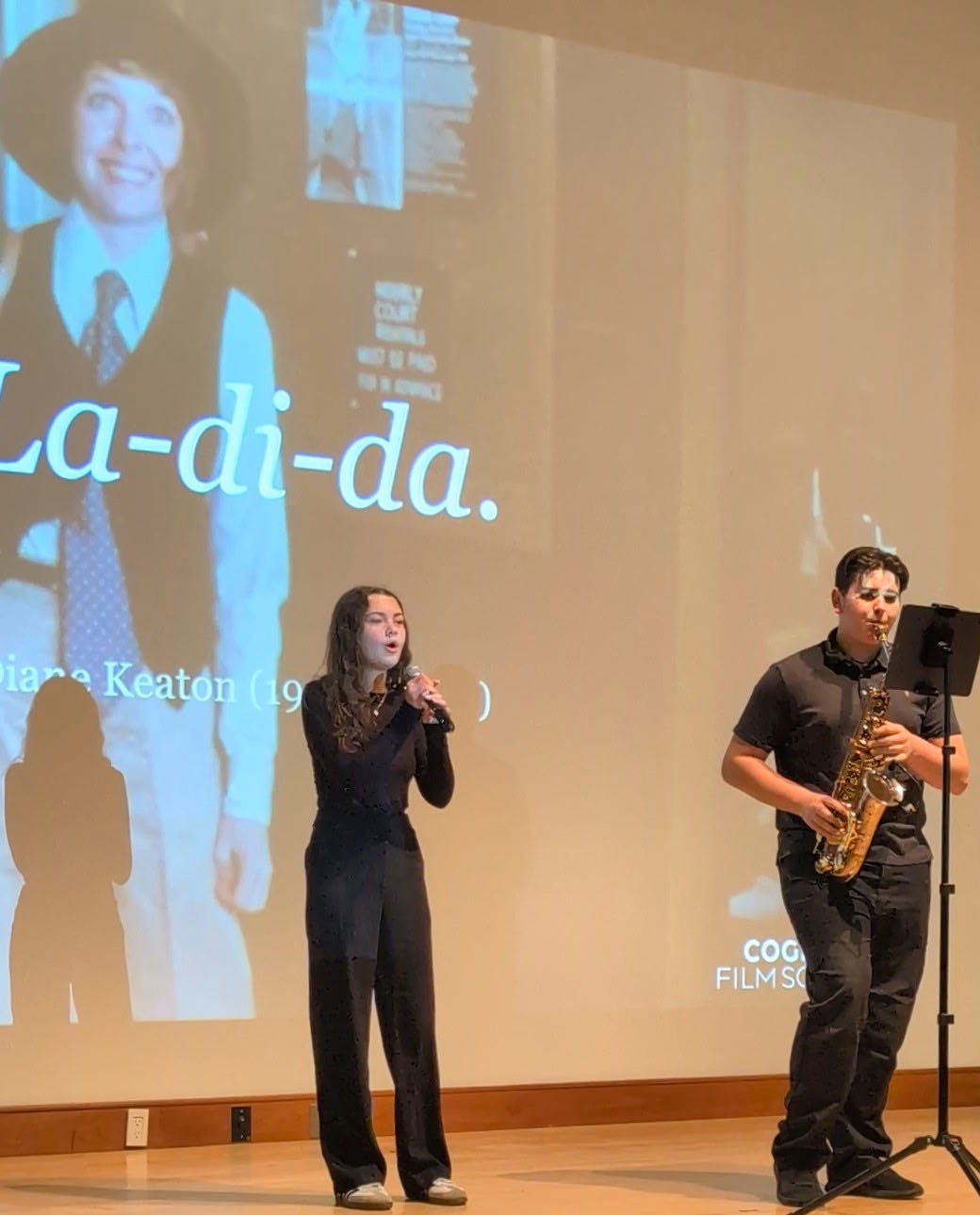
Aleksy Fradlis and Victoria Brodsky — returning for their third CFS performance — followed with a set of jazz standards from the era. Then we screened the film. Nearly fifty years old, full house, and the whole room was laughing.
Watching Annie Hall on the big screen with sixty-some people, nearly fifty years after it was made — it still works.
La-di-da.


